
Democratization of Lethality: Drone Proliferation in Sudan
On March 11, a drone strike in southern Sudan struck a secondary school and health center, killing at least 17 people. Local sources have blamed the Rapid Support Forces (RSF) for the attack, a paramilitary organization currently embroiled in a civil conflict with the state-led Sudanese Armed Forces (SAF). The strike represents a troubling pattern in the usage of aerial artillery in the conflict, where more than 200 civilians in the span of 17 days have been killed by drones in the Kordofan region and White Nile state.
This escalation reflects a broader transformation of warfare in Sudan: the rapid proliferation of drone technology, facilitated by wealthy external patrons, is enabling both state and non-state actors to dramatically expand their reach and lethality, with devastating consequences for civilians.
Conflict broke out between the RSF and SAF in April 2023 amid brewing tensions between their respective leaders, Muhammad Hamdan Dagalo Musa (commonly known as Hemedti) and Abdel Fattah al-Burhan. In two years, the war has plunged Sudan into crisis, with more than 33 million people in need of humanitarian assistance and roughly 11 million displaced. The scale of damage has been exacerbated by the introduction of unmanned aerial vehicles (UAVs), or drones, to the conflict, as weak borders, fragmented international control, and their flexible design have made them easier to use and spread.
A central driver behind this rapid expansion of aerial warfare is the decisive role of external patrons, with the UAE being the principal supplier for the RSF’s drone capabilities. In 2015, Hemedti sent RSF troops to support a Saudi-led coalition against Houthi forces in Yemen, allowing him to generate close ties with Abu Dhabi. Hemedti has since leveraged this previous support to receive extensive military and humanitarian aid from the Emirates, despite the UAE’s repeated denial of these claims.
UN investigators have, however, confirmed this illegal weapons smuggling operation, and cited credible evidence that the UAE was breaking a U.N. arms embargo in Sudan. Satellite images exposed a drone hangar and munitions bunker operating alongside an Emirati-run hospital in Adjarass, Chad, a mere 100 km from Sudan’s border.
Chad’s permissiveness towards Abu Dhabi’s presence in Amdjarass could potentially be explained by a $1.5 billion USD loan granted to N’Djamena in 2023, almost as big as Chad’s $1.8 billion USD national budget a year earlier. As long as the UAE continues to prop up Chad’s economy, they will be able to exploit their proximity to Sudan to further their support for the RSF.
When taking into account Hemedti’s gold empire and the UAE’s regional ambitions of expanding influence, Abu Dhabi’s financing of the RSF becomes abundantly clear. According to a confidential report submitted to the United Nations Security Council, over $860 million USD worth of gold in 2024 was extracted from RSF-controlled mines in the Darfur region alone, the majority of which was smuggled into the UAE. What began as a pragmatic political and economic relationship between Hemedti and the Emirati leadership has thus evolved into a mutually reinforcing illicit exchange network, where both sides stand to profit handsomely from the continuation of war.
From Chad, the Emirates reportedly piloted the Chinese-manufactured Wing Loong 2 drone for the RSF, which boasts over 4,000 km of range, laser-guided missiles, and anti-personnel bombs. While largely used for reconnaissance in this conflict, they still provide the paramilitary force a major advantage in intelligence gathering and deterrence. The hands-on operation of these UAVs by the UAE compromises their claim of abstention from this conflict. This implicates them in the humanitarian crisis that has been perpetuated by RSF attacks.
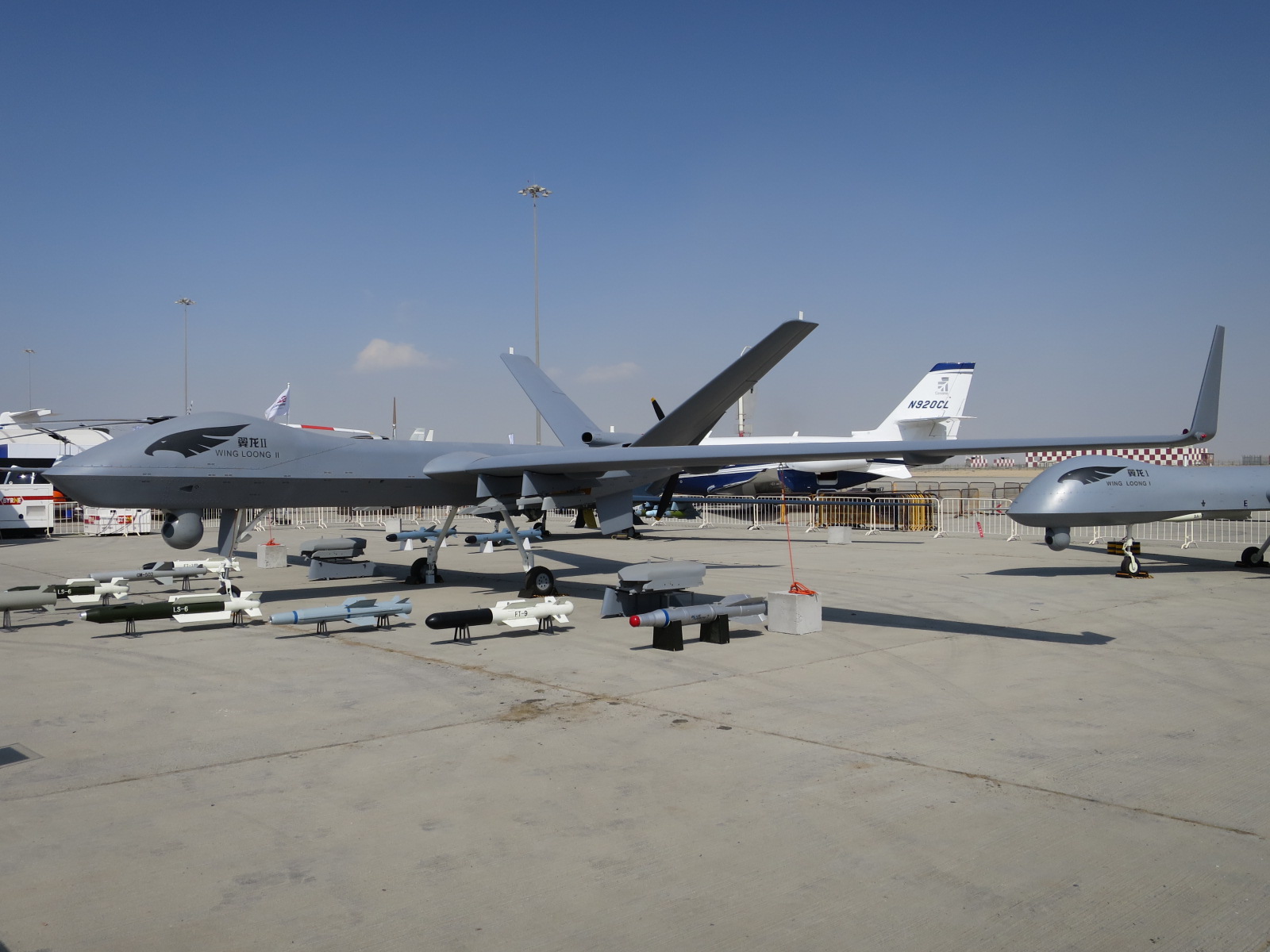
In addition to the Wing Loong 2 drones, the RSF has equipped itself with other Chinese-manufactured UAVs: the Sunflower 200 Kamikaze and FH-95. With a range up to 2,000 km, the Sunflower 200 could reach as far as Port Sudan, which currently serves as the de facto capital of the SAF. The FH-95, conversely, travels a shorter distance (250 km) but carries a significantly larger payload, allowing it to drop more munitions and explosives.
The RSF do not arm themselves with rudimentary or purely tactical systems; they field platforms that fundamentally expand their operational reach and destructive capacity. These drones raise the ceiling of violence by enabling long-range strikes, precision targeting, and heavier payload delivery, capabilities traditionally reserved for state militaries.
A report released by Yale indicates that it remains unclear which countries have acquired these airframes, and who supplied the specific drones used by the RSF. China’s ambassador to Sudan has denied claims of any connection between Beijing and the RSF, which leaves the transfer pathways of these systems highly opaque. The murkiness of these supply chains has significant implications for drone proliferation. Without clear attribution, enforcement of arms control becomes far more difficult. This allows state and non-state actors alike to plausibly deny involvement while continuing to facilitate transfers.
The SAF are also complicit in this scale of devastation in Sudan, and similarly rely on beneficiaries for their drone technology. Russia, which previously supplied missiles to the RSF, switched sides in 2024 in exchange for reinstating a 2017 agreement for a Red Sea naval base. Similarly, Iran provided the SAF with various multi-purpose drones, including the Mohajer-6 and Zajil-3, with hopes of establishing a naval presence along the Red Sea.
Representing a vital global trade artery, the Red Sea handles roughly 10 to 12 per cent of total international trade and 30 per cent of global container traffic. Here, Russia and Iran can secure a strategic foothold in a key maritime corridor, counter Western influence, and potentially disrupt shipping traffic as a source of bargaining power.
The civil conflict is being instrumentalized to bolster the strategic standing of both sides. Sudan has become a marketplace of war, where external powers sustain the violence through drone proliferation and cynically extract geopolitical concessions from it. A stark moral indictment has been cast on the international community, whose tolerance enables the conflict’s prolongation and normalization.
As always, the people of Sudan bear the brunt of these transactions. Nearly 2000 people have been killed from drone strikes alone since 2023, with this number rising exponentially as the RSF and SAF continue to bolster their inventory. Introducing new non-state players to the military economy sets a dangerous precedent for the future global order. As actors gain unfiltered access to cutting-edge war capabilities, asymmetric balancing tactics become increasingly obsolete. If left unchecked, Sudan’s war risks becoming a blueprint for the democratization of lethality, where groups like the RSF now access and deploy advanced drones once reserved for state militaries. This shift reshapes modern conflict at the expense of civilian life.
Edited by Shumyle Eman Sahid
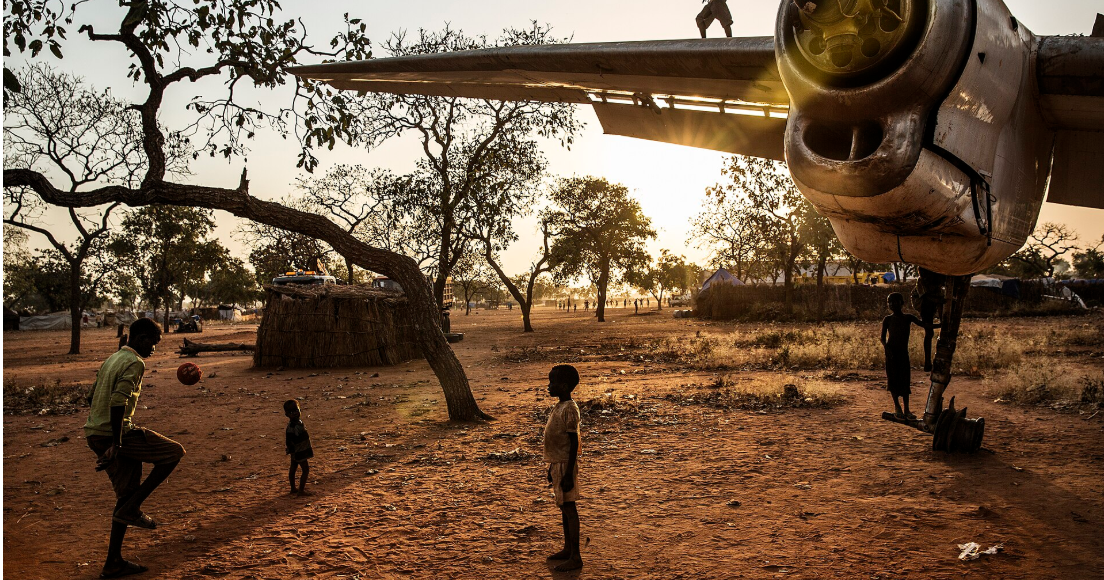
Featured Image: Children playing on aerial military debris at Yida refugee camp. Photo by Marco Gualazzini is licensed under CC BY-SA 4.0 .


