
How Russia Manufactures Legitimacy in the Sahel
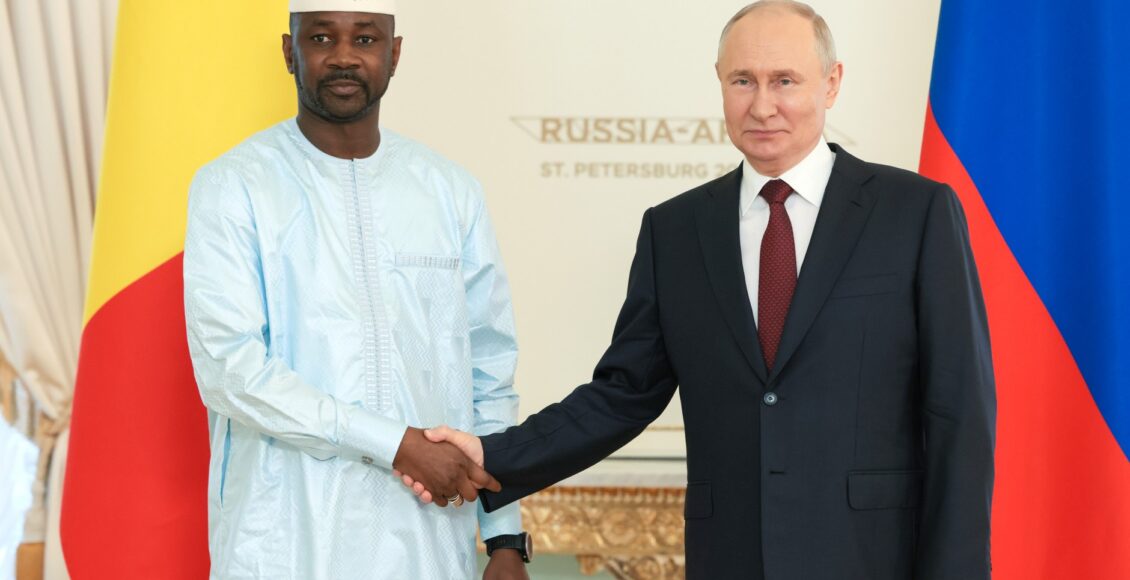
Hundreds of AI-generated music videos have recently swarmed the internet, featuring global celebrities such as Rihanna singing odes to Burkina Faso’s military ruler. Although the creators of these videos remain largely untraceable, they contribute to a broader ecosystem of propaganda and disinformation which Russia has spent years cultivating across the Sahel, specifically in Mali, Niger, and Burkina Faso. Indeed, Russia’s propaganda apparatus, bolstered by the rise of AI, is built to manufacture its legitimacy in the region, regardless of whether Russian-backed regimes provide real security. Although Wagner’s military offensives fuel the headlines that make it into Western news, Russia’s propaganda machine may be the more dangerous tool through which it manufactures legitimacy in the Sahel. Unlike battlefield victories, this legitimacy doesn’t need to be won, but can simply be produced, allowing leaders to maintain public support without providing real results. What makes this strategy even more significant is how long it has been in development, refined over decades and largely overlooked by Western governments. This suggests that Russia’s influence in the region is likely to endure, regardless of what happens on the battlefield.
While the surge of pro-Russian propaganda is recent, it builds on goodwill dating back to the 1960s, when the Soviet Union backed several African independence movements, providing weapons and free university education. At the same time, decades of French political, military, and economic influence also fueled resentment across the region. Russia has moved deliberately to keep that resentment alive. The Wagner Group’s disinformation campaigns tap directly into this sentiment, circulating, for example, a cartoon depicting French soldiers as skeletons being shot down by Russian and Malian fighters. The simplicity of this media perfectly encapsulates the “liberation” narrative Russia is selling, presenting itself as an alternative to the West in counter-terrorism aid and general security in the region. As former Wagner operative Sergey Eledinov described, Russia’s intervention was meant to fill the vacuum left by France.
Indeed, it is important to note that Russia’s presence in regional media did not emerge organically. Between 2019 and 2022, after a series of internal investigations, Meta removed eight distinct account networks targeting African audiences, many of which were linked directly to Yevgeny Prigozhin, the founder of the Wagner Group. These networks began pushing coordinated messaging right as Wagner mercenaries first arrived in Mali, albeit unofficially. This timing suggests the precise aim of the accounts, intending to prepare and guide public opinion in advance of Wagner’s deployment. Having established an online foothold, the next phase was consolidating this pro-Russian sympathy by establishing a physical institutional foundation. Cultural centres known as Russian houses — coordinated by the Russian federal agency Rossotrudnichestvo and sanctioned by the European Union for spreading disinformation since the invasion of Ukraine — opened in Mali in June 2022, Burkina Faso in January 2024, and Niger in October 2024.
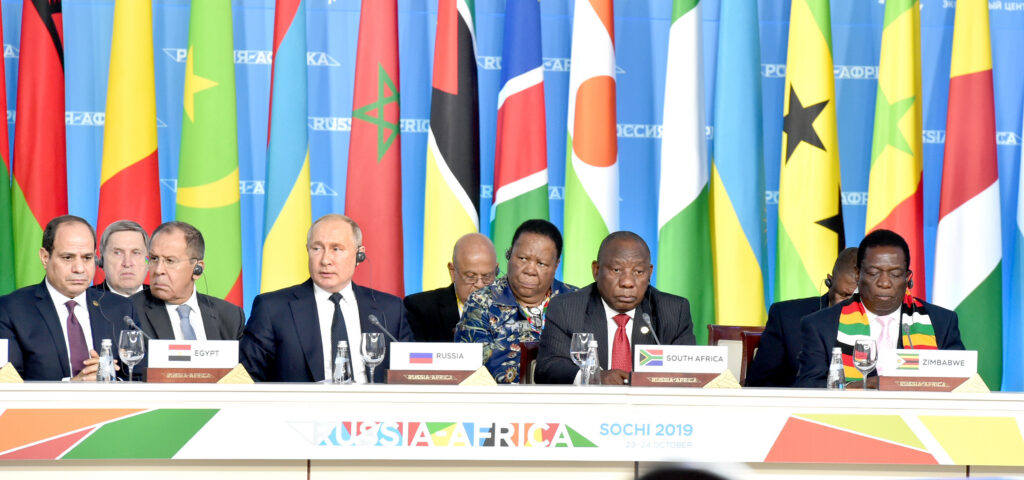
With the groundwork in place, Russian state media moved to occupy the regional information space directly. Russian media expansion was aided considerably by the retreat of competing Western voices. In 2023, after Mali and Burkina Faso expelled French correspondents and suspended Radio France Internationale and France 24, Reporters Without Borders concluded that these bans had created an opening for pro-Russian narratives to dominate largely unchallenged. For example, in Mali, a Bamako-based radio station airs a nightly Sputnik news segment, embedding Russian state messaging into the daily habits of local listeners. Ultimately, the combination of the silencing of competing narratives and long-term efforts to embed Russian media allows Russia to single-handedly influence local politics.
After establishing a considerable presence in local media, the next step was for Russian Houses to launch cultural embedding operations. In Burkina Faso, Russian government-funded information stalls offer Russian-language instruction and Soviet history classes to local students, planting favourable attitudes at a formative age. This demonstrates the true nature of Russia’s operations, serving as long-term investments in ensuring political sympathy further down the line. The effects of this can be seen from one of Afrobarometer’s most recent surveys: Mali was the only country, among the 38 surveyed across the continent, where a majority of respondents explicitly favoured Russia over Ukraine in the ongoing war. Such alignment of political views suggests something more durable than the product of influenced news cycles, pointing instead to the result of sustained, youth-directed, cultural investment.
Perhaps the most telling sign that Russian efforts have created deep-rooted sympathy in the region is the unplanned and sporadic nature of new pro-Russian propaganda videos. For example, in 2022, a network of pro-Russian Facebook pages in Mali was found to be administered locally, with no confirmed Kremlin operator behind it. In addition, when France 24 traced the origins of a viral Traoré deepfake video, the trail led to an independent Nigerian creator monetizing AI-generated content for roughly $1,000 USD per video. This indicates that once the initial media infrastructure serving Russia had taken flight, the newest layer of pro-Russian content no longer required Russian authorship altogether. Indeed, the narrative conditions first put in place seem to prove self-sustaining, suggesting an automatic amplification of these narratives.
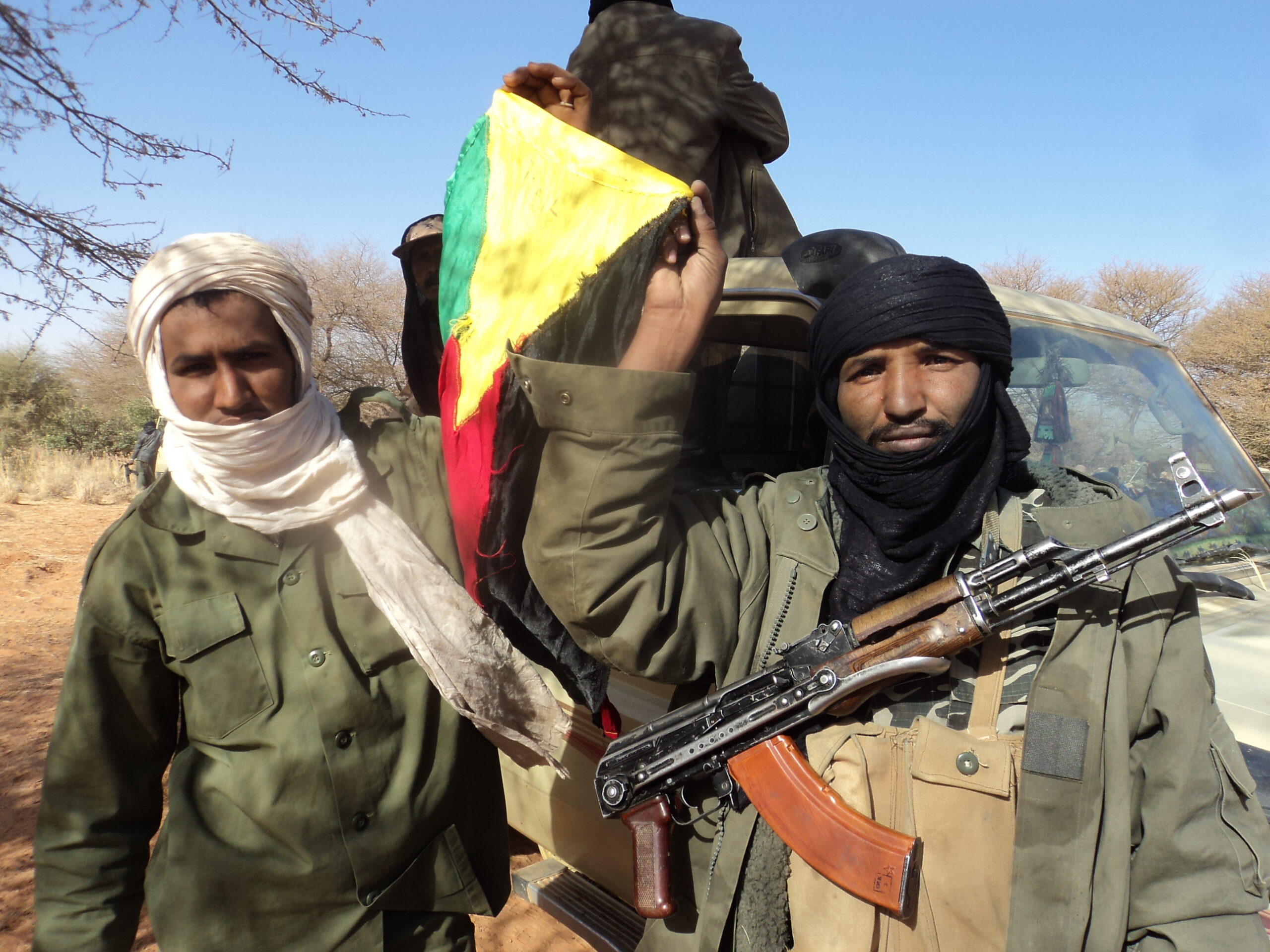
Yet the creation of a sympathetic environment in the region is not the central strategic goal. In reality, Russia reaps material benefits from regional support by evading certain accountability costs, which have historically been the determinant of whether a foreign intervention is positive or negative. More concretely, in Mali, a 2025 survey showed an 88 per cent positive view of Russia’s economic and political influence in the country, despite numerous Russian military failures. In fact, this number was recorded less than a year after Wagner’s costly defeat at the Battle of Tinzaouatène in 2024, in which a 30-vehicle convoy of Wagner and Malian forces was ambushed by Tuareg rebels and Al-Qaeda-linked fighters. Rebel accounts claim 84 Russian mercenaries and 47 Malian soldiers were killed, with at least two taken hostage. This was a significant failure for Wagner, whose military premise of operation was to suppress a jihadist advance and attain stability in the region. This military objective has proven to be a real challenge for Russia. In April 2026, it was forced to retreat from the region of Kidal entirely due to a coordinated offensive by Jama’a Nusrat ul-Islam wa al-Muslimin, a united front of various jihadist organizations, and the Azawad Liberation Front. This is particularly noteworthy as Russia’s previous capture of Kidal had been marketed for years as proof that its security model worked. In sum, the ecosystem of propaganda developed by Russia over recent years is not the goal in itself, but rather serves as a means to maintain local support despite the debatable efficiency of its military intervention.
Ultimately, while a purely material evaluation of Russia’s intervention highlights struggle and failures, Russia defines success by a different set of factors: public opinion. In this sense, Moscow’s real achievement in the region was building a durable narrative infrastructure, robust enough to keep generating legitimacy, which persists as Wagner and Africa Corps falter on the ground. This should reshape how the West interprets Russian intervention, moving away from the presumption that military failure and the erosion of local support are directly correlated. The comforting prediction that Russia’s worsening security record would eventually translate into declining sympathy for Moscow may need revisiting.
Edited by Shumyle Eman Sahid
Featured image: “Mali’s junta leader, Assimi Goïta, meets with Russian President Vladimir Putin at the second Russia-Africa Summit in July 2023, part of the deepening ties between Moscow and the Sahel’s ruling juntas. “Assimi Goïta with Russian president Vladimir Putin, July 2023” by kremlin.ru is licensed under CC BY 4.0.”

