
Mauna Kea and the Illusion of Indigenous Consent in Hawai‘i
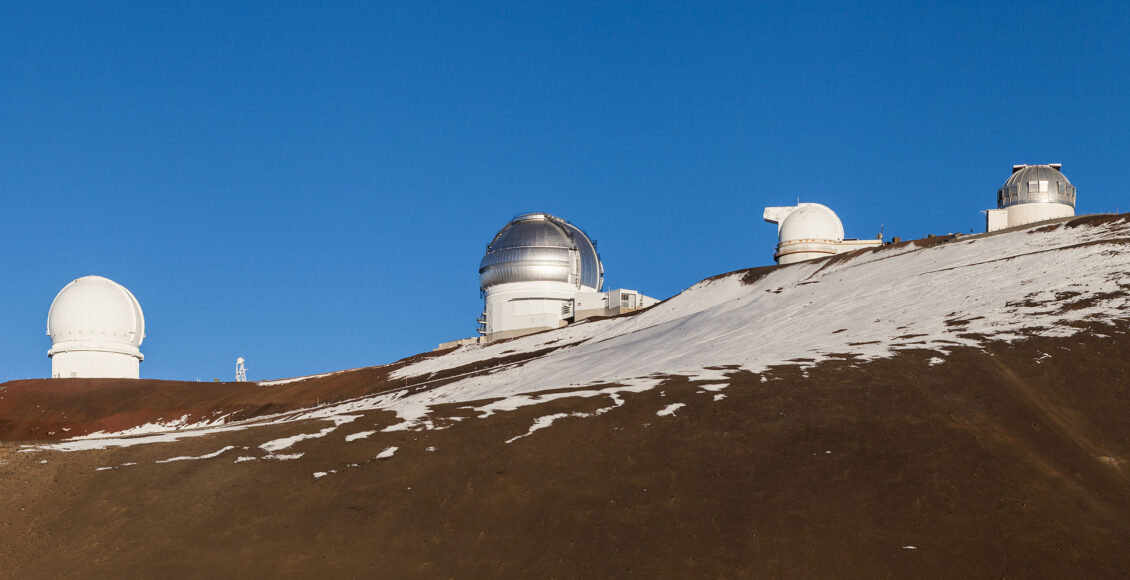
In October 2025, Hawai’i Governor Josh Green and his congressional delegation signed a letter promising to commence a permitting process to reconstruct telescopes on volcano Mauna Kea’s decommissioned observatory sites. They framed this move as a step towards “clear and transparent” governance, with the announcement neatly sidestepping the core controversy that halted the Thirty Meter Telescope. In 2019, there was widespread Native Hawaiian opposition to further construction on what advocates call the most sacred mountain in their genealogy. This new announcement came without broad public consultation and drew immediate criticism from Native Hawaiian advocates, who argued that the state was once again disregarding the hundreds of thousands who have opposed further construction on the sacred mountain for over a decade.
The Green administration’s renewed effort to fast-track telescope development on Mauna Kea exposes a deeper failure of political due process in Hawai’i, which reduces Indigenous consent to a procedural step rather than a foundational basis of democratic legitimacy. Although the state claims it has consulted Native Hawaiians, their participation has been systematically constrained, with bureaucratic processes reproducing state authority instead of respecting Indigenous sovereignty.
For Kānaka Maoli, or Native Hawaiians, Mauna Kea is represented in mythology as the dwelling place of gods, making it a central site of ritual, pilgrimage, burial, and ancestral connection. Hawaiian stewardship traditions regard the summit as a sacred site (wahi kapu) whose protection carries genealogical and legal significance. Environmentally, Mauna Kea is home to some of Hawai’i’s most fragile alpine ecosystems, with rare and endangered species such as the Mauna Kea silversword and arthropod communities. These beings are extremely sensitive to disturbance from construction and land alteration. These ongoing concerns about ecological and cultural damage are reflected in the decades of Native Hawaiian activist works and decommissioning efforts.
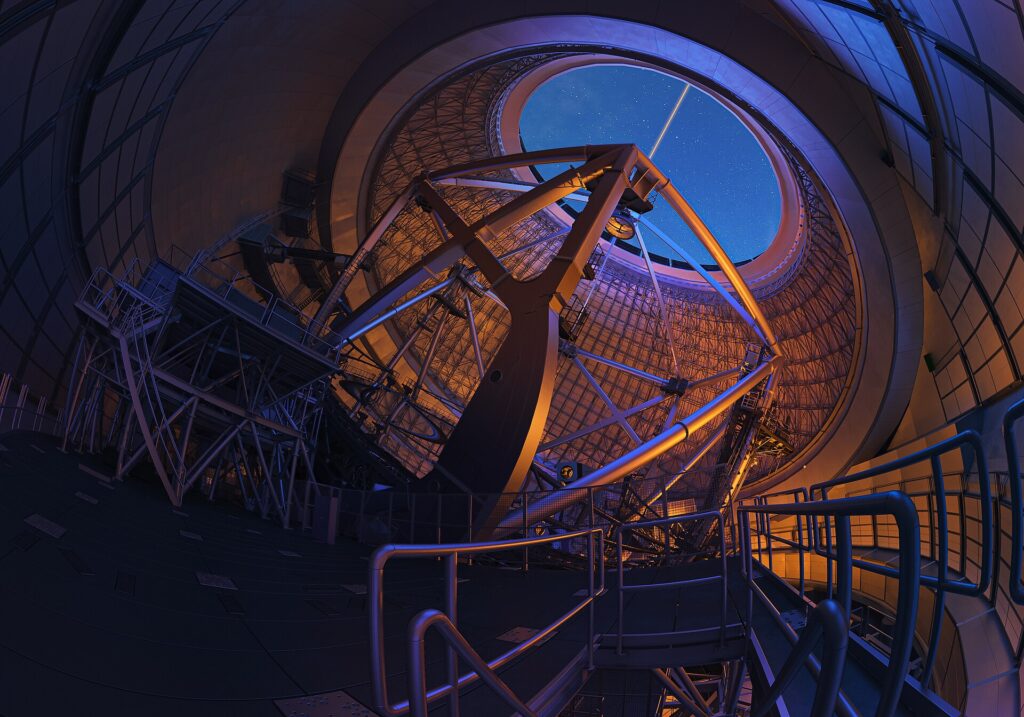
The Thirty Meter Telescope then intrudes into this delicate balance between sacred landscape and ecological vulnerability. The telescope proposal was designed to be one of the world’s most powerful ground-based observatories, using a 30-meter segmented mirror to study exoplanets, galaxies, black holes, and other celestial bodies. Mauna Kea is ideal for telescopes due to its high elevation, stable airflow, clear skies above the inversion layer, and lack of light pollution. These factors minimize atmospheric distortion and maximize light capture for observing celestial objects. Proponents argue the project would advance global science and bring educational and economic benefits to Hawai’i. However, protectors who oppose the telescope claim that further construction desecrates a sacred mountain already burdened by numerous other observatories, threatens sensitive ecosystems, and perpetuates a long history of excluding Native Hawaiians from decisions about their own land. Major protest waves in 2015 and 2019, including elder blockades, mass arrests, and widespread community mobilization, have shaped public debate and halted construction. In 2015, legal challenges culminated in a temporary injunction halting construction after the Hawai’i Supreme Court invalidated an initial permit for violating due process, forcing the state to restart the approval process.
International norms, particularly the United Nations Declaration on the Rights of Indigenous Peoples (UNDRIP), establish that Indigenous communities should grant free, prior, and informed consent (abbreviated as FPIC) for any administrative or legislative measures affecting their lands, resources, or cultural heritage. Under FPIC, consent is not reducible to mere “consultation”: it requires the absence of any coercion, access to full information, and consent obtained sufficiently in advance. By contrast, the political process surrounding the Thirty Meter Telescope has employed a purported consultation with Kānaka Maoli to simulate legitimacy, while actual consent remains limited.
In December 2015, the Hawaiian Supreme Court struck down the conservation-district permit for the Thirty Meter Telescope because the Board of Land and Natural Resources (BLNR) had issued the permit before even holding the required contested-case hearing, thereby violating legal due process. The court ruled that BLNR “put the cart before the horse” by denying its opponents a fair hearing before making a decision. Although the permit was reissued in 2017 following a lengthy, contested hearing and was later upheld by the Supreme Court, the project was initially approved without meaningful consent or deliberation—one of many instances in which procedural formality overrides Indigenous voices.
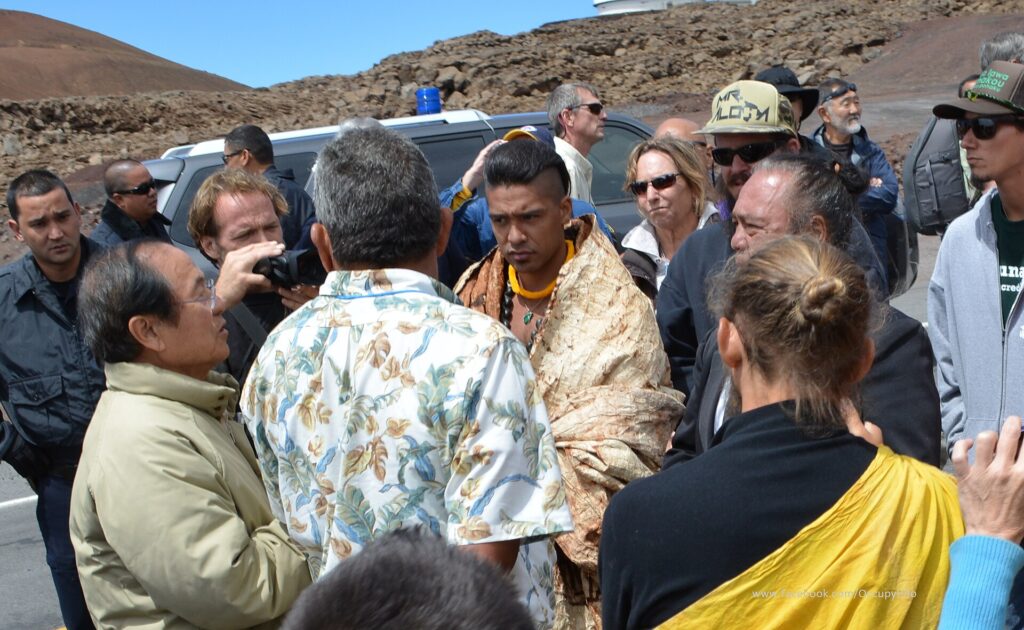
Indigenous sovereignty was also undermined during the 2019 blockade, when Native Hawaiian elders nonviolently stationed at the base of Mauna Kea were arrested, despite repeated requests for formal mediation and cultural protocol. Rather than pausing construction activities or initiating dialogue grounded in established Native Hawaiian processes, the state declared a state of emergency and expanded police powers before deploying them to clear the access road. Beyond this move’s reclassification of peaceful protestors as mere obstacles to be removed, it disregarded the thousand people who had mobilized and spoken their culturally grounded objections.
This gap between process and actual legitimacy shows how the state, though claiming to serve the public interest by advancing scientific development, defines “public” by centring its own institutional priorities—such as global astronomy and research funding—over the land rights and self-determination of the Kānaka Maoli. Instead of being a beacon of scientific progress, the telescope becomes a microcosm of the long history of land dispossession and settler-state governance of the US over Native Hawaiians. By obscuring power relations through legal formalities and lengthy administrative procedures that appear impartial, the state demonstrates that it values consent as bureaucratic paperwork rather than actual democratic participation. Public process becomes nothing more than a mechanism for reproducing governmental authority and has little to do with granting legitimacy to Indigenous populations.
The conflict over Mauna Kea cannot be separated from the longer history of state intervention in Hawaiian political life. The state’s response to the Mauna Kea protests, which was marked by staunch dismissal of Native Hawaiian concerns and the criminalization of protestors, closely mirrors its treatment of sovereignty movements more broadly. These patterns echo a much older historical injustice: the 1893 overthrow of the Hawaiian Kingdom, which can be considered the original act of illegitimate political authority, setting the terms by which the state continues to govern Hawaiian lands and voices. The present disputes on the mountain raise a question about Hawai’i that has never been answered: whose authority is recognized?
The debate over the Thirty Meter Telescope is not just a clash of scientific progress and cultural tradition. It is the natural product of a political system that treats the consent of Indigenous people as a mere formality rather than a democratic requirement. This enables state agencies to override Kānaka Maoli participation whenever it conflicts with their institutional priorities. Ultimately, any meaningful resolution to the conflict must centre Native Hawaiian sovereignty. Whether through legal claims, protest, or self-determination movements, the authority of Kānaka Maoli over their sacred lands is not just an obstacle to be managed: it is a necessary foundation for justice and democracy.
Edited by Annabelle Zehner
Featured image: “Mauna Kea Eastern Telescopes.” Photo by Generic1139 is licensed under CC-BY 4.0.

.jpg)

