
The Fate of Mexico’s Zapatista Movement Under Claudia Sheinbaum
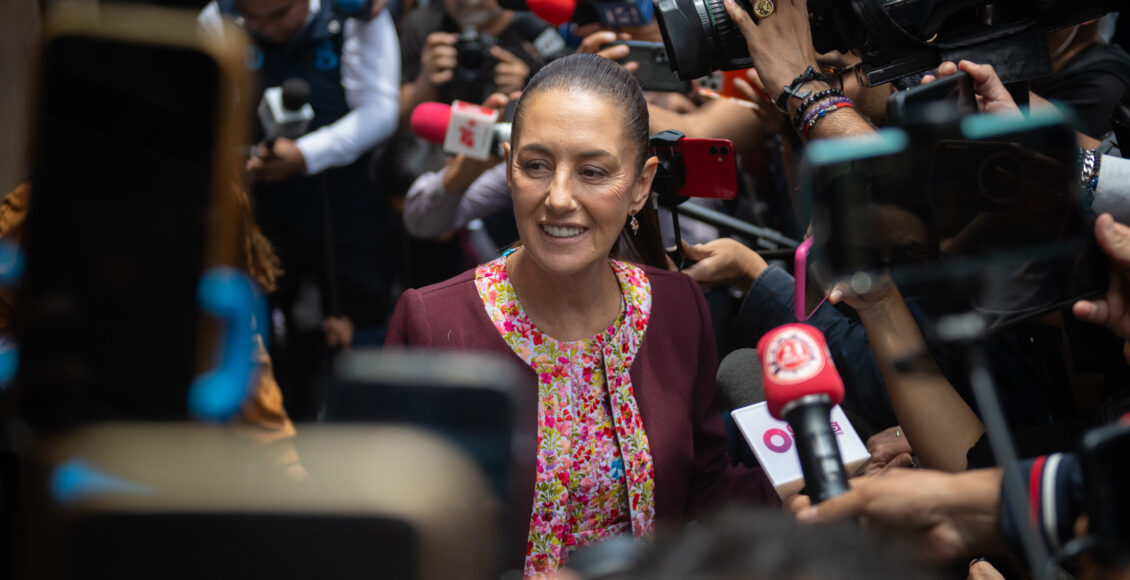
The year 2024 marked the 30th anniversary of the armed uprising undertaken by the EZLN, Ejército Zapatista de Liberación Nacional, rebels. Much has changed in the Mexican political landscape since the Indigenous members of the movement first took to the streets of Chiapas in 1994. Given the left-wing nature of Zapatismo ideology, one would expect that the election of Mexico’s first female president in 2024, Claudia Sheinbaum, under a left-leaning party would bring about progress for the movement. This, however, does not seem to be the case. Increased cartel violence, along with constitutional reforms, has introduced a significant set of challenges for the EZLN movement and the Mexican government alike.
Sheinbaum’s campaign, built upon the slogan of “continuity with change,” suggested little deviation from her predecessor. However, to honour its longstanding demands, the Zapatista movement may require a stronger commitment from Sheinbaum to effect change.
The EZLN uprising arose in response to the Institutional Revolutionary Party’s (PRI) reforms to the Mexican economy, including the privatization of Indigenous land and Mexico’s participation in the North American Free Trade Agreement (NAFTA). While NAFTA brought significant macroeconomic benefits to Mexico by reducing trade barriers, the EZLN movement exposed the poverty experienced by those in the rural sector, particularly in agriculture. Zapatismo, the ideology that motivated the EZLN uprising, comprises left-leaning principles such as farmer subsidies and land redistribution.
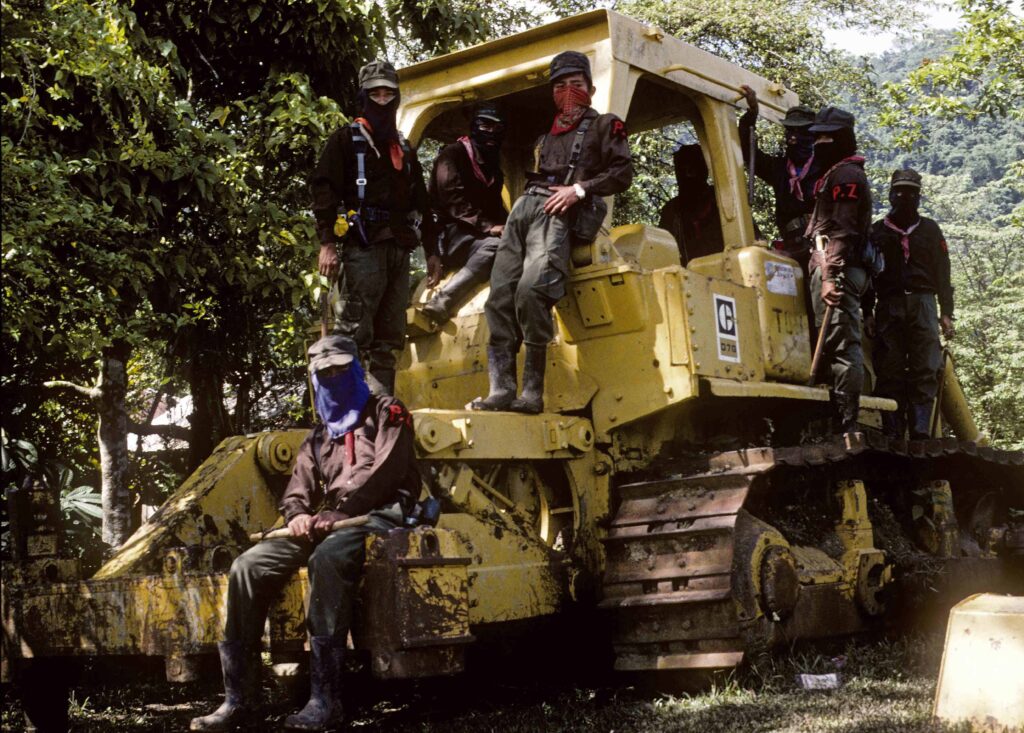
The 1996 San Andrés Accords, signed by the Mexican government, committed the administration to recognizing Indigenous rights. In the years following the signature, negotiations between EZLN movement members and the Mexican government resulted in a stalemate: the federal government carried out little action to put into effect the San Andrés Accords, and rejected a set of constitutional reforms inspired by the San Andrés Accords, known as the COCOPA proposal, causing the EZLN to discontinue negotiations in 1997. The Mexican government, under President Zedillo, established its own counterproposal for legal reform in 1998, which failed to address the critical points of the San Andrés Accords. The stalemate ended under Vicente Fox, Zedillo’s successor, who submitted the original COCOPA proposal to the Federal Congress, resulting in Ley Indigena in 2001. This law severely diluted the critical points of the original COCOPA proposal, failing to honour the demands of the Zapatista movement.
While the San Andrés Accords reintroduced the issue of Indigenous rights to the Mexican political agenda, they did not result in substantial legal reform. Lacking the support of the Mexican government to protect the Indigenous peoples’ right to self-determination, the Zapatistas established autonomous municipalities, Municipios Autónomos y Rebeldes Zapatistas (MAREZ). These consisted of separate jurisdictions with autonomous forms of government administered by municipal councils.
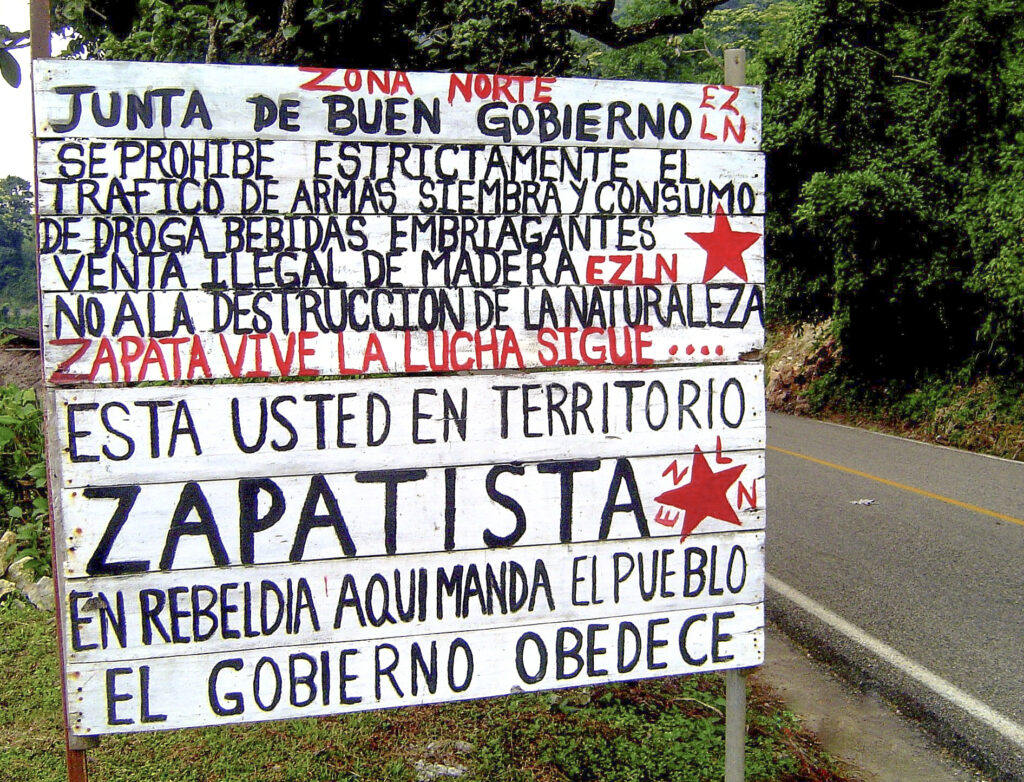
One year prior to EZLN’s 30th anniversary in 2024, the autonomous communities were dissolved as a result of increasing levels of cartel violence throughout Chiapas. Chiapas’s border with Guatemala is advantageous to two cartels: the Sinaloa and Jalisco New Generation Cartels, whose territorial disputes have turned the state into a battleground. Instances of targeted violence toward the Zapatista communities include an armed attack by civilians against the Zapatista community named “October 6th.” Indigenous community members and civil society organizations have publicly condemned the violence taking place, gathering in front of the National Palace on October 24, 2024, to protest against the increased crime and to demand action from President Claudia Sheinbaum’s administration.
Indeed, Sheinbaum acknowledges the necessity of a revised security approach. Sheinbaum addressed this concern through concrete action, introducing a federal security strategy, alongside Omar García Harfuch, the Secretary of Citizen Security, that departed from her predecessor’s approach. It comprises four central objectives: implementing poverty-reduction strategies to address the root causes of violence; strengthening the capacity of the National Guard under Sedena; increasing intelligence and investigative capacities; and enhancing coordination between federal and state authorities. While Sheinbaum’s security strategy presents a slight deviation from her predecessor’s by increasing the emphasis on intelligence, the revisions it offers remain minor and remain within the prevailing structure of former President Andrés Manuel López Obrador (AMLO).
Cartel violence is not the only challenge currently faced by the movement, with new constitutional reforms presenting a complex layer of obstacles. In the months preceding her election, Sheinbaum dubbed the respect and recognition of Indigenous and Afro-Mexican peoples as “fundamental.” The reforms, initially proposed by AMLO, expand Indigenous and Afro-Mexican rights under the constitution and have been fully endorsed by Sheinbaum as she enters her presidential term. Some of the most critical provisions include the recognition of Indigenous peoples and communities as “subjects of public law”, the recognition of their systems of government, the recognition of “the right to access the jurisdiction of the State”, and the right to free, prior, and informed consent.
However, without robust mechanisms to facilitate constitutional reform, the proposed provisions risk failing at the implementation stage. The first of these provisions, which recognizes Indigenous peoples and communities as “subjects of public law,” seeks to grant them greater autonomy and authority over their own resources. To achieve meaningful impact, such a provision requires adequate administrative capacity, infrastructure, and access to appropriate training, all of which must first be made available to Indigenous communities. Further issues regarding the consultation processes include the risk of superficiality; in other words, will consultation prove to acquire true consent, or merely become a means to an end?
The purpose of consultation as a mechanism for obtaining consent is outlined in the reforms, with no indication of a veto right for Indigenous communities, provided that the communities’ rights are respected. In other words, as long as a consultation is carried out, and the substantive rights of Indigenous communities are respected, Indigenous members do not possess the right to oppose a project. Indeed, without the opportunity to refuse, the principle of consent is invalid and, thus, severely violated. Notably, the reforms do not specify the exact circumstances in which free, prior, and informed consent is required. Even when the necessity of free, prior, and informed consent is specified, it holds minimal significance without the option of refusal.
Continuity appears to predominate in the shortcomings of the constitutional reforms for indigenous autonomy. On the other hand, Sheinbaum’s deviations from AMLO’s security strategies present a potential beacon of hope amid rising cartel violence. The success of Sheinbaum’s security strategies in reducing crime and violence will determine whether genuine change can be achieved. When it comes to Indigenous rights, it remains to be seen whether Sheinbaum’s administration will once again repeat history by failing to incorporate true provisions for Indigenous self-determination.
Edited by Georgia Massis
Featured image: “Claudia Sheinbaum frente a las cámaras” by EneasMx is licensed under CC BY 4.0.
