
Russia’s War in the Classroom
Lauded as a challenging, rigorous, internationally-focused high school diploma, the International Baccalaureate (IB) program has become one of the Russian state’s recent “undesirables,” coming under attack for what the Kremlin has claimed are “russophobic” educational materials, “anti-Russian propaganda,” and attempts to “mould Russian youth according to Western models.” However, the banning of the IB program is only one of the Kremlin’s latest efforts in its wartime overhaul of its educational system.
Since the outset of the war with Ukraine in February 2022, high school education in Russia has found itself at the center of a battle over the control of truth and national identity. The banning of the IB, a politically unaffiliated educational organization whose framework is present in more than 160 countries, is only one facet of this battle. Mandatory military education, weekly lectures promoting national values, and the diffusion of state-written textbooks have equally emerged as key aspects of the state’s attack on education. As the war in Ukraine enters its fourth year and the Russian military suffers massive casualties for small-scale territorial gains, the need for new soldiers and public support has never taken on such an immediacy. With the Kremlin seeking to exercise control of the political narrative and mobilize its citizens in favour of its war efforts, educational reforms have become an indispensable tool in militarizing youth, legitimizing the war, and consolidating nationalistic and patriotic values in the rising generation.
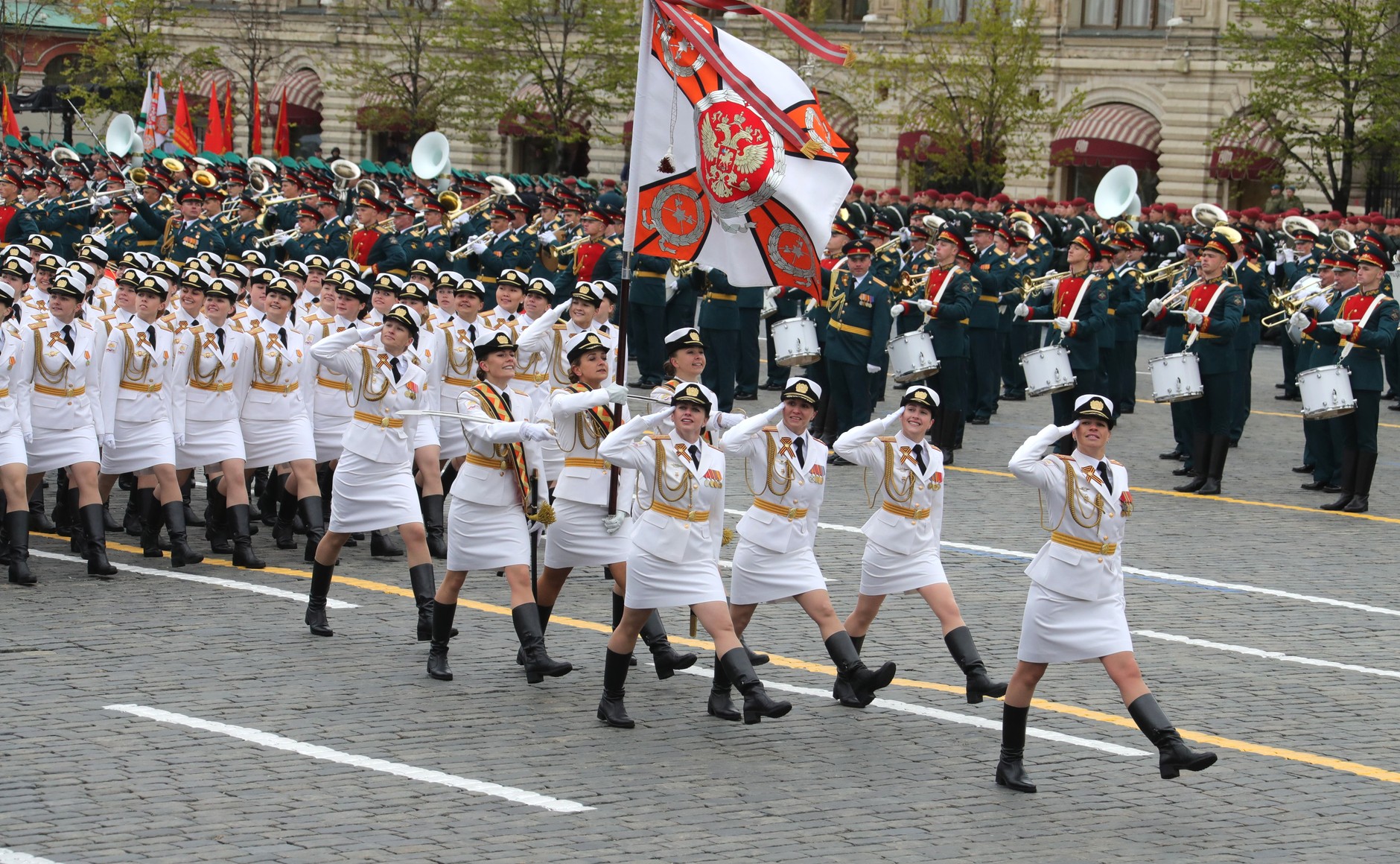
The Kremlin has made no attempt to disguise its efforts to train Russian high schoolers for future military service. Beginning in September 2023, students in grades 10 and 11 were introduced to a new curriculum that includes military training and battlefield first aid. In 2024, a course on general life safety was renamed “Foundations of Safety and Defence of the Motherland”, in which children learn how to use unmanned aerial vehicles, among other technical military skills. In 2023, “hero desks” were installed across Russian schools, sponsored by the pro-Putin United Russia party. These desks display the faces and stories of Russian soldiers who have died in the war against Ukraine, bringing the reality of the war into the heart of classrooms. This overt intrusion of military education and symbolism into high schoolers’ daily lives is a clear attempt to prepare a new generation for service in the Russian Army, normalizing military duty and violence in the malleable minds of Russian youths.
The changes in education have also taken place in more subtle ways, aiming to adjust the worldviews and national identities of young Russians in favour of Kremlin-promoted values. In 2022, a weekly lecture series, titled “Conversations about Important Matters,” began with the goal of promoting patriotic values, national unity, and shaping the narrative around current political events. In 2024, new history textbooks were released, which had been co-authored by a presidential aide. These textbooks are perhaps the most revealing of the Kremlin’s efforts to control the ideological narrative and consolidate national cohesion around the war in Ukraine.
What is perhaps more worrying is the message that such educational policies send about the future of the war. While curricula are being updated and youth are being trained for the frontlines, Russia seems far from agreeing to peace. To the contrary, it seems to be preparing the next generation for the battlefield. Despite recent peace talks in Abu Dhabi, no breakthroughs have been made. Putin’s maximalist demands continue to act as a roadblock to resolving the conflict. On top of the thousands of lives already lost, it seems that more will continue to be lost at the expense of stagnating diplomacy. Even as the death toll rises, the Russian army still manages to bring in about 30,000 volunteers each month. While there are a range of factors that may contribute to such numbers, the infusion of militarism into education cannot be ignored as a push factor. As military futures are increasingly pushed on Russian teenagers, this propaganda serves to create a new crop of recruits willing to unquestioningly serve their country’s military aims.
For Russia, the idea of a cohesive national identity has been elusive since the breakup of the Soviet Union in the 1990s. However, one event has emerged as a key source of national unity and has been co-opted by the Kremlin in its quest to justify the war on Ukraine to students. In newly written textbooks, World War II, or The Great Patriotic War as it is known in Russia, has become a tool for national mobilization and identity construction. The collective memory of Russian suffering in the Great Patriotic War has been revived to legitimize the war in Ukraine and build a patriotic narrative which makes Russia the victim of Ukrainian aggression. This revisionist narrative is being force-fed to students in the newly updated high school textbooks. Excerpts reveal that the textbook calls Ukraine a “neo-Nazi state” and writes that Russian soldiers in Ukraine are fighting “like their grandfathers” for “goodness and truth.” It goes further to claim that the war in Ukraine is a “noble mission inherited from WWII to liberate historically Russian lands from fascist invaders.” When woven into educational materials, the cult of victory that Putin has constructed around the Great Patriotic War serves not only as a source of national unity and consensus, but a source of the legitimization and consecration of the war in Ukraine and the regime’s aggressive, expansionist foreign policy.
Taken in the context of these extensive educational policy reforms, the Kremlin’s ban on the International Baccalaureate program seems to be one of the final steps in a sinister plan to raise a new generation on a doctrine of militarism, unquestioning patriotism, and devotion to Kremlin-sanctioned ideological and historical narratives. In a statement released by the International Baccalaureate shortly after the decision, the organization expressed their regret over the Russian authorities’ decision, and emphasized its commitment to promoting “academic rigour, critical thinking, ethical reasoning, and student agency.” These foundational values are in stark contrast to the inward-looking, revisionist, and propagandist educational reforms that Russia has enacted. Such opportunities for intellectual freedom are not an option for Russian high schoolers and can only be seen as an intrinsic threat to the Kremlin’s indoctrination efforts.
Russian youth have become the answer to the country’s increasingly sluggish war effort and its rising human toll. High schools have become less centers of intellectual expression and discovery than pipelines to the military, and Russia’s history has been co-opted by the Kremlin in its effort to consolidate nationalistic and patriotic values in a new, impressionable generation. The potential success of these educational reforms may have untold consequences for the continuation of the war in Ukraine and the implementation of further aggressive, expansionist Russian foreign policy efforts.
Edited by Stellar Zhang
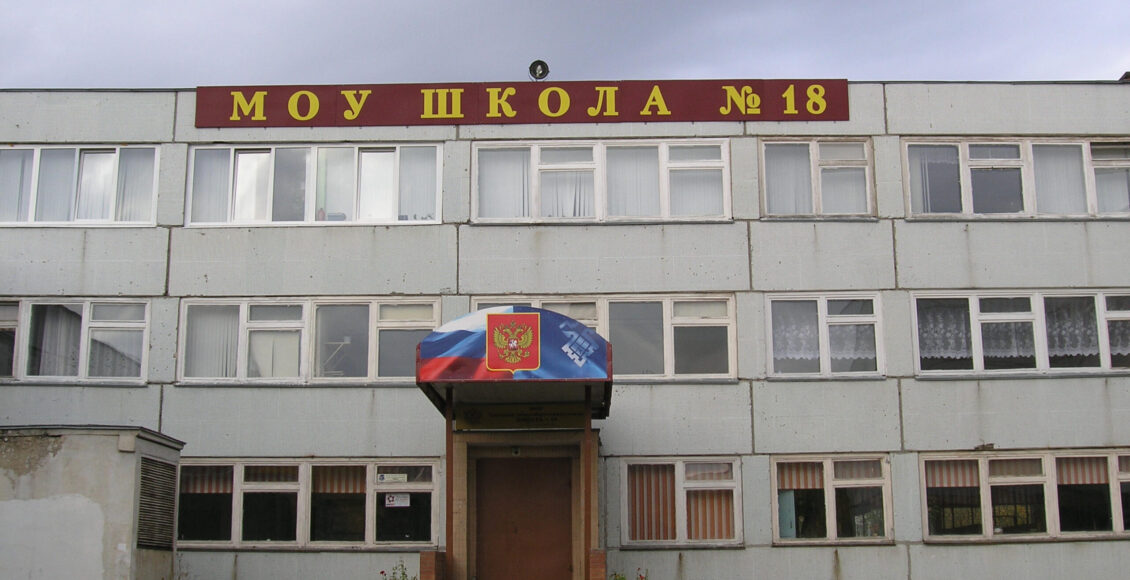
Featured Image: A public school in Togliatti, Russia. Schools across Russia have become central targets of the Kremlin’s pro-war propaganda efforts. “School 18, Togliatti, Russia” by ShinePhantom is licensed under CC BY-SA 3.0.


