
The Forging of a New World Order
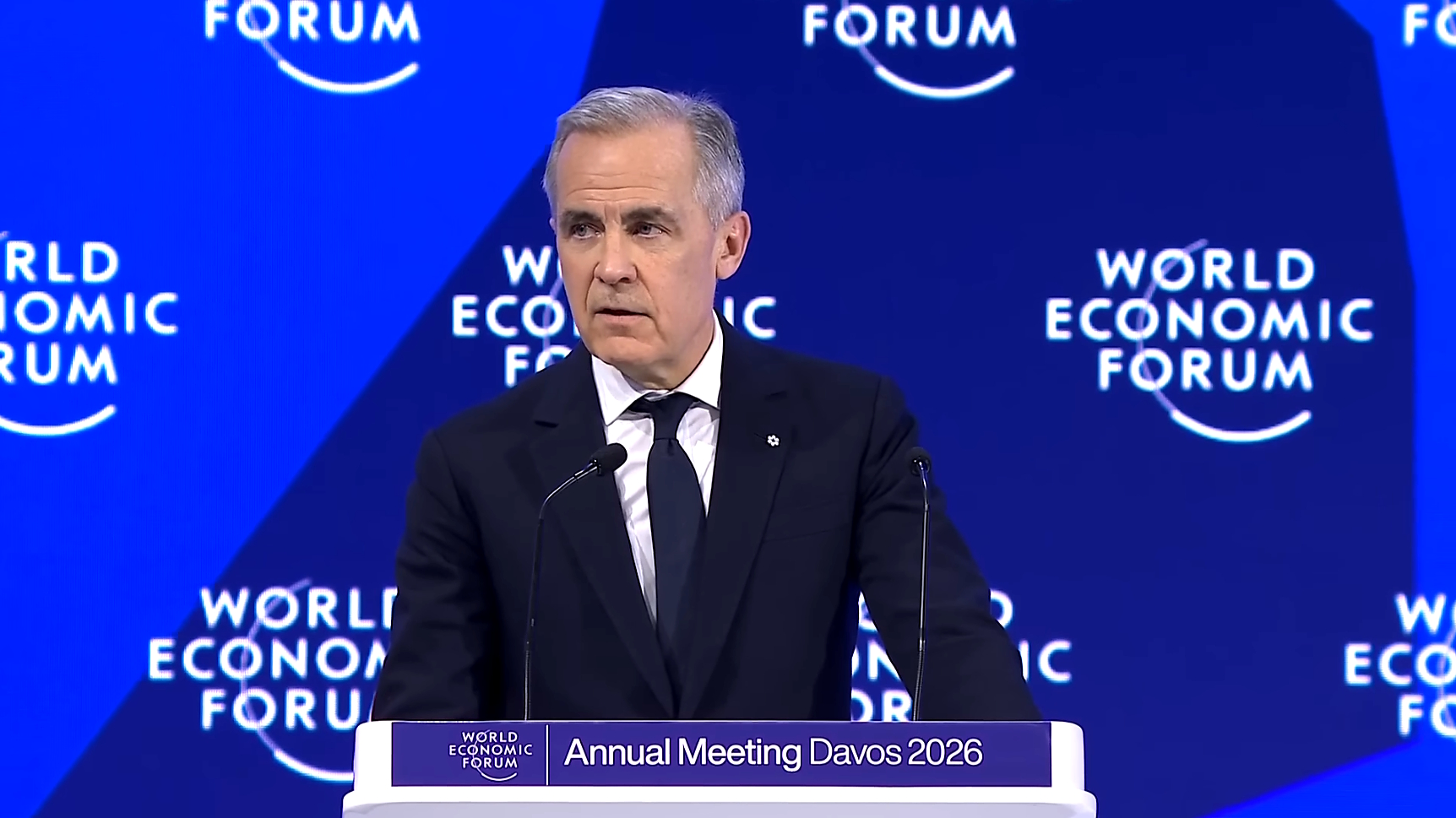
Earlier this year, at the World Economic Forum in Davos, Canadian Prime Minister Mark Carney announced that “Canada is forging a new strategic partnership with China” and declared that the global order was at a point of “rupture… not a transition.” This willingness by Canada and other middle powers to diversify partnerships and reduce dependence on a single hegemon casts serious doubt on the strength of US leadership, reflecting disillusionment with the sense of stability in the international order that has persisted since the end of the Cold War. Carney did not imply that China is on course to replace the United States as a global hegemon. Rather, the Prime Minister clarified that if one can imagine the world existing without its longstanding leader, then inevitably the construction of a new world order is underway.
Political analysts’ recent fascination with trying to predict the future world order isn’t surprising. They know perfectly well that no vacuum can ever persist and strive to identify the contours of a new order in the ashes of the old one. In a hegemonic arrangement, where one power maintains relative peace by providing public goods and acting as a lender of last resort, a state’s position is considered stable: as part of the already constructed order, states can focus on ensuring growth and forging partnerships as long as they adhere to the conditions of their relationship with the hegemon. In the post-WW2 order, the United States, proclaiming development and democracy, was often seen as a reliable world leader. Trump’s declaratory openness to annexing Greenland, part of Denmark and a US ally, has changed the rules of the game. His “America First” strategy reflects a diminished willingness to provide public goods and signals a retreat from multilateral leadership, casting doubt on its commitment to ensuring cooperation.
One immediate consequence of hegemonic distancing is the increased demand for state autonomy. In need of some sense of security, states feel encouraged to develop regional self-reliance. In practice, this has proven more difficult than many initially assumed. Since the shift in the world order was a gradual process that most likely began with China’s entry into the WTO in 2001, many did not expect a sudden catalyst to tear the system apart. Yet the declining American willingness to act as a guarantor of Western alliances, combined with a shift towards more selective, power-based partnerships, has intensified the long-brewing disillusionment with the West’s sense of unity.
This change is most evident within international institutions, which form the foundation of post-WW2 relationships. From a realist perspective, these institutions persist only so long as they serve the interests of their creators. NATO’s continued centrality, therefore, illustrates not only institutional strength but the entrenched American dominance within Western institutions. Recent NATO pledges to increase defence spending to 5 per cent of GDP by 2035 and pursue greater strategic autonomy similarly reflect rational self-help behaviour under anarchy, as allies hedge against declining confidence in American security guarantees. Yet these efforts also reveal the limits of fragmentation: as NATO Secretary-General Mark Rutte cautioned in January 2026, “if anyone thinks that the European Union or Europe as a whole can defend itself without the US, keep on dreaming,” highlighting the extent to which American military power remains indispensable.
The obvious solution in the age of disruption would be to create a new source of power. Autonomy may not be the way to go, at least at the beginning of forging a new order, and yet it gives states another form of power: greater liberty. Autonomia, from Latin, refers to the “freedom to use self-made laws,” a quality that may not make a country like Iraq the next hegemon, but one that ensures it can play its own game in the international system. Another increasingly likely option is for Europe and the Global South to turn towards China for its critical raw minerals and manufacturing leverage. American withdrawal from its role as the world’s hegemon has indeed provoked a new question: Is China a viable new leader? With the former maintaining structural advantages of domination, including control over the financial system, leadership in international institutions, and accounting for roughly 40 per cent of the global military spending, China’s prospects will depend not only on its material capacities, but most importantly on “whether it can overcome other countries’ scepticism about its reliability as an insurer” as Adam S. Posen notes in a Foreign Affairs piece.
Inevitably, however, a geopolitical game needs to be played by multiple actors. The credibility of the global order is grounded in shared rules that can only exist alongside cooperation. Autonomy, therefore, should not aim to make states entirely independent of each other, as this risks isolation, but rather to create an economically and politically interdependent network based on trust. Thus, the Canada-China partnership mentioned by Carney, as well as the recent EU-India deal, underline the importance of diversifying partnerships and opening up to new allies. The fact that the EU-Mercosur Partnership Agreement has finally been signed after 25 years of negotiations demonstrates that third-party countries are now more aware than ever of the need to cooperate. Autonomy, then, becomes a matter of collective balancing of power rather than nation-building. Indeed, Max Weber described the “state” as a political institution with a monopoly on the legitimate use of force. However, the common understanding of what is legitimate depends on shared values and norms, and those can change over time. With the US viewing its recent violations of international law as legitimate, the new order needs to be grounded in stronger shared rules that cannot be so easily breached. Similarly, liberals emphasize that common beliefs and benefits are what bind states together. Although the intensified rivalry on the world stage has pointed towards a more fragmented order, these recent signs of cooperation reveal that solidarity among states is considered crucial to countering the power of China and the United States together.

For Europe, the current threat posed by the Trump administration can be viewed as an unprecedented assault on the continent’s identity, coming from its own ally. By denying that Europeans helped American troops in Afghanistan and asserting newfound authority over Greenland, Trump is destroying the foundations of European-American relations and the trust that was used to secure their alliance. Yet little evidence points to Trump as the only factor in the change in the world order. Some argue that a real order has not in fact existed for quite some time, with few guidelines effectively overseeing geopolitical dynamics. Today, rising rivalry and insecurity call for stronger regulation, yet this must be anchored in a conception of world order capable of addressing shared problems and sustaining legitimacy over time.
Predicting the future world order, whose construction has already begun, is no easy task. On the one hand, wars in Ukraine, Gaza, and Iran, along with the intensification of geopolitical tensions in Asia and South America, point to the possibility of more direct conflict. On the other hand, economic interdependence and institutional constraints cannot be abolished overnight, thereby providing some protection against open rivalry. At the crossroads of a hegemon’s withdrawal, an attempt to compensate for its absence by collective provision of public goods and China’s contender vision, the emerging world order will ultimately be defined by how successfully rivalry can be contained within cooperation.
Edited by Jacob Van Bergh
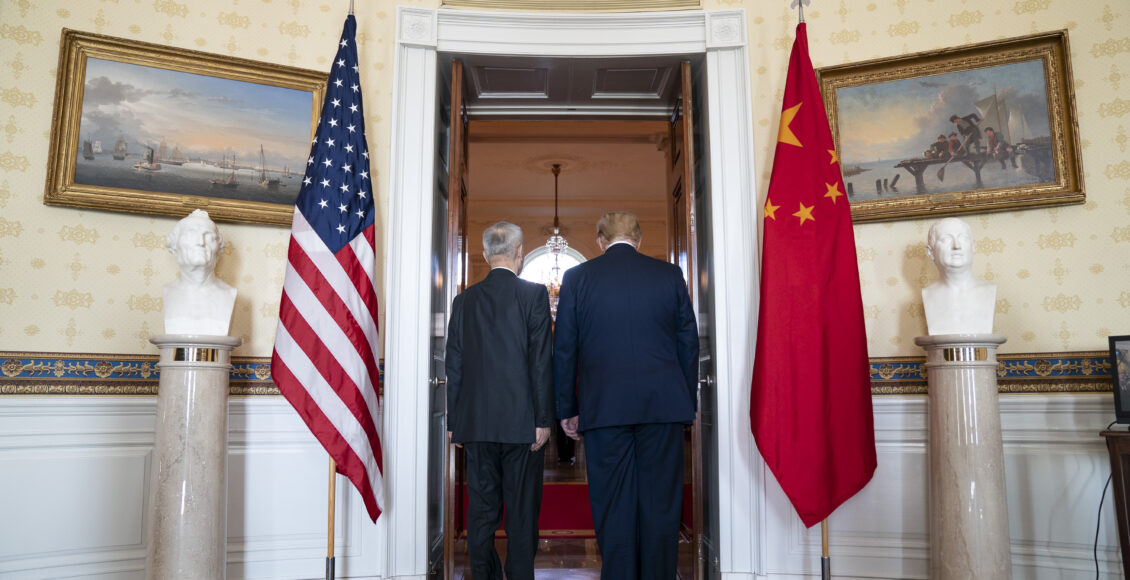
Featured Image: President Donald Trump, during his first term and joined by then-Chinese Vice Premier Liu He, prepares to attend the signing ceremony for the US–China Phase One Trade Agreement in January 2020. Photo is licensed in the public domain as a work of the US federal government.


.jpg)