
Seen But Not Stopped: How the Global Ghost Fleet Keeps Sailing
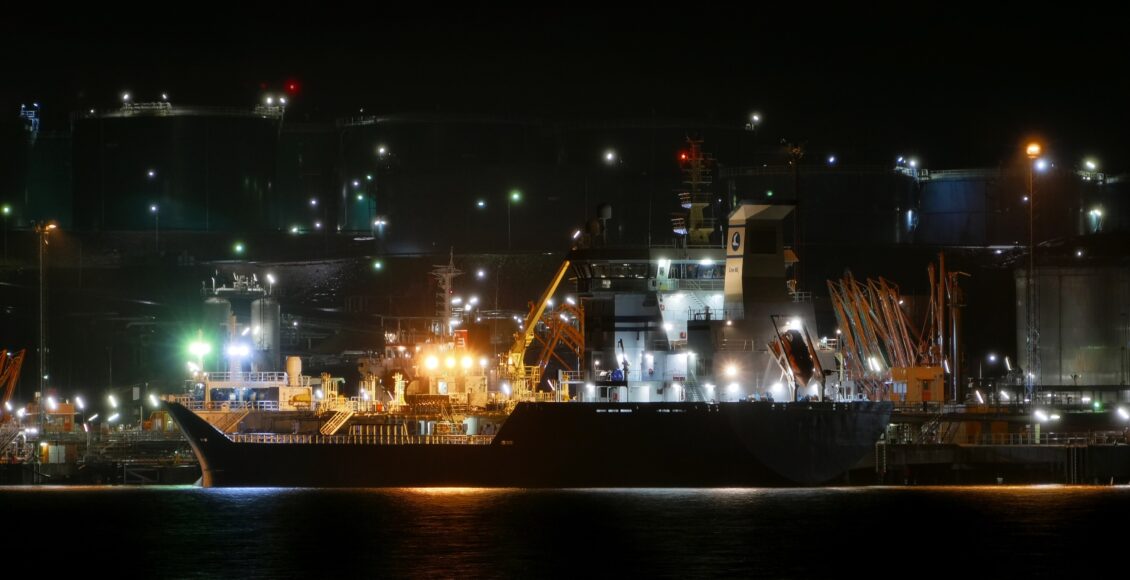
A vast intelligence network monitors the activities of ghost fleets—the global armada of tankers smuggling sanctioned oil from Russia, China, Iran, and other non-Western economies. The average ghost tanker is an aging ship that conceals its identity by frequently changing its name, flying a flag of convenience, or even displaying a bedsheet draped over its nameplate. Many tankers “spoof” their locations by emitting false Automatic Identification System (AIS) data to the global network of ship radio broadcasts. In response, a surveillance ecosystem comprising private firms, journalists, and sanctions enforcement bodies has emerged, detecting spoofing through satellite imagery analysis, social media monitoring, and artificial intelligence.
On marinetraffic.com, thousands of triangles fill a map of the world’s ports and oceans, each representing the active location and destination of a ship. Suspicious tankers are plentiful amongst them. Zooming in on a ghost tanker hotspot–the Riau archipelago, a red triangle appears, marking the crude oil tanker MONIQUE, a 20-year-old vessel previously named TOKIO, PHUKE, PHUKET, and ELYSIA. Its old age and frequent name-changing indicate it may be a ghost tanker. As of March 12, 2026, Monique’s course is at 271°, while its true heading (the direction the bow is pointed) is 8°. The large discrepancy between the two values is a common sign of spoofing.
Monique’s indicated departure from Yantai, China shows the ship began its transit in August, 2025. The ship’s reported estimated date of arrival was January 18, 2026, an already conspicuous estimate given that a trip from Yantai to Singapore does not usually take more than two weeks. So, why was the tanker signalling it was still on the way to Singapore on March 10? Monique’s history in the last few months provides clues to answer this question. The ship left Yantai on August 29, 2025, and was sanctioned by the US Office of Foreign Assets Control (OFAC) on December 11, 2025, the day after the US launched a military raid to capture Skipper, a crude oil tanker that was carrying about 1.8 million barrels of Venezuelan crude. Monique was sanctioned along with five other tankers, which constituted “the mainstay” of Venezuela’s crude oil export fleet, as part of a campaign that would culminate in the capture of Nicolas Maduro. As of March 12, 2026, thousands of miles from Venezuelan waters, the vessel was nestled in the Riau Archipelago, though given the discrepancies in her AIS data, that location cannot be taken at face value.
Monique is one of hundreds of sanctioned or suspicious tankers emitting misleading signals that appear on AIS websites. Their locations have been identified at times through corroborating satellite imagery with crew members’ Instagram stories and TikToks of their travels. This illustrates the mundanity of the ghost tankers’ activity—they are observable and can be investigated from a distance, but continue to be a working portion of the global oil ecosystem, making up roughly 15 to 20 per cent of the global oil fleet.
The gap between observation and sanction enforcement was sharply closed in the United States’ crackdown on tankers leaving Venezuela. After seizing Skipper in December 2025, the US instituted a blockade of sanctioned tankers moving in and out of Venezuelan waters. By the end of January 2026, the US had seized at least seven tankers off the coast of Venezuela, crippling Venezuelan oil exports, which dropped 36 per cent by December 2025.
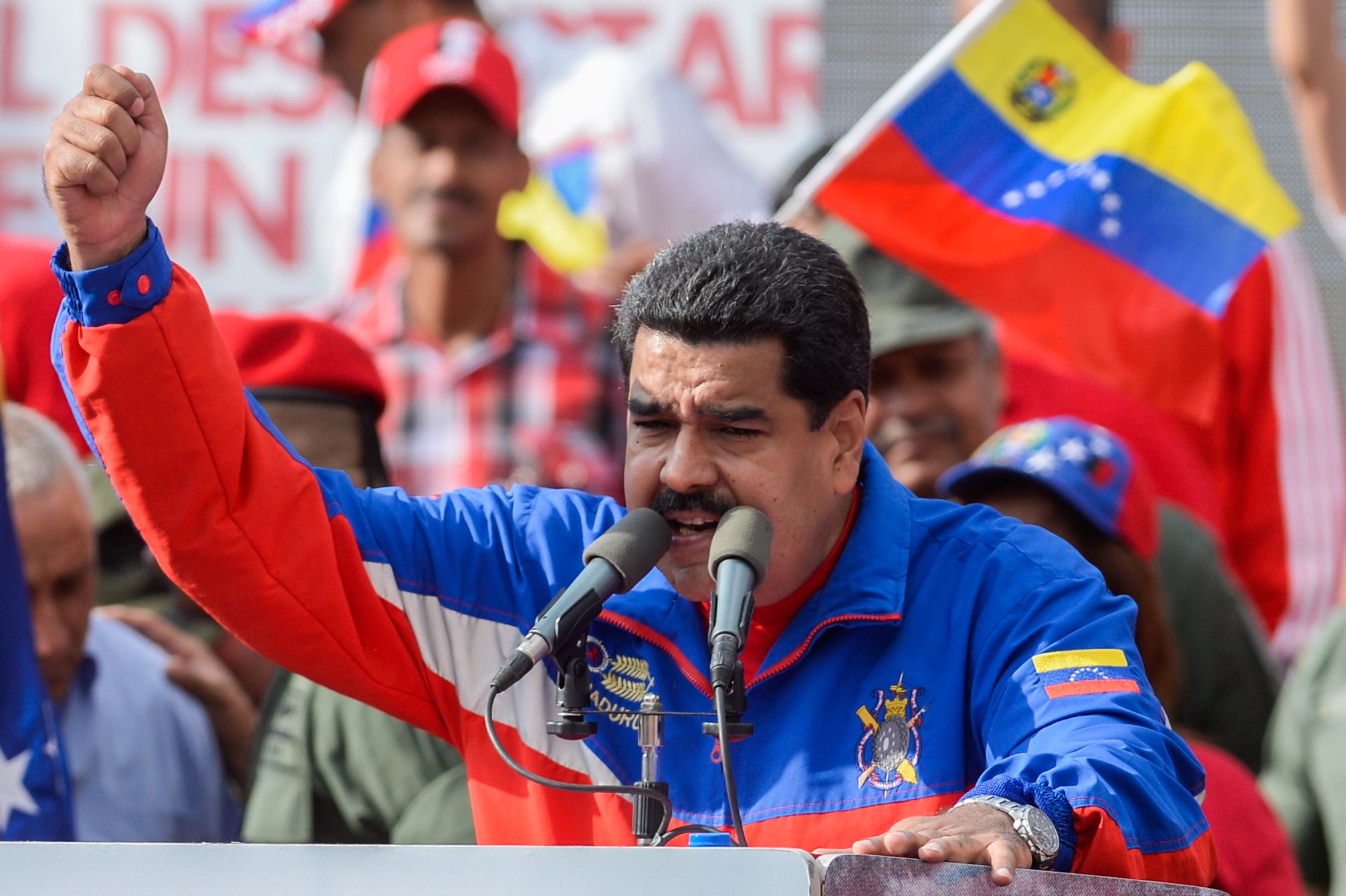
The enforcement of these sanctions through military action appears to have functioned as a part of the pressure campaign that preceded the capture of Nicolas Maduro, which the United States carried out on Jan 3, 2026. The tanker seizures were thus strategic steps escalating pressure leading up to and during regime change. As a result, at least 16 tankers fled the Venezuelan coast in a coordinated attempt to evade US capture. Four resorted to false names and spoofed positions, while the remaining twelve completely switched off their transponders.
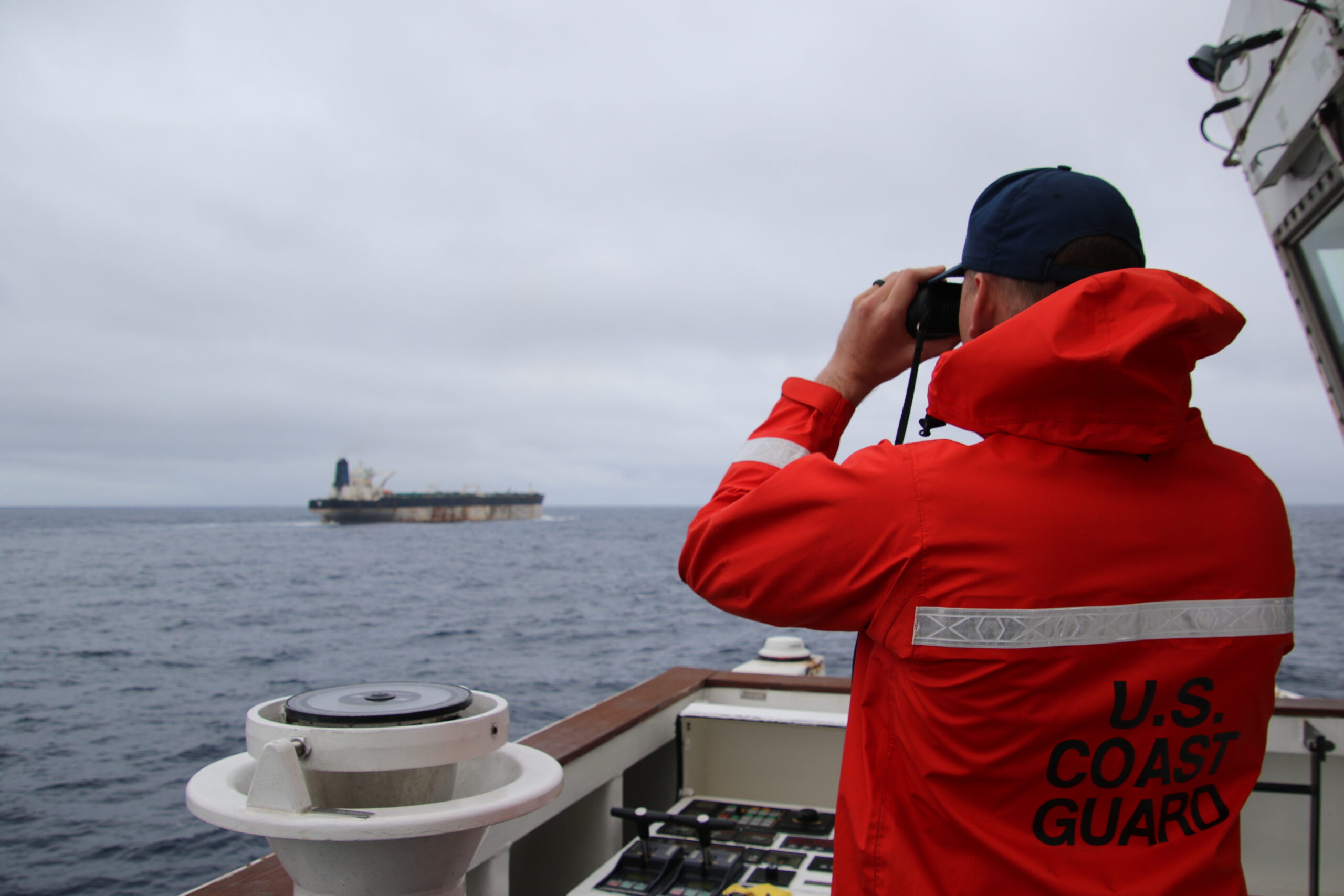
The elusiveness of ghost fleets sustains Iran and Russia’s reliance on the illicit oil market, as American sanctions remain a distant form of response, rarely implemented due to the challenges of tracking and capturing hundreds of ghost tankers. Advanced maritime data detection, provided by companies such as Windward AI, Planet Labs, and Kpler, has created a privatized surveillance market serving insurance companies, traders, and other maritime stakeholders. Kpler reports an expanding grey zone of vessels that are not strictly sanctioned nor clearly compliant, exhibiting more subtle behaviours that can be illuminated through maritime surveillance technology. This suggests a symbiotic relationship between the increasingly populated grey zone and the intelligence companies that profit from observing and managing data within it. The coupling of satellite imagery and AIS analysis is an already implemented method for monitoring oil smuggling and is further refined by geospatial intelligence companies that employ AI to manage real-time data on ghost vessel activity.
The increased visibility of this grey zone is an end product in itself, only sometimes overlapping with government objectives through partnerships to directly enforce sanctions. In Venezuela, bridging observation and enforcement was part of the regime change process. Around the world, however, the ghost fleet remains afloat, with greater visibility altering its evasion tactics—but not ending its role in the international oil market.
Edited by Ellen Lurie
Featured image: Photo by W. Carter is licensed under CC BY-SA 4.0.


