
Bukele’s Brand Is Contagious. The Results Are Not.
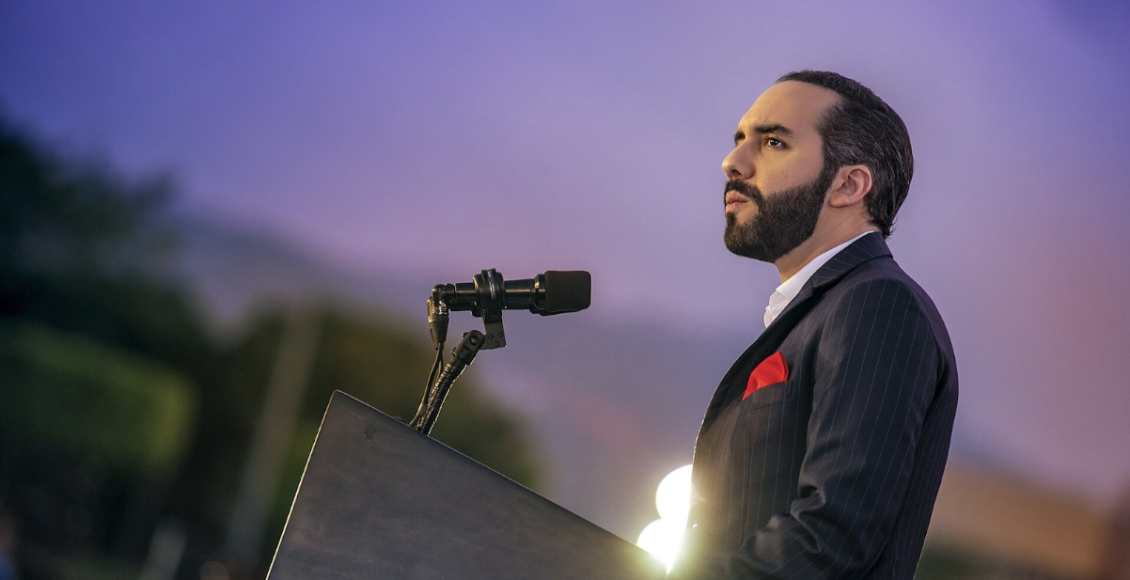
A new political ideal is sweeping Latin America—and it has one face. In December 2025, Chile elected José Antonio Kast, a hardline conservative who had personally toured El Salvador’s CECOT mega-prison and campaigned on importing its logic. He won with the wind at his back: a late 2024 poll had found that 42 percent of Chileans wanted their next president to govern in an El Salvadoran, Bukele-like, style. By then, Costa Rica’s Congress had already approved funding for its own CECOT-inspired facility, and the country’s newly elected president, Laura Fernández, had pledged to see it through. In Colombia, presidential hopeful Abelardo de la Espriella cites Bukele as a role model. In Brazil, figures like Flávio Bolsonaro are riding a similar wave ahead of the 2026 elections. In Peru, graffiti demands a “Peruvian Bukele”—and Lima mayor Rafael López Aliaga has called Bukele’s crime crackdown a “miracle.” Across the region, the demand is the same: a Bukele of one’s own.
Nayib Bukele is, at this moment, the most popular and celebrated political figure in Latin America. But understanding why requires understanding what “Bukelismo”, or the “Buekele model”, actually is—and what it is not. Bukele came to power in El Salvador in 2019, not as a traditional right-wing strongman but as something stranger: a 37-year-old former marketing executive expelled for “disloyalty” from the Farabundo Martí National Liberation Front (FMLN)—the dominant left-wing party—who built his own movement from scratch. His party, Nuevas Ideas, was less a platform than a personality cult organized around a single proposition: that El Salvador’s two dominant parties had both failed, and that he alone could fix it. What followed was a systematic demolition of institutional constraints. When the Constitutional Chamber ruled his re-election unconstitutional, his congressional supermajority simply replaced the five justices overnight. Term limits were abolished in 2025, and journalists who have reported critically have been surveilled and jailed.
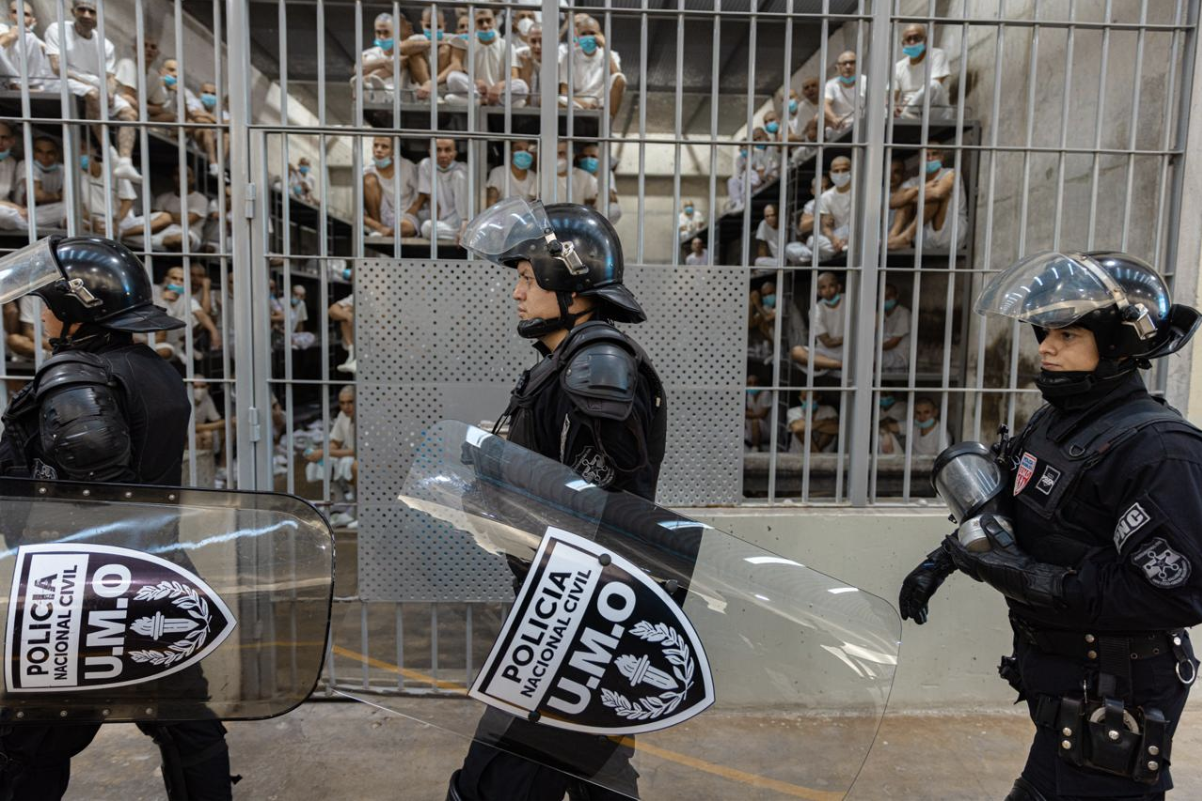
At the center of “Bukelismo” is the security transformation that made all of this not only politically viable but revered. In 2015, El Salvador, a country consumed by maras (gangs), had a homicide rate of 103 per 100,000 people—among the highest in the world. By 2024, it had fallen to 1.9, below that of the United States. This is the number that travels, and that made Bukele achieve approval rates close to 90 per cent in El Salvador. When Bukele is asked about the human rights cost, his response has become a regional mantra: the rights of the “honest”—in Spanish, “la población honrada”—come first, not the rights of criminals. Although who qualifies as “honest” remains unclear, this argument lands viscerally in societies where organized crime is a daily fact of life, and it is precisely this appeal that renders the human rights cost not a scandal, but a selling point.
The instrument that made this possible was the régimen de excepción, declared in March 2022 and renewed 42 times in a row since then. Over 85,000 people have been detained. El Salvador now holds the highest incarceration rate on the planet—roughly 1.7 per cent of its total population behind bars. CECOT, the Terrorism Confinement Center, unveiled in 2023, holds up to 40,000 inmates in cells offering 0.6 square meters each. Security as the organizing principle of legitimacy, emergency as routine governance, mass incarceration, human rights and institutional constraints reframed as obstacles to public safety—this is “Bukelismo”.
And yet the story of how the miracle actually happened is considerably more complicated. El Faro—the investigative outlet that has done most to expose Bukele’s darker dealings—has revealed that the violence drop began not with the iron fist but secret deals: from 2019 onward, the Bukele government secretly negotiated with powerful maras MS-13 and Barrio 18, trading prison privileges and protection from extradition for reduced homicides and political support in midterm elections. The pact unravelled in March 2022 when the gangs killed 86 people in 72 hours—triggering the régimen de excepción. The crackdown succeeded in part because the prior negotiation had already weakened and fragmented the gang structures.
This inversion—secret negotiation before iron fist—points to a deeper structural truth about Bukelismo that its regional admirers tend to overlook. Political scientists Vergara and Meléndez-Sánchez identify it with precision: conventional wisdom holds that the crackdown allowed Bukele to dismantle El Salvador’s institutions, but the opposite is true. A crackdown of this scope was only possible because Bukele had already captured every independent oversight institution before the régimen was ever declared. By March 2021, Bukele had used his legislative supermajority to fire the attorney general and pack the constitutional court. By November, he had purged the lower courts, gutted local governments, and placed loyalists atop every remaining oversight institution, including the human rights defender. The army and police were firmly his. Not a single gang member had yet been arrested under the state of exception.
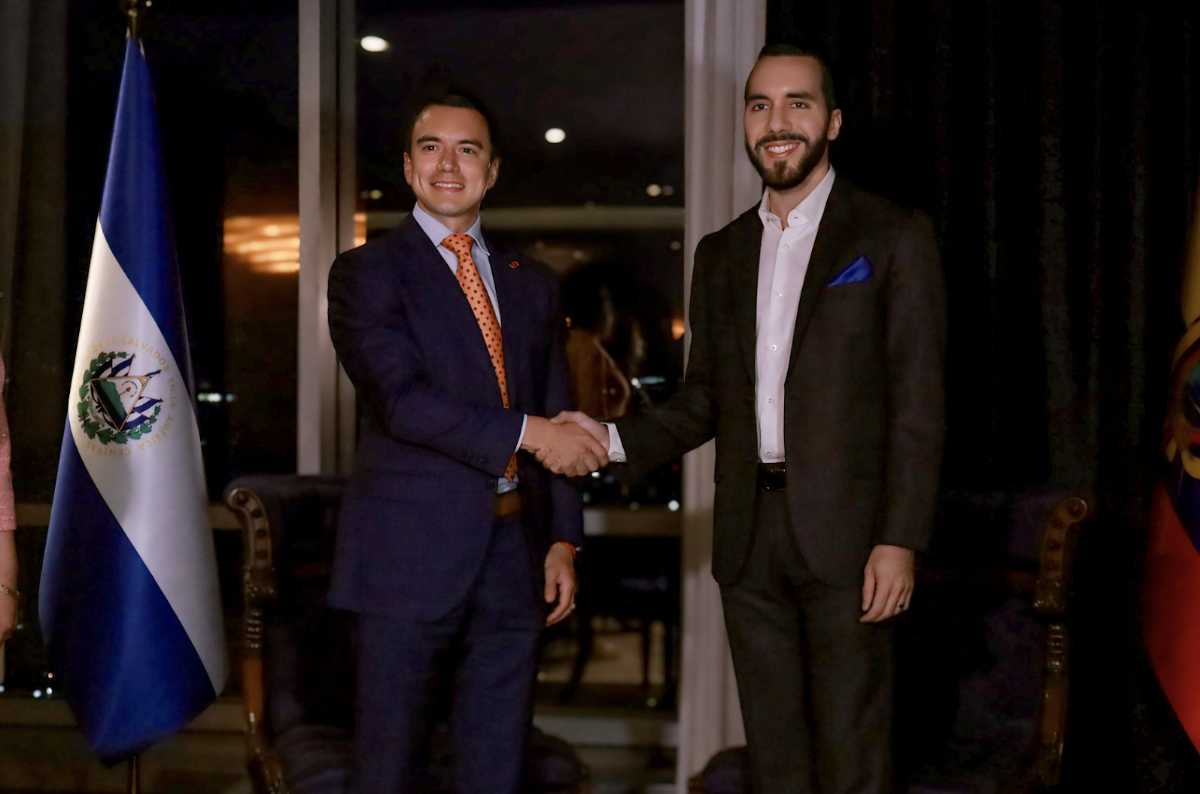
This is the trap inside Bukelismo. Latin Americans have elevated Bukele to an almost mythic status, and are desperately seeking their own equivalent. Yet, replication has proven irreproducible. El Salvador’s maras were hierarchical, territorial, and extortion-based—organizations with a chain of command that could be negotiated with and dismantled from the top down. The criminal landscapes that Bukele’s imitators face are entirely different. Ecuador, for instance, is dominated by narcotraffickers embedded in transnational supply chains. Colombia’s ecosystem involves ex-paramilitary factions, guerrilla offshoots, and multinational cartels operating simultaneously. When Ecuador’s president Daniel Noboa launched his own crackdown—declaring a state of emergency in 2024, announcing CECOT-style prisons—criminal groups adapted, and extortions and kidnappings soared. In Honduras, where President Xiomara Castro instituted a Bukele-inspired state of emergency, this produced roughly 1,960 additional arrests in its first year, but extortions rose 11 per cent.
Any government still operating under functioning democratic constraints cannot replicate the scale and maintain socioeconomic stability. Politicians can borrow the aesthetic, invoke the name, build the prison—but to actually become Bukele, they would have to dismantle the institutions that would stop them. El Salvador’s small size and the particular structure of its gangs made this version of mass incarceration feasible in ways that simply do not transfer. To attempt it elsewhere is to either fall short or to increasingly build an authoritarian state that struggles to provide for its citizens beyond security. Despite the successful crackdown, Bukele himself faces a stagnating economy—GDP growth projected at 2.5 per cent in 2025, below Honduras and Guatemala—and nearly 30 per cent of the population is still in poverty.
And yet none of this has slowed Bukelismo’s expansion because a policy that so drastically reduced homicides is, for many, irresistible. What is actually spreading is not a replicable toolkit but a brand, a political grammar: institutional constraints framed as obstacles to safety; emergency powers as common sense; rights-based objections dismissed with a catchphrase. Even Donald Trump’s embrace of Bukele has amplified the brand’s prestige across a region that watches Washington closely. The demand is real: Latin Americans are exhausted by crime and disillusioned with institutions that have failed them for decades. The electoral rewards for voicing Bukelismo are immediate, and even where the policy fails, the posture succeeds.
The more unsettling question is what comes next. Strongmen who cannot sustain the benefits underpinning their popularity turn toward repression. A country no longer terrorized by gangs will eventually demand functioning hospitals and decent jobs, and Bukelismo has no answer for the morning after. So, does this model really represent a comprehensive and sustainable form of governance? Leaders across the region invoking his name are betting they can capture the politics without paying the full institutional price. Some will win elections on that bet. But the model they are importing is a performance of security, not its substance. The brand travels. The results do not.
Edited by Sofia Gobin
Featured Image: Nayib Bukele by Casa Presidencial del Salvador via PizzaKing13 is licensed under CC0 1.0 Universal.

.jpg)
.jpg)