
Opinion | Taiwan Is More Resolved Than Ever. It Is Also More Vulnerable.
There is a particular cognitive dissonance that defines how the world watches China and Taiwan. Every new headline produces two simultaneous reactions: disbelief and resignation. Of course, a Chinese warship cut across a US destroyer. Of course, Beijing launched a two-day military exercise days after Taiwan’s new president was inaugurated. The outrage arrives already exhausted, preempted by the certainty that this was always coming. Both responses are correct; The trouble is that one of them is winning.
In 2025, Chinese military aircraft entered Taiwan’s Air Defence Identification Zone (ADIZ) a record 3,764 times, representing a near-daily intrusion that has become so routine that Taiwan’s Ministry of National Defence announces it the way other governments publish traffic updates. Furthermore, Taiwan has accused Beijing of sabotaging three undersea cables since 2023. Chinese coast guard vessels routinely patrol waters that Taiwan considers its own.
The numbers should shock us. They don’t. That gap—between what is happening and what we feel about it—is not a failure of attention. It is a hallmark of China’s strategy. The transition from scandal to inevitability is the point. Grey zone tactics are not designed to seize territory in a single dramatic moment; rather, they shift the psychological baseline so gradually that sovereignty erodes without conscious acquiescence. This is the outrage-to-shrug pipeline: a deliberate arc from transgression to routine, engineered through repetition and almost perfectly suited to the current moment in geopolitics.
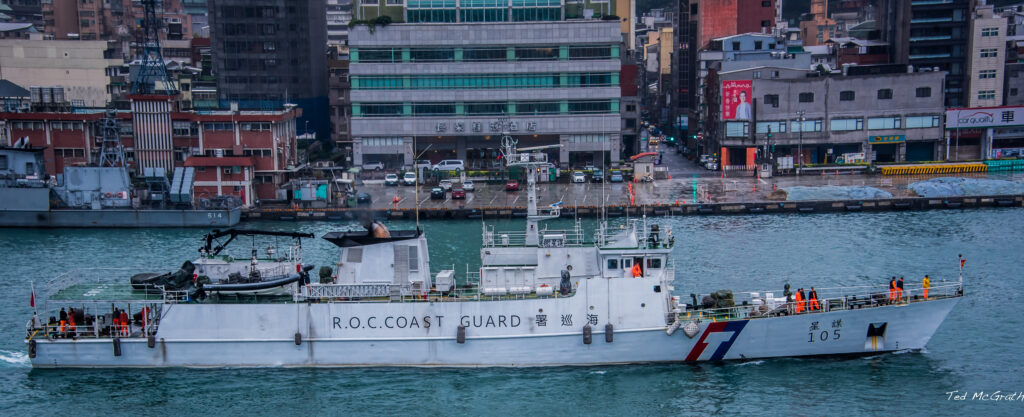
Grey zone tactics occupy the space between peace and armed conflict—coercive, aggressive, and calibrated to stay below the threshold that would trigger a conventional military response. China’s pressure campaign against Taiwan has become the world’s most sustained example of this approach. What began as concentrated air intrusions into the southwest corner of Taiwan’s ADIZ has expanded into circumnavigation routes around the island, systemic crossings of the median line that once served as an informal buffer in the strait, and the deployment of a widening array of assets—including surveillance drones and high altitude balloons. In September 2023, Taiwan tracked 103 People’s Liberation Army (PLA) sorties in a single day. The median line—a decades-old operational norm that had helped keep the peace—no longer exists in any meaningful sense.
The picture is equally systematic. PLA Navy vessels operate closer to Taiwan than at any point in recent memory. Chinese Coast Guard ships, now operating under a law granting them authority to enforce Beijing’s sovereignty claims, have redefined what normal maritime presence looks like in the strait. The cable sabotage incident fits the same pattern: deniable, incremental, designed to erode Taiwan’s infrastructure and investor confidence without crossing into the kind of attack that demands a response. The underlying logic is what analysts describe as normalization through repetition: first, incursion; then, reiteration; finally, control. Each action, taken in isolation, is alarming. Cumulatively, they produce something more dangerous than alarm—they produce mundanity.
In a different world, 3000 ADIZ incursions a year would be a five-alarm crisis. They might sustain front-page coverage for months, generate sustained diplomatic pressure, and force legislative action. But we do not live in that world. We live in what analysts have taken to calling the polycrisis: a condition in which multiple interconnected catastrophes unfold simultaneously, each amplifying the others. Ukraine, Gaza. Iran, Sudan… emotional and institutional bandwidth is finite. When everything is urgent, nothing stays urgent.
This environment dramatically accelerates the outrage-to-shrug pipeline. In a single-crisis world, the shock of 3,000 Chinese ADIZ incursions might sustain alarm for months. In the current environment, it is metabolized in weeks. In an overloaded system, the speed at which the exceptional becomes routine increases. What would have taken a decade of normalization in the 1990s can now be accomplished in a few years—not because tactics changed, but because the environment in which they operate has.
The mechanism is worth understanding clearly. Beijing is not hiding what it is doing; the strategy does not depend on concealment. It relies on repetition until the transgression stops registering as transgressive. The international system has no functional response for this. The frameworks built to manage conflict between states are triggered by invasion, by kinetic attack, by the kind of unambiguous violence that activates alliance networks and legal mechanisms. The gap between what grey zone tactics accomplish and what the international system can do about them is structural. When Russia crossed into Ukraine, it activated NATO, reshuffled European security policy, and generated a rare level of Western mobilization. A tank crossing a border is, in the grammar of international relations, a sentence that demands a reply. A drone crossing a median line, one of three thousand in a year, is a comma.
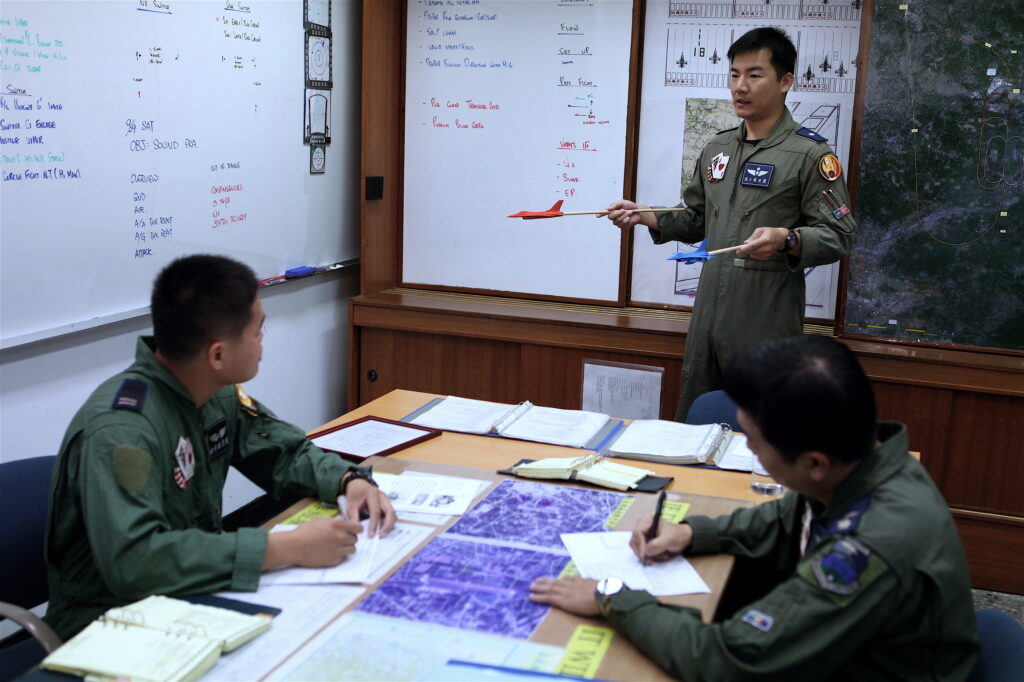
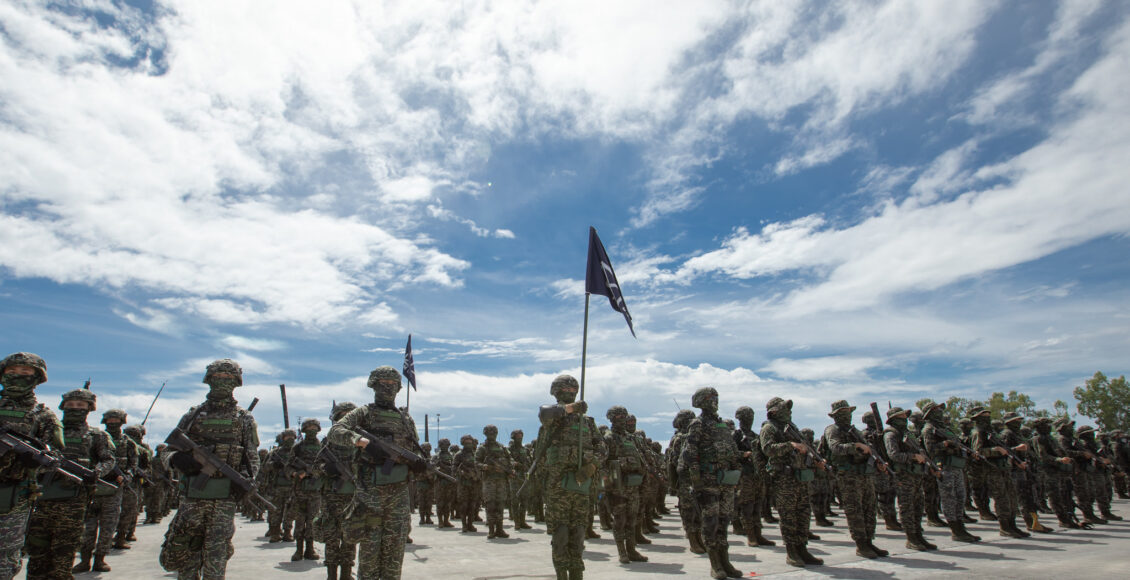
There is a serious counterargument to this picture, and it deserves honest engagement. China’s grey-zone campaign may be backfiring. Taiwan has elected a president whose stance on sovereignty is considerably firmer than that of his predecessor. Public support for independence has trended upward for years. Taiwan’s 2025 National Defence Report reframes deterrence explicitly as national resistance, emphasizing psychological readiness alongside military capability. The Whole-of-Society Defence Resilience Committee, launched in 2024, is integrating civilian agencies, critical infrastructure protection, and urban resilience exercises at a scale never attempted before. Taiwan is not simply absorbing the pressure. It is, in meaningful ways, hardening.
That resistance, however, contains a paradox. When a government publishes a national defence report that formally names cognitive warfare as an existential threat, and builds committees and resilience frameworks specifically designed to counter grey-zone pressure, it is resisting—and, in the same gesture, ratifying. The incursions are now a load-bearing infrastructure in Taiwan’s political architecture. The emergency has been institutionalized. And institutionalized emergencies have a way of becoming permanent features of the landscape rather than temporary crises to be resolved. This matters because resolve and capacity are not the same thing—and capacity is not simply a function of what Taiwan does, but of the terrain on which it has to do it. Taiwan can harden its will to resist while the ground beneath that resistance quietly shifts: the median line gone, the operational baseline redrawn, the threshold for what constitutes provocation incrementally raised by the party doing the provoking. The deficit is structural, manufactured incrementally by a campaign designed specifically to move the goalposts before anyone has agreed to a new game. Formal acknowledgement, it turns out, is not the opposite of normalization. It can be one of its mechanisms. A country can be clear-eyed about what is happening to it and still find, when the moment arrives, that clarity does not offer control.
Sovereignty can be dissolved without ever being formally surrendered—no treaty violated, no threshold crossed, no moment anyone can point to and say: there, that was when it changed. The genius of grey-zone tactics is that detection changes nothing. The world watches, documents, convenes, and publishes, and yet the baseline moves anyway, indifferent to the attention paid to it.
This is what makes the Taiwan Strait the defining strategic theatre of this moment: because the more consequential battle is already underway and largely already won. Not a conquest; a fait accompli that arrived so incrementally it was never quite new enough to refuse. By the time the crisis demands a response that matches its scale, the terms of that response will have been quietly set by years of prior accommodation—not chosen, never announced, simply accumulated.
The question the outrage-to-shrug pipeline ultimately poses is not whether the world cares about Taiwan. It does, in the abstract, in the way that it cares about many things it has learned to live with without changing. The question is whether caring, in the absence of the institutional and psychological capacity to act on that care, constitutes a posture or merely a eulogy written in advance.
Edited by David Amm

