
A Voluntary Union? The Scottish Independence Movement at a Legal Impasse
At the centre of the modern British state lies a foundational, unresolved constitutional question: where does ultimate authority reside? As the push for a second Scottish independence referendum has faced repeated rejection from the United Kingdom government in Westminster, the debate has shifted from whether or not an independent Scotland is the right choice to a debate between a state’s sovereignty and authority and the people’s right to self-determination. Do the people of Scotland have the right and ability to determine their own governance? Additionally, do the laws and actions of the UK government challenge the idea of a voluntary United Kingdom of equal nations?
In September 2014, Scotland held a historic independence referendum. With an extremely high voter turnout of 84.59 per cent, the Scottish people voted to remain in the Union, with 55.3 per cent voting “No” and 44.7 per cent voting “Yes” for Scotland to gain independence.
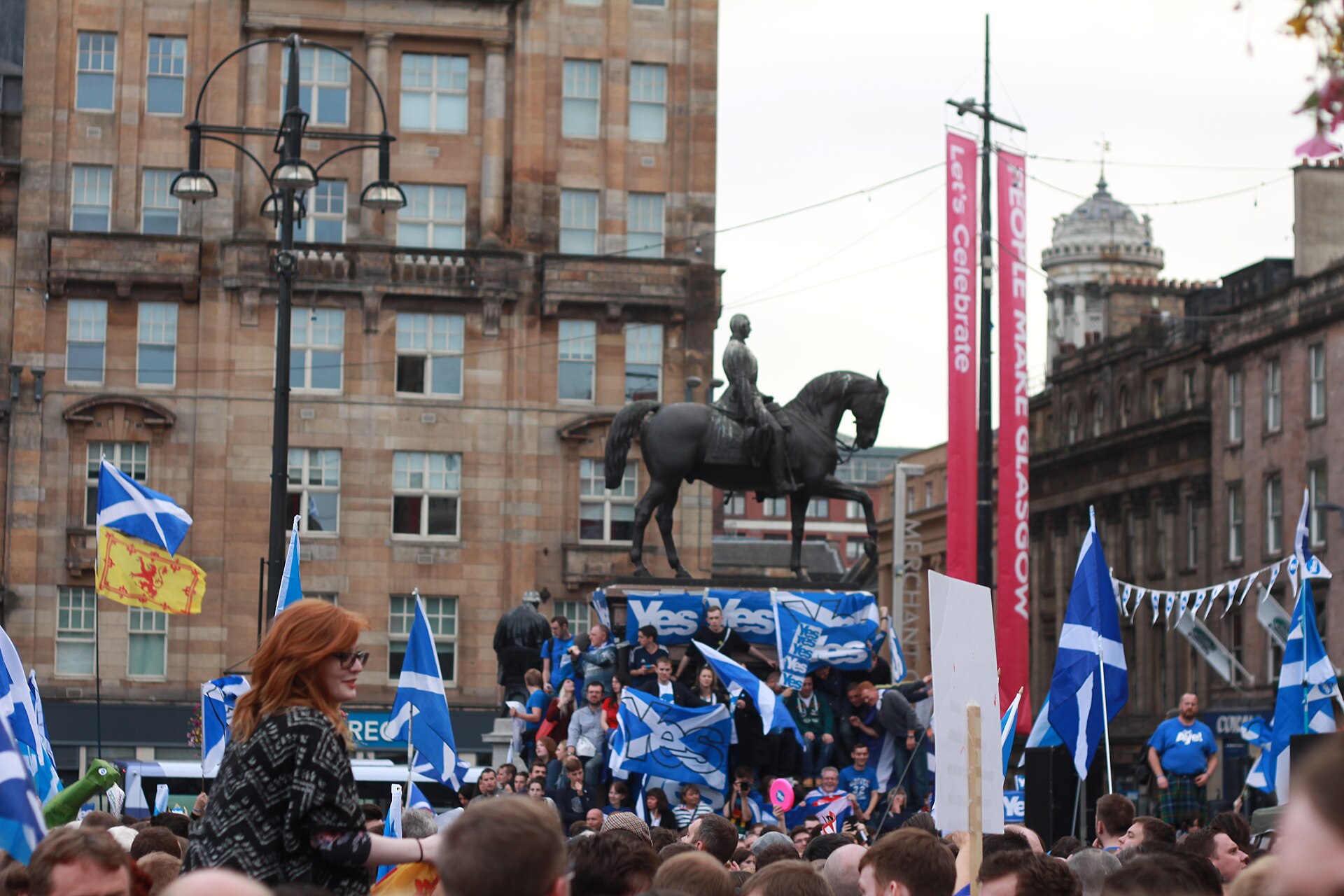
The “Better Together” and “No Thanks” campaigns led the opposition to the independence movement, advocating to stay in the Union. They argued that the only way Scots could protect their EU membership was to remain in the United Kingdom, because an independent Scotland would not be a part of the Union and would have to reapply for membership. On the contrary, the “Yes” campaign stated Scotland could negotiate from within the EU. However, there remains no precedent for how this would work, and the fear of having to leave the EU was a major factor in many Scots’ decision to vote to remain in the UK.
Yet, this argument dissolved just two years later. In the 2016 EU referendum (“Brexit”), the UK as a whole voted 51.9 per cent to 48.1 per cent to leave the European Union. After a transition period, the UK officially left on January 31st of 2020. In Scotland, however, the results were a completely different story, with 62 per cent of constituents voting to remain in the EU while 38 per cent voted to leave. Additionally, every council in Scotland voted by a majority to remain in the EU.
Despite Scotland’s clear preference to remain in the European Union, the entirety of the UK left the EU. Brexit has fundamentally changed the landscape of the Scottish independence movement. What was once a key argument to remain in the United Kingdom is now a reason to leave. Currently, polls indicate that only 30 per cent of UK citizens still support the UK leaving the EU, yet the EU has shown no intention of allowing the UK back in. However, a recent YouGov poll found that “the majority in Denmark, France, Germany, Italy and Spain (63-75 per cent) say they would support an independent Scotland joining the EU.” Therefore, for Scotland, independence is now perhaps the clearest path to realignment with the EU.
With these major changes in the national perspective on independence since the last referendum, there comes the question of a second independence vote. In an attempt to take the next step, Scottish First Minister John Swinney marketed the 2026 Scottish Parliamentary election as a referendum in a way. He promised that if the Scottish National Party (SNP) gained a majority, he would immediately request permission from Westminster to hold a referendum vote. Swinney’s SNP won 58 seats of the 129-seat parliament, just seven seats short of an absolute majority; the next two closest parties both hold 17 seats. Additionally, the pro-independence Scottish Green Party also holds 15 seats.
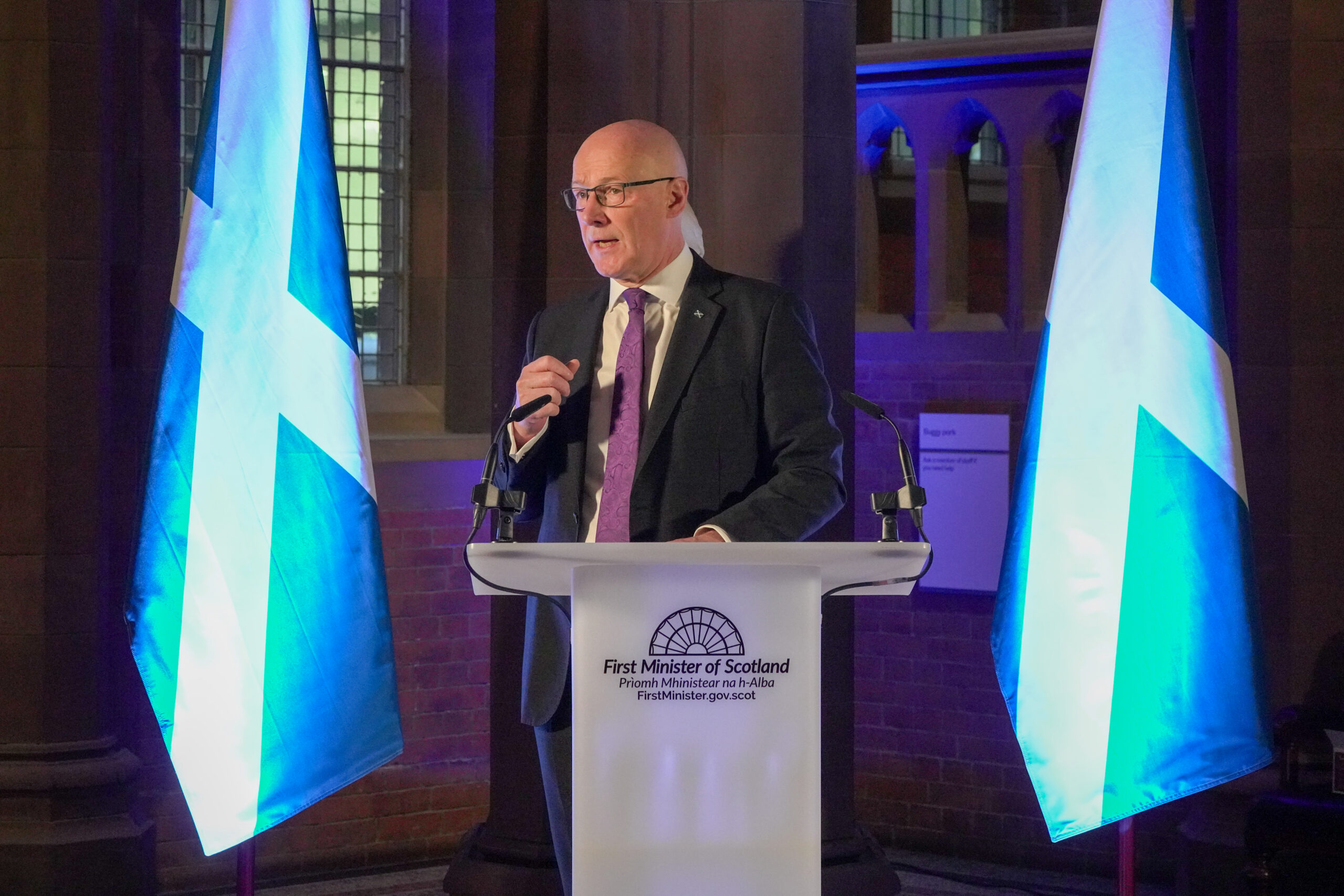
With this victory, the SNP-led government called on Westminster for a Section 30 order to legally hold a second independence referendum. Prime Minister Sir Keir Starmer and the United Kingdom government, however, immediately rejected the request.
So what’s next for the movement? With Starmer’s resignation and with Andy Burnham taking his place as Labour leader and Prime Minister, there could be a policy change. Yet, this is extremely unlikely, as Burnham has already stated he would also oppose another referendum for Scottish independence.
In response, Dave Dogan– the SNP Westminster leader– stated, “Andy Burnham must not repeat the mistakes of his predecessors,” and that “he would be displaying the worst of Westminster arrogance by denying democracy in Scotland.”
Does the UK government have the right to deny a Scottish independence referendum, and is this denying democracy? In the Scotland Act of 1998, which created the Scottish Parliament (Holyrood), Section 29 para. 1 states that Acts of the Scottish Parliament are “not law so far as any provision of the Act is outside the legislative competence of the Parliament.” Section 29 para. 2(b) states that “a provision is outside that competence” if “it relates to reserved matters” which are defined by Schedule 5, in this case Schedule 5 Pt 1 para. 1(b): “the Union of the Kingdoms of Scotland and England.” Therefore, because the power to alter the Union rests entirely in Westminster, Holyrood cannot legally host a binding referendum on its own, no matter whether they vote to or not. Instead, they require a temporary delegation of power under Section 30, a power they were granted for the first referendum via the 2014 Edinburgh Agreement. Without consent from the UK Prime Minister and the UK government, the Scottish Government faces a democratic dilemma and what is essentially a legal brick wall, creating a perpetual loop where a Scottish referendum mandate is met by an absolute Westminster veto time after time.
At its core, democracy can best be defined as a system of government built on the idea that political authority is vested in its people. However, an impasse that reaches beyond party politics arises when applying this framework to domestic secession, and concerns the definition of democracy in a modern Western state. International law recognizes the right to self-determination, but in constitutional practice, democratic nations rarely offer explicit pathways for domestic secession, as there is also an argument that it conflicts with their sovereignty. This is because, in international law, the idea of a people’s right to self-determination has been constructed within the boundaries “of respect for the territorial integrity of existing states,” and there is no explicit right to secession as a means of achieving self-determination. Yet, the 2014 Edinburgh Agreement demonstrated that a major Western power could work to resolve territorial sovereignty questions peacefully at the ballot box, while upholding the idea of a voluntary union.
Today, however, the “voluntary union” is under immense strain. The question is separate from whether Scotland should be independent; it is whether Scots have the right, ability, and means for self-determination, and whether the laws and actions of the UK government challenge the idea of a voluntary United Kingdom of equal nations. This most recent push for a Scottish independence referendum demonstrates that while the actions of the United Kingdom government may be considered legal under UK law, the people of Scotland do not have the right, ability, or means to determine their own governance.
Edited by Sophie Wright Sinclair
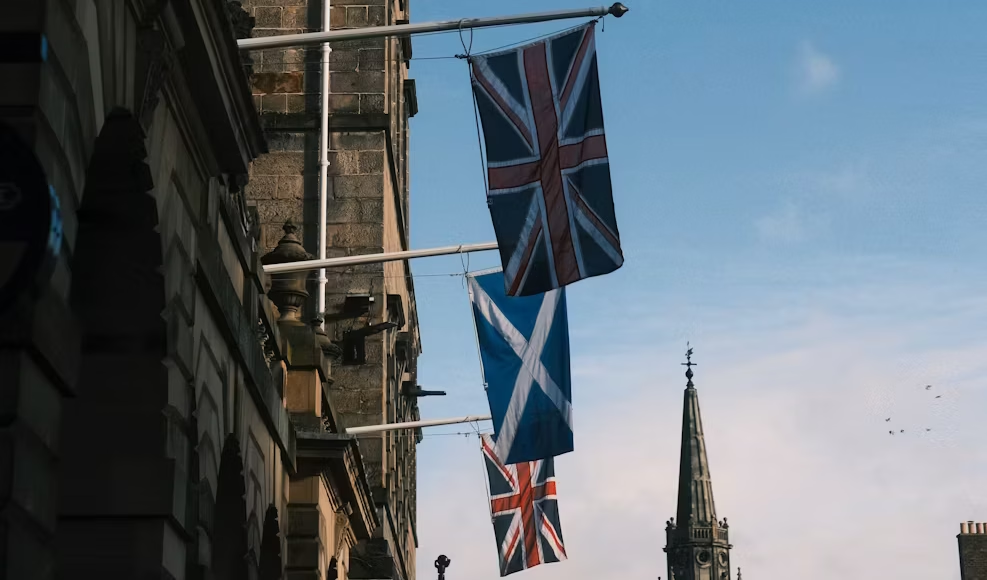
Featured Image: Scottish and Union Flags flying outside the Edinburgh City Chambers. Photo by Tegan Conway is licensed by Unsplash.

.jpg)