
Can Italy’s Mattei Plan Fulfill its Promises to Africa?
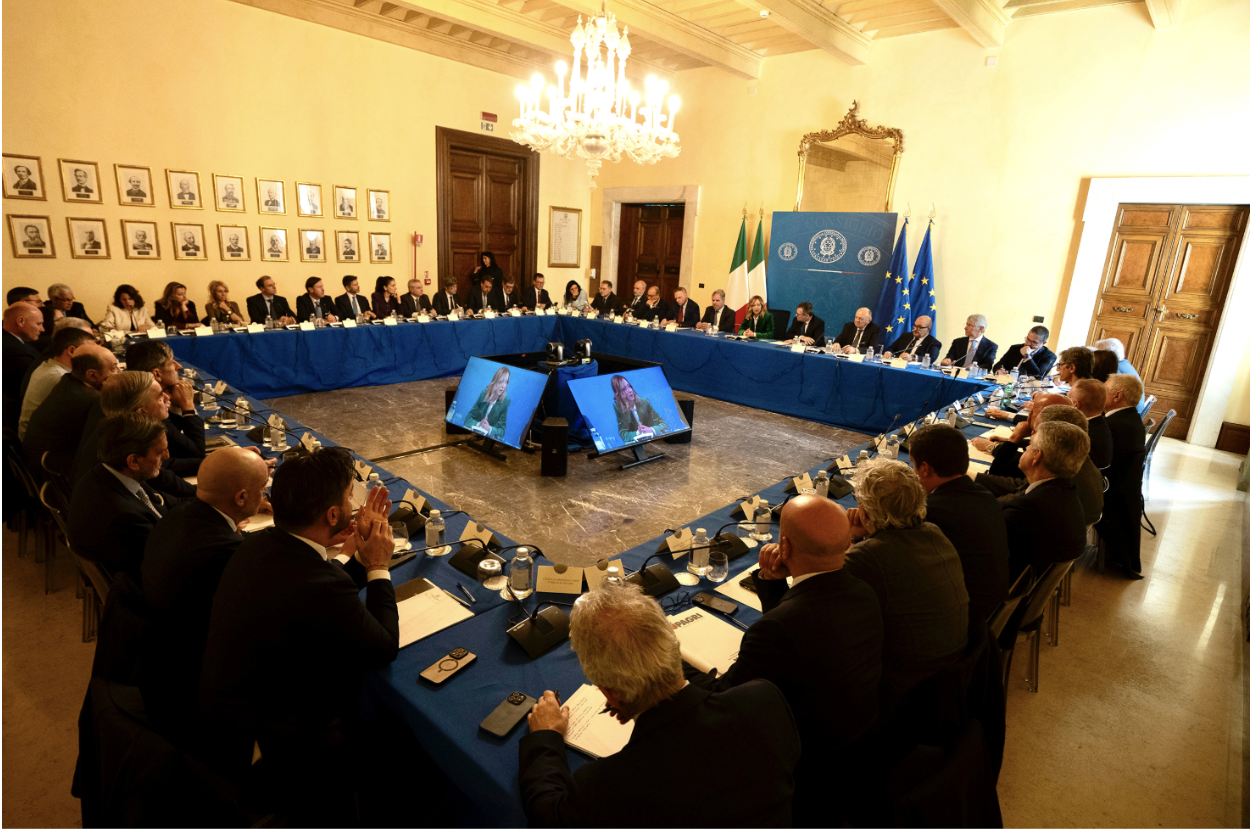
For centuries, control of the Mediterranean has been a central strategic objective for the states that surround it. Since the time of the Roman Mare Nostrum, political power and economic prosperity have been closely linked to control of the sea. Today, the Russian invasion of Ukraine and growing immigration pressures have renewed the importance of Europe’s relationship to Africa as a strategic goal. Italian Prime Minister Giorgia Meloni plans to capitalize on Italy’s position in the Mediterranean through the Mattei Plan. The plan, introduced in 2022 and formalized into a decree in 2024, consists of a framework to ensure “a mutually beneficial partnership” by fostering development through economic and diplomatic cooperation with the African continent.
The project is named after Enrico Mattei, founder and former chairman of the National Hydrocarbons Board (ENI), Italy’s state-controlled energy company. Mattei built his reputation by taking what many viewed as a fairer approach to resource-rich countries. He negotiated more favourable deals than many of his Western competitors, while criticizing the colonial practices of European powers. During the Algerian War, he criticized France’s occupation of Algeria and recognized its right to independence. Similarly, the Mattei plan is presented as a move from aid to partnership. Supporters argue that this model offers a more sustainable alternative to conventional aid and standard resource extractivism. By encouraging investment, improving infrastructure, and expanding economic opportunities, African countries are expected to achieve stronger long-term growth while Italian firms gain access to new markets, creating a lasting mutually beneficial relationship, following the “non-predatory” doctrine of Enrico Mattei.
However, there are concerns about multiple aspects of the project. First, there are questions about whether the funding is sufficient to create any real impact in Africa. Most of the Mattei Plan’s funding comes from the Italian Climate Fund and the national development fund, resulting in a total investment of €5.5 billion. For a region as large and diverse as Africa, €5.5 billion might be enough to finance some targeted, consequential projects, but will not transform the continent as a whole. Further, although the plan aims to adopt a “medium-to-long-term perspective,” according to the International Affairs Institute (IAI), it currently lacks a genuine long-term vision. IAI notes that most of the projects contained in the Mattei Plan seem to focus on immediate results. However, no real long-term goal has been announced, with the exception of building durable ties with African partners. Even this lacks a concrete time-based objective and operational roadmap, thus increasing the plan’s vulnerability to electoral cycles and political changes in its partner states.
While many of the African partners certainly face important development challenges, they also occupy positions of considerable strategic importance for Italy. This therefore raises the question of whether developmental need or geopolitical value ultimately determines where Italian resources are directed.
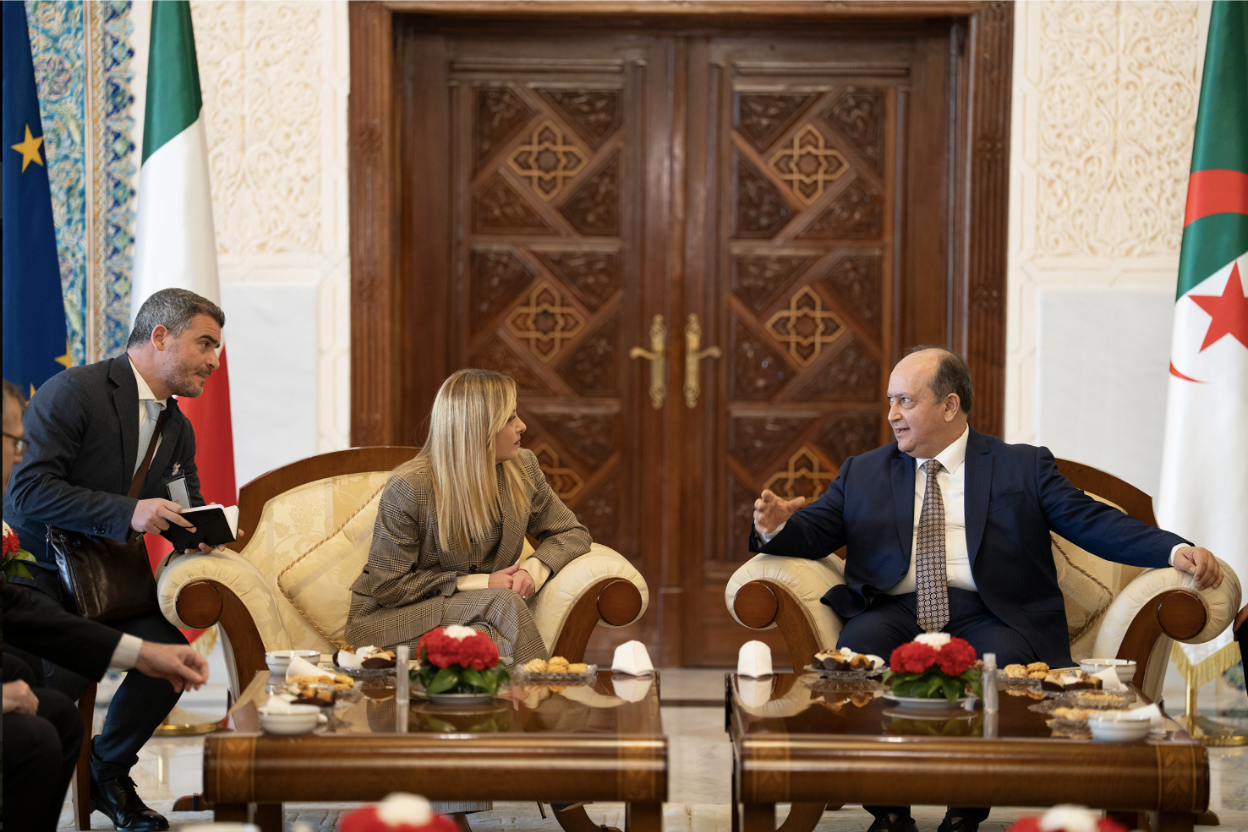
Energy security offers perhaps the clearest explanation for these priorities. Before Russia invaded Ukraine in 2022, much of Europe depended heavily on Russian natural gas. Italy had the highest dependence, with over 40 per cent of its energy derived from Russian natural gas, compared to only three per cent today. The subsequent effort to diversify energy supplies transformed North Africa– and particularly Algeria– into a region of renewed strategic importance. Italy, thanks to its geographic position in the Mediterranean and its existing infrastructure, has sought to become Europe’s principal energy hub, connecting African producers with European consumers. Additionally, Italy has capitalized on other European states’ failing diplomatic relations. For example, while France and Spain’s diplomatic relations with Algeria have deteriorated because they supported Moroccan sovereignty over Western Sahara, Italy has heavily increased bilateral deals with Algeria, becoming a privileged and reliable partner. In turn, Algeria has become Italy’s number one natural gas supplier.
Moreover, many of Italy’s development goals in Africa double as methods to control and halt illegal immigration at its source. In Libya, previous attempts at controlling migration, wherein the EU and Italy funded Libyan coast guards, led to disastrous human rights abuses. The Mattei Plan’s economic development projects are marketed as a way to reduce these flows and the abuses that come with them by targeting the problem at its root. The projects provide funding for education, health, and economic growth, giving Africans– according to Giorgia Meloni– “the freedom to remain.” Yet, a detailed plan of these migration-focused projects has not been delivered, leaving questions about their efficacy and ability to replace the more brutal methods of controlling illegal immigration.
Although the plan might reduce illegal immigration, this framing could be problematic. Growing concerns about immigration across Europe have made the control of migration flows a central policy issue. Recently, the European Parliament voted on the Migration and Asylum Act, allowing for the construction of detention centres outside the EU zone for illegal immigrants guilty of a crime, reminiscent of Meloni’s actions in Albania. Thus, in this context, some experts maintain a degree of skepticism about the Mattei Plan’s focus on immigration control through development, classifying it as an act of propaganda to reassure domestic concerns over the subject.
The Mattei Plan seems to have clear priorities. Yet, the evidence suggests that development within the scope of the plan is often strategically selective. Projects concentrate where they reinforce Italy’s energy security, strengthen its diplomatic position, or contribute to domestic political goals. Development remains an important objective, but it frequently functions as the means through which broader geopolitical goals are pursued. The key interests animating the plan thus seem to undermine its “non-predatory” clause, with energy and immigration dominating and almost functioning as tacit preconditions for pursuing any other objective.
Ultimately, the Mattei Plan not only illustrates a shift from aid to partnership, but a substantive change in the orientation of European interests. The geopolitical climate has led to an increased focus on Africa, but whether this focus will produce genuine, mutually beneficial cooperation, or repeat old extractive paradigms remains to be seen. If its practices consistently outweigh development goals in favour of strategic interests, the Mattei Plan will represent less of a real shift in diplomatic relations than a continuation of old political ambitions.
Edited by Eliot Mudry Danisch
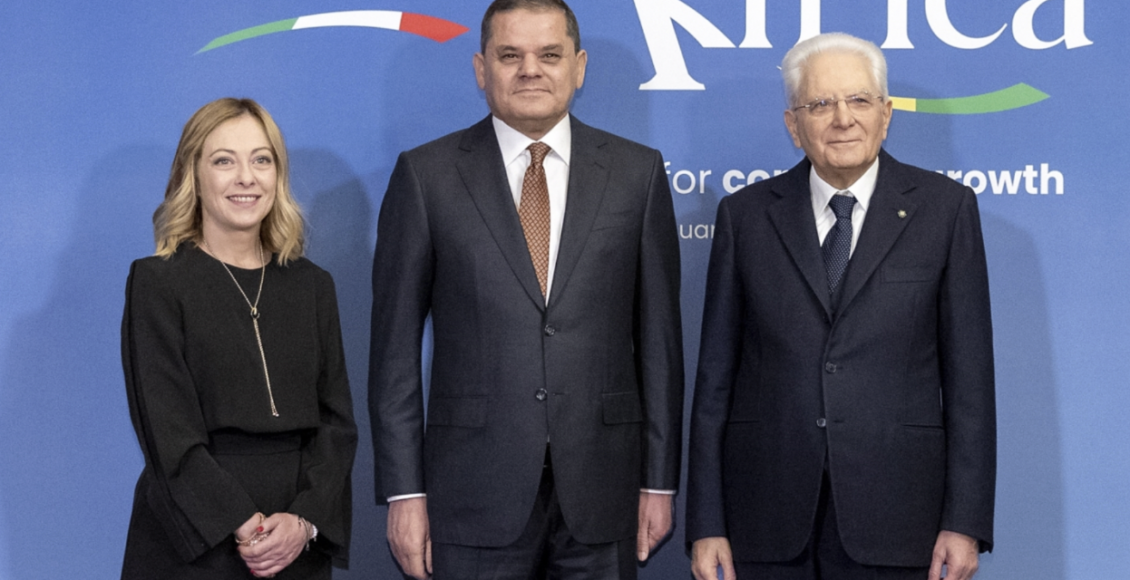
Featured Image: President of the Republic Sergio Mattarella and Prime Minister Giorgia Meloni at the Italy-Africa Summit alongside Libyan Prime Minister Abdul Hamid Dbeibeh. Photo by Quirinale (Paolo Giandotti/Francesco Ammendola) is licensed under CC BY 3.0 IT.
