
Canada’s Dairy Dilemma: Supply Management and the 2026 CUSMA Review
In July 2025, the United States International Trade Commission (ITC) launched a probe into Canadian exports of dairy proteins, alleging that surplus non-fat solids, including products such as skim milk powder and whey protein, are being actively dumped into US markets at artificially low prices. The investigation’s findings are expected in March 2026, just three months before Canada, the US, and Mexico reopen negotiations on the Canada–United States–Mexico Agreement (CUSMA), the successor to NAFTA. For Ottawa, the timing could hardly be worse. The probe not only revives long-standing US grievances with Canada’s dairy supply management system but also threatens to turn one of the country’s most entrenched agricultural policies into a bargaining chip. Canada now faces a difficult choice: offer concessions on dairy to safeguard other trade interests, or hold firm and risk provoking broader retaliation from Washington.
Established in the 1970s, Canada’s supply management system regulates dairy, poultry, and egg production with remarkable rigidity. Farmers must purchase production quotas tied to domestic demand, while tariffs exceeding 200 per cent shield imports. Prices are collectively set by the government to guarantee stable farm incomes, creating one of the world’s most heavily protected agricultural sectors. The system has been defended by every federal administration since Pierre Elliott Trudeau—not only for its economic role, but because dairy farmers concentrated in rural Quebec and Ontario form a powerful and politically influential constituency. Yet supply management remains divisive. Critics of this protectionist approach argue that it keeps consumer prices artificially high and sits uneasily alongside Canada’s broader free-trade commitments, where liberalization has been embraced. Contemporary policy, therefore, embodies both Canada’s tradition of agricultural protection and the contradictions at the heart of its trade policy.
The ITC inquiry focuses on whether Canadian producers have evaded export caps established under CUSMA by blending or relabeling surplus dairy proteins, particularly non-fat solids. US complainants, led by the National Milk Producers Federation and other industry groups, allege that Canada has been offloading excess production into international markets at below-market prices.
Ottawa’s response has been to emphasize scale. Canada represents less than one per cent of global dairy protein exports, and officials maintain that production remains overwhelmingly geared toward domestic demand. Nonetheless, the optics are politically charged. For American dairy lobbies, the dispute is less about trade volumes than about precedent—allowing Canadian practices to go unchallenged would undermine the perception of US leverage heading into renegotiations.
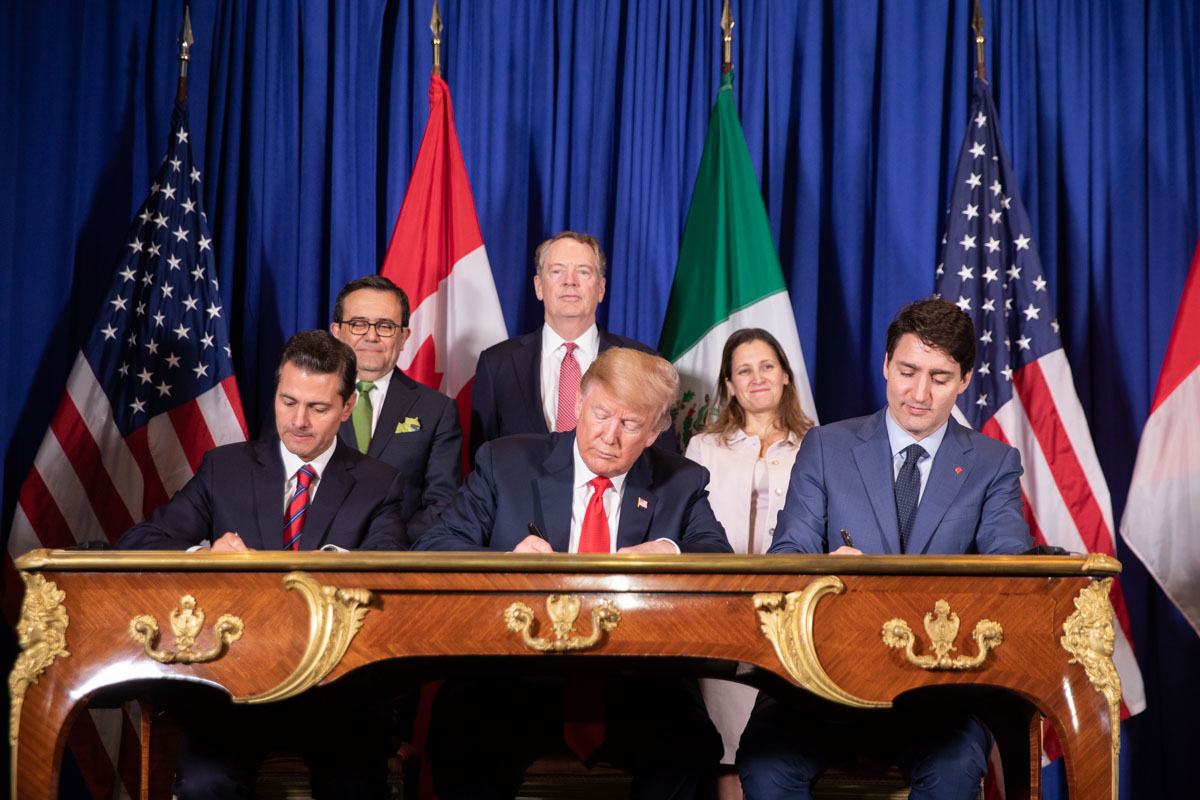
The convergence of the ITC probe with the 2026 CUSMA review gives Washington potent leverage in trade talks. CUSMA sets the rules for trade in goods and services across North America, with recurring negotiations often centering on market access in agriculture, autos, energy, and digital trade. Against this backdrop, the US could now use dairy as a wedge issue, pressing Canada on one of its most sensitive protectionist policies.
Donald Trump’s return to the White House has reinvigorated protectionist rhetoric on behalf of the US, with Canadian supply management long cast as a symbol of “unfair” trade. For Trump, the issue is not merely ideological: it has electoral stakes. Wisconsin, a pivotal swing state and major dairy producer, has repeatedly been held up as evidence that Canadian barriers disadvantage US farmers. By framing supply management as a direct threat to Wisconsin’s dairy industry, Trump links a local grievance to a national trade agenda, sharpening its salience in American politics.
Expanded dairy market access for the US would likely mean Canada reducing or eliminating its high over-quota tariffs, increasing tariff-rate quotas (TRQs), or otherwise loosening restrictions on American milk, cheese, and protein powders entering the Canadian market. More ambitiously, Washington could attempt to set a precedent for rolling back Canada’s protections in other sectors during CUSMA negotiations.
Ottawa, meanwhile, faces new constraints. Earlier this year, the House of Commons passed Bill C-202, which prohibits the federal government from offering additional dairy concessions in trade talks. Proponents argue the law shields farmers from being traded away, as happened in past deals like CETA and the TPP, where Canada granted modest TRQ openings. Critics counter that it boxes Canada in, forcing negotiators to yield in other sensitive areas such as autos, aluminum, or steel. The US has previously weaponized trade investigations to extract concessions, such as the Section 232 tariffs on Canadian steel and aluminum in 2018, and could use the ITC’s dairy probe in a similar way.

The domestic politics of the situation are also fraught. Urban voters, frustrated with rising grocery bills, increasingly question the fairness of a system that guarantees stable farm incomes at their expense. Rural communities, however, see supply management as vital to their survival. Any move by Ottawa will have to navigate this divide, balancing international pressures with deeply entrenched domestic constituencies.
Canada’s options in the 2026 CUSMA review are stark. On one hand, making targeted concessions on dairy could shield other industries from harsher retaliation and preserve the broader framework of North American trade. On the other, defending supply management outright would reinforce Canada’s right to maintain entrenched domestic policies—but at the risk of escalating tensions with Washington at a moment of heightened US protectionism.
If the ITC ultimately confirms that Canada has been dumping surplus dairy proteins into US markets, the immediate consequence would likely be punitive duties on Canadian exports, further straining an already fragile trade relationship. Beyond tariffs, Washington could use the ruling as formal justification to push for structural reforms in Canada’s dairy regime during CUSMA negotiations, wielding the probe as both legal and political leverage. Ottawa would then be forced to decide whether to litigate and resist, risking broader retaliation across other sectors, or to compromise by offering carefully circumscribed market access to defuse the dispute.
The ITC probe thus ensures that dairy will be at the center of the renegotiation agenda. How Canada responds will test its ability to defend politically sensitive policies in an increasingly politicized trade order. Whether Ottawa bends or holds firm, the outcome will reverberate far beyond dairy barns in Quebec and Ontario, shaping Canada’s economic sovereignty, its negotiating credibility, and the future contours of North American trade.
Edited by Marina Gallo.
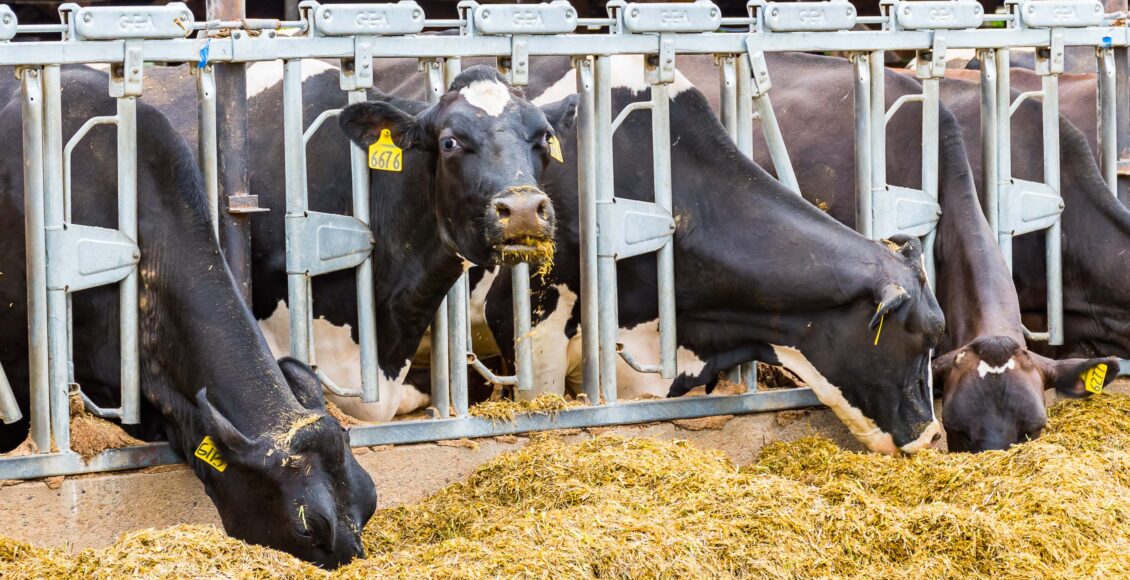
Featured Image: “Northwest dairy cattle eat rations out of a feed bunk” by Karla Salp is licensed under CC BY-SA 3.0 US.

