
Chinese Cobalt Extraction: A Modern Reflection of the Democratic Republic of the Congo’s Colonial Past?
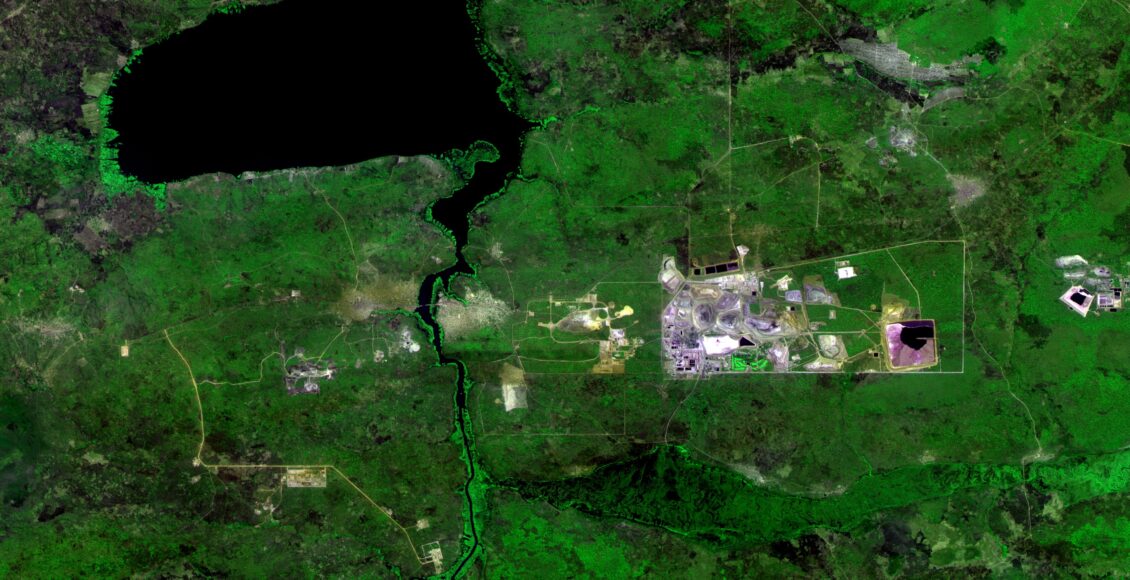
The lives of over 200 miners were lost in the Democratic Republic of the Congo (DRC) on the 28 of January, when landslides tore through the Luwowo mining site in the eastern region of the country. Yet accidents like this are not unusual in the DRC, where poverty, weak labour regulations, and dependence on raw mineral exports coalesce to trigger regular mining catastrophes.
Holding 80 per cent of the global supply of cobalt, roughly 40 per cent of annual GDP growth in the DRC stems from the mining sector—with cobalt representing its most valuable mineral resource. However, Chinese companies control approximately 80 per cent of the DRC’s total cobalt output, and have leveraged infrastructure investments to monopolize the country’s mineral rights.
The 2007 Sicomines agreement exemplifies this “resources-for-infrastructure” model: a consortium of Chinese firms pledged $3 billion USD in infrastructure investments in exchange for a 68 per cent stake in the Sicomines copper and cobalt concession. Sicomines remain largely exempt from taxation, meaning that the DRC captures far less revenue than the scale of extraction would suggest, underscoring an imbalance between their economic return and the Chinese companies’ profits. Additionally, the DRC’s stake in the agreement is limited to a mere 32 per cent. These foreign investors are clearly not blind to the DRC’s current weak economic standing and hawkishly capitalize on their limited bargaining power to secure positions in deals where they stand to profit handsomely, leaving the Congolese state to see little profit from its own mineral wealth.
The agreement was subsequently revisited in 2024, after a state audit revealed that only $822 million USD of the promised funds had been delivered, with the consortium increasing its total commitment to $7 billion USD. Although the upward revision of the investment package may appear to signal progress, it illuminates the asymmetry embedded within the original deal. The fact that a substantial shortfall could persist for over a decade before triggering meaningful revision conveys the limited leverage available to the Congolese state. Unfortunately, a structural dependence on foreign investment means that the DRC is vulnerable to actions of financial duplicity, in which its material sovereignty is compromised.
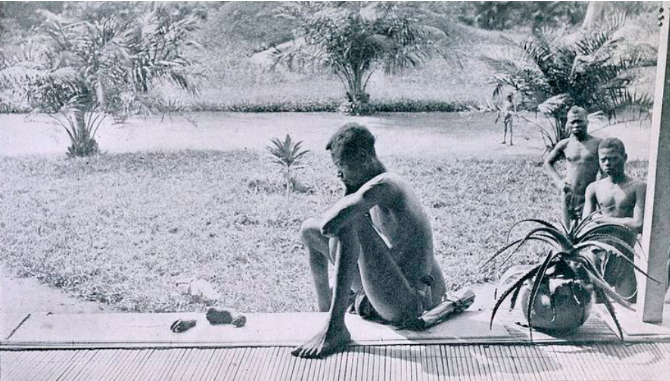
China’s involvement in the DRC draws troubling parallels with the extractivist practices of Belgium’s King Leopold II in what was then known as the Congo Free State. In 1885, under the guise of a philanthropic mission to ‘civilize’ Central Africa, Leopold unilaterally transformed the Congo into a state-owned monopoly, coercing the local population into labour for concessionary companies extracting resources such as rubber. Enforcement was brutal: workers who failed to meet rubber quotas were subject to mutilation, and by the end of Leopold’s rule in 1908, an estimated 10 million Congolese had been killed.
Belgium formally annexed the territory in 1960, but maintained the core extractive economic structure. Although limited investments were made in state institutions toward the end of colonial rule, access to education and administrative authority was largely restricted to the colonial elite. Congolese communities were systematically excluded from meaningful participation in, or benefit from, the revenues generated by their own natural wealth.
Today, while the methods differ, the structure appears disturbingly familiar. Workers at Chinese-owned mines have reported “colonial-era” abuse and discrimination, often falling victim to racist remarks and physical intimidation from employers. Forced evictions constitute another travesty associated with Chinese mining practices. In Kolwezi, long-established communities have been dismantled following the expansion of a copper-cobalt mine operated by Zijin Mining Group Ltd in partnership with the DRC’s state mining company, Générale des Carrières et des Mines (Gécamines). Investigations by Amnesty International document the forced displacement of hundreds of residents, many of whom were offered compensation insufficient to secure comparable housing.
The government’s complicity in prioritizing the economic welfare of private, foreign-owned enterprises over that of its own citizens reflects a chilling reality of extractive governance, in which state authority is deployed to safeguard external capital rather than to protect domestic communities. This is a common dilemma among post-colonial states, where a legacy of extractivist governance has produced an overreliance on foreign investment and a tolerance for its predatory tendencies. A delicate balance must be achieved, where foreign investment ensures economic development and a stronger state apparatus, while simultaneously protecting civilians from exploitative practices.
Chinese cobalt refiners and manufacturers contribute in equal measure to grave human rights abuses in the DRC. Dongfang Mining (CDM), a subsidiary of the Chinese mineral conglomerate Zhejiang Huayou Cobalt Co, reportedly buys vast quantities of cobalt sourced from artisanal mines, where child labour runs rampant. At these sites, children as young as seven use handheld tools and work for over 12 hours a day, routinely exposed to toxic metals and unstable tunnels. Recent data suggests that an estimated 40,000 children are engaged in mining activities across the country, typically earning one to two dollars per day, and are unable to attend school. The cobalt extracted under these conditions feeds directly into global supply chains, is refined and sold to multinational technology and automotive companies, including Apple, Samsung, and Volkswagen.
Cobalt is not a peripheral commodity but rather a critical component in lithium-ion batteries, used in electric vehicles, smartphones, laptops, and renewable energy storage systems. As governments accelerate decarbonization efforts and the global transition to clean energy, demand for cobalt has surged. Its ubiquity in modern technology poses a severe ethical concern regarding the integrity of global supply chains, which have been corrupted by these staggering human rights violations.
This lack of transparency on the origins of cobalt manufacturing is a direct result of the DRC’s weak state capacity. An Amnesty International report in 2016 revealed 16 multinationals, which were listed as customers of the battery manufacturers, as sourcing processed ore from CDM. None of these companies provided information to trace the origin of the metals they use, suggesting their tolerance for opacity in global supply chains. Poor labour governance institutions in the DRC, coupled with appealing investment deals from foreign companies, have produced an environment conducive to illegal workplace practices.
Internationally, there appears to be little incentive to strengthen supply chain supervision. A 2024 US appeals court ruling refused to hold five major technology companies, including Apple and Google, liable for their alleged connection to child labour in cobalt mining operations in the DRC. The court, in a 3-0 majority decision, stated that buying cobalt in the global supply market did not constitute ‘participation’ in child labour practices. The judicial legitimization of poor supply chain due diligence sets a dangerous precedent and permits the continued exploitation of illegal workplace practices in the DRC.
Ultimately, this limited agency over their own resources seems to be a manifestation of the DRC’s extractivist past. China’s strategic calculus in monopolizing access to cobalt reserves facilitates an economic dominance in global markets at the expense of Congolese civilians, where shiny investment deals draw state attention away from grave workplace injustices. Unfortunately, international reluctance to hold suppliers accountable reinforces this cycle of systemic exploitation, allowing profit and geopolitical advantage to eclipse human well-being. The DRC has been at the behest of foreign actors since 1885, and until the country can negotiate from a position of strength and capture greater value from its own resources, cobalt will remain a source of leverage for others rather than a foundation for Congolese prosperity.
Edited by Georgia Massis
Featured Image: Photo of an open-pit copper and cobalt mine in the DRC by CBERS/INPE is licensed under CC BY-SA 4.0.


