
Farewell, Victoria! On Hanwha Ocean’s Bid for the Canadian Patrol Submarine Project
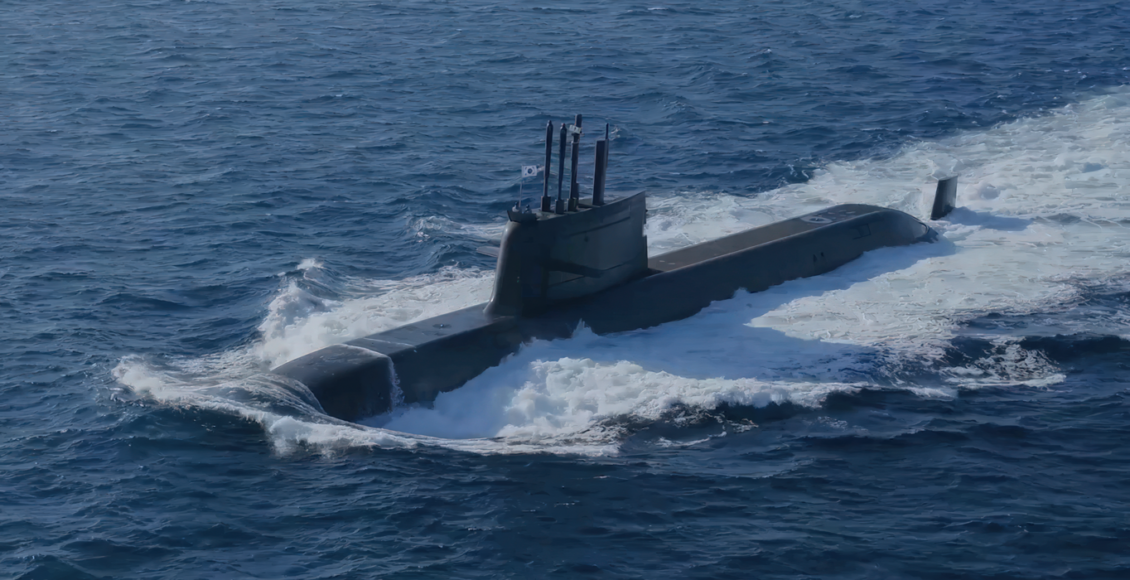
Foul-weather friends are much like submarines: easier kept than procured—and Canada now faces a dilemma on both fronts. Amid America’s burgeoning unpredictability towards long-time allies, Canada’s enduring reliance on American defence capabilities proves increasingly untenable. Simultaneously, the Royal Canadian Navy’s fleet is in dire need of replenishment. The first and third points of the Liberal Party’s defence agenda from 2025 stress the expansion of the Royal Canadian Navy and the bolstering of Canada’s industrial base, respectively. Any advancement of the Canadian Patrol Submarine Project (CPSP) thus ought to be undergirded by a synthesis of these two points: the revitalization of Canada’s fleet must occur in tandem with a conscious strengthening of the country’s industrial base.
The clamour for a robust maritime fleet is not merely a response to systemic uncertainty; exogenous geostrategic positioning decisively validates Canadian interest in maintaining a formidable navy. With a coastline spanning over 240,000 kilometres, Canada’s is the longest in the world—outsizing that of the runner-up, Norway, twice over. Canada’s geographic location sufficiently explicates the country’s critical interests in not merely Arctic sovereignty, but also transatlantic and Pacific security.
Submarines differ from surface vessels in one critical respect: stealth. They are optimized for covert patrol, maritime deterrence, intelligence collection, and both offensive and defensive operations. Since the Cold War, submarines have served as the cornerstone of Canada’s maritime capabilities. More specifically, Canada operates diesel-electric attack submarines (i.e., conventionally powered submarines whose primary imperative is to sink other sea-faring vessels). Since the retirement of the inaugural Oberon-class submarine, four Victoria-class submarines have upheld these capabilities since 1998. Now, to both decommission the Victoria-class and phase in replacements by 2030, observers anticipate that a contract for the CPSP will be awarded by the summer of 2026.
The baseline requirements for the 12 replacement submarines are explicit: they must be blue-water, conventionally powered, and capable of under-ice operations. Shortlisted contenders include ThyssenKrupp Marine Systems’ (TKMS) Type 212CD submarines and Hanwha Ocean’s KSS-III submarines, which are operational within the Bundeswehr and the Republic of Korea Navy (ROKN), respectively.
While both platforms are technically credible, the rhetorical undertones shaping each bid are strikingly different. The South Korean pitch appears more receptive to Canadian sustainment and localized industrial participation, while the Type 212CD offer echoes integration into existing European frameworks. TKMS’s messaging implies a more limited pivot toward Canada’s industrial sovereignty, foregrounding alliance integration over strengthening Canadian industrial expansion.

The lifecycle of most contemporary submarine procurement programmes encompasses five broad stages: identification; operations analysis; contracting and construction; operations and in‑service support; retirement. Returns to the industrial base start as early as stage two—operations analysis—wherein vessel designs are amended to accommodate operational needs. Under Canada’s Industrial and Technological Benefits (ITB) policy, contractors must generate economic returns commensurate with contract value. Within this scheme, “banking transactions” allow firms to accumulate investment credits via eligible activities undertaken prior to contract awards.
Stage three—contracting and construction—is where memorandums of understanding (MOUs) signed in incipient negotiations crystallize into final contracts. Algoma Steel, PCL Construction, MDA Space, Cohere, and Telesat—these are just a handful of the numerous MOUs Hanwha Ocean has signed since 2021. While MOUs are non-binding, they lay critical groundwork for formal contracts by signalling intent.
Historical precedent offers reassurance against the seeming impermanence of MOUs. South Korean defence firms have previously honoured industrial commitments in export deals, notably in Poland’s procurement of K9 howitzers and K2 tanks. Insofar as MOUs portend industrial returns, the breadth of MOUs signed by Hanwha Ocean paints a more cogent picture than TKMS’s partnerships. Algoma Steel for steel, Blackberry for communications, L3Harris for maritime technologies: how each MOU fits into a grander scheme appears fairly intuitive. Having so far disclosed arrangements with only Marmen, EllisDon, SeaSpan Shipyards, and a triad of Canadian universities, TKMS feels arguably less vocal in its pursuit of the contract.
Assuming the preconditions for industrial returns are met—that is, a contractor receives the award and existing MOUs are developed into enforceable contracts—how might one attempt to quantify industrial returns? Consider this: a larger submarine implies both a larger hull and more internal components, necessitating greater steel usage. Intuitively, this should yield greater benefits for the domestic steel industry. This rationalization is not as straightforward as one might presume, however.
While KSS-III’s ~4,000-ton displacement far exceeds Type 212CD’s ~2,500 tons—indicative of its larger stature—Canada lacks a mature manufacturing ecosystem for high-pressure hull steel. Producers like Algoma Steel can therefore only supply auxiliary components; critical pressure hull materials will invariably be imported from the US or EU, irrespective of the contractor. Even as steelmakers clutch the highest-value MOU contributions between both contractors, the economic returns are less clear-cut than they appear.
The sheer number of MOUs signed is, hence, an incomplete metric for industrial gains—not because they aren’t binding, but more so because a concrete judgement is ill-substantiated if the quality of the MOUs is unknown. Essentially, while cooperation is being promised—and by extension, investment—what is this money being put towards?
Thus, the most consequential phase is actually stage four: operations and in-service support. Sustainment via maintenance, repair, and overhaul (MRO) often captures the majority of a submarine’s lifecycle cost. In fact, sustainment accounts for roughly 50 per cent of the contractor’s evaluation score during this bidding process. Benefits to Canada’s industrial base will therefore be determined by the MRO of each system once commissioned.
Sired by distinct design imperatives, the sustainment characteristics of the KSS-III and the Type 212 will naturally diverge as well. For submarine sustainment, TKMS intends to partner with Seaspan Shipyards, and Hanwha with Babcock Canada. The South Korean shipbuilder has further pledged to establish a Through-Life Support (TLS) Centre in Canada, responsible for maintenance and modernization over a projected 30 to 40-year period, staffed by Canadians.
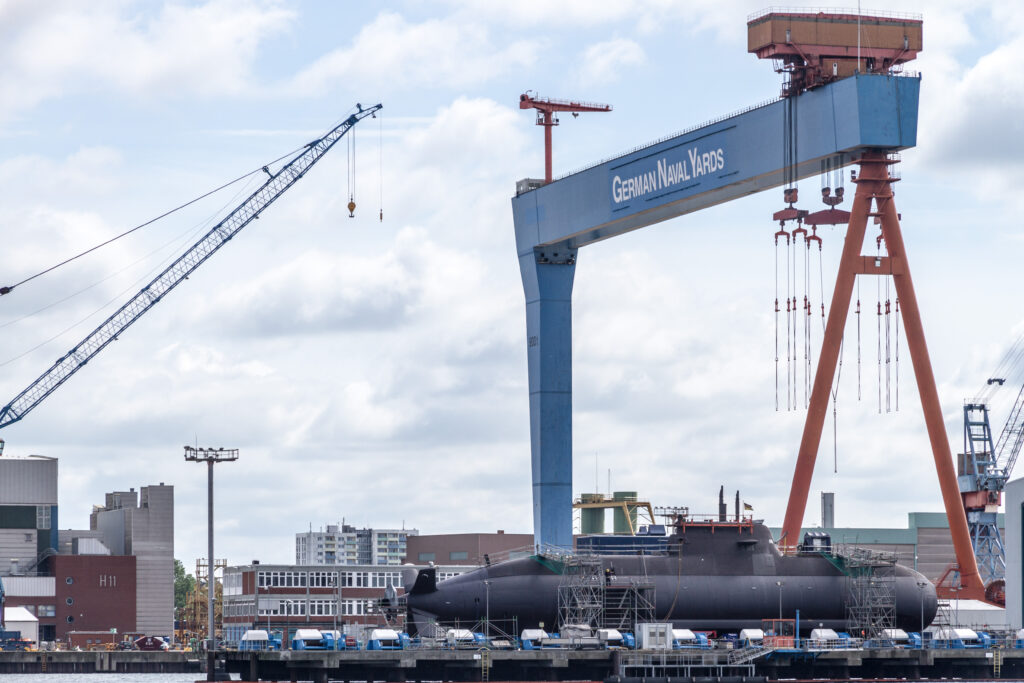
While TKMS is an undeniably capable submarine producer, Hanwha’s stress on Canadian industrial sovereignty eclipses that of the Germany-Norway bid. As seen in Norwegian pitches for joint procurement, TKMS’s appeal hugely hinges on European familiarity. While there remain credible arguments in favour of Canada-NATO interoperability, the comfort of traditional alliances should not insulate against the pragmatism of fortifying greener ties. Particularly so if this tie purports to satiate Canada’s appetite for industrial expansion. Promising $275 million CAD for a new steel mill and an avowed 200,000 new jobs by 2040, Hanwha has made big commitments. Can Hanwha keep them?
Much critical information remains unavailable, particularly regarding industrial commitments and the extent of MRO localization. That said, based on what is publicly known, South Korea presents a compelling offer. With the South Korean government now firmly backing Hanwha, a deliberate nationwide effort to ensure meaningful returns for Canada is taking clearer manifestation. In its well-vocalized intent to reinforce Canada’s defence-industrial capabilities, Hanwha’s KSS-III submarines present a viable line of sustenance for the Royal Canadian Navy and Canada’s military-industrial base.
Importantly, Seoul’s partnership with Ottawa appears to extend beyond the CPSP alone. Canadian firms have already been integrated into Korean programs: Toronto-based Hepburn Engineering has secured work on the ROKN’s Replenishment-at-Sea systems. Contingent upon Hanwha’s receipt of the full deal for 12 submarines, these engagements bear the germs of an industrial relationship that surpasses a singular submarine contract.
Davos recently offered a significant insight: the tectonic plates of the international system have long been in a state of unrest—a disquiet unarticulated by the West until recently, yet felt by all nonetheless. Amid this unrest, Canadian interests are best prioritized through a diversification of allegiances. Given Canada’s unambiguous interest in the Indo-Pacific, contracting a preeminent shipbuilding power like South Korea to deliver critical defence capabilities will yield fertile ground for a promising partnership. This, however, requires Ottawa to marshal the resolve to defend its own interests—industrial and maritime security alike. In doing so, Canada might secure both submarines and a steadfast friend to weather foul waters.
Edited by Georgia Massis
Featured Image: “ROKS Dosan Ahn Changho class submarine” by Ministry of National Defence of the Republic of Korea is licensed under Korea Open Government License (KOGL) Type 1.

_oversee_mooring_operations_from_the_sail.jpg)
