
How Apathy is Choking a Country
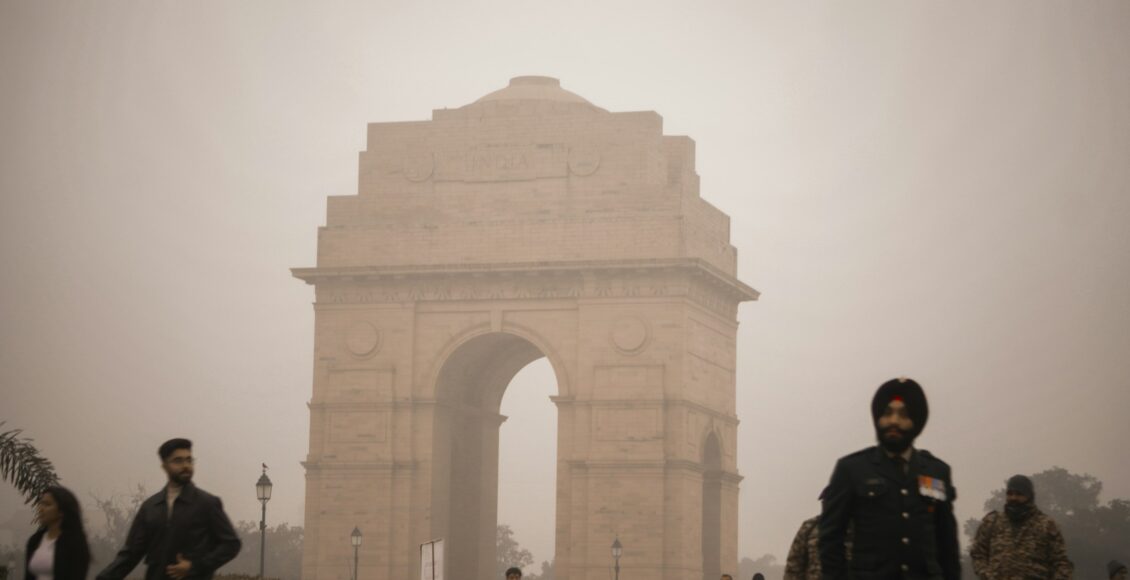
Imagine this: after months of drowning in sweat, humidity, and heat-waves, the first breeze of winter grazes your cheeks. Finally, some much-needed respite from the harsh summer sun. However, it carries a smell of smoke, dust, and ash. Then you start coughing and wheezing, schools are closed, and you’re forced to wear N-95 masks outside because prolonged exposure to hazardous air quality is shortening your life span by almost half a decade. This sounds like a nightmare, but it is the lived reality of almost every single Indian today.
India’s air pollution crisis has been unfolding for the better half of two decades, with Delhi’s air quality worsening every winter. India accounts for nearly 70 per cent of all air pollution-related deaths, yet government authorities have done little to implement policies to curb the impacts of the hazardous living conditions. On the contrary, the government has rolled back key environmental policies and eliminated regulations. To understand how India’s air pollution got so bad, three factors are critical: India’s geography, deregulated and inefficient systems, and the denial of governance.
Delhi, India’s capital city, houses more than 34 million people. With the Himalayas to the north and the Aravalli mountain range to the south and west, the city’s lack of ventilation causes a continuous stream of dust and debris to collect within, making it hard for pollution to disperse. The city’s bowl-like positioning not only makes it hard for pollutants to disperse, but it also serves as a deposit for pollutants from nearby regions. The months of October to February are particularly sensitive periods of worsening air quality for northern India. The mass burning of unwanted crop debris (stubble) in the Indo-Gangetic Plain dissipates smoke from agricultural regions such as Punjab, Haryana, Uttar Pradesh, and Madhya Pradesh, which is carried by north-western winds. This, mixed with particles and gases in Delhi from sources such as industry, vehicles, domestic fires, and the bursting of firecrackers during the festival of Diwali, creates an air pollution crisis that lasts for almost five months.
Along with these challenges already straining the region, the temperature inversion during the colder season makes breathing even more difficult. As the ground cools, the air near the ground cools faster than the air above, creating an air pocket that traps pollutants. All this is to say, Delhi is geographically positioned at an extraordinary disadvantage when it comes to dispersing pollutants from the region.

Yet, Delhi is only one example of the air pollution crisis. In 2024, the World Air Quality report identified 94 of the 100 most polluted cities were in India. Mumbai, India’s economic capital with an ever-changing skyline, has similarly hazardous air quality days in the “poor” to “very poor” category during the winter months. It is ironic, then, that, as a coastal city, it has a self-proclaimed “superior” status over Delhi in terms of clear skies and clean air. The sea breeze was used as a crutch to curb air pollution concerns amidst the dense population and constant construction. Still, Mumbai could not escape its fate—from 2021 to 2025, there were only seven days of air quality in the “good” category during the winter months. Even with coastal winds, fewer registered vehicles than in Delhi, and a large carbon sink in the middle of the city—the Aarey Forest—the air in Mumbai has remained toxic. What this points to, then, is something larger than simply geographical factors or exceptionally harsh winters in the country; it is a systemic problem that authorities have ignored and brushed under the rug.
Mumbai, like Delhi, has its own compounding factors that have worsened the city’s air pollution crisis. The densely congested urban area, persistent construction without adherence to regulations targeting dust control, climate change weakening the sea breeze, and the destruction of natural barriers for the city are all creating an environment for increased air pollutants, with little dispersion and even less oversight.
Although air pollution in Indian cities is a widespread phenomenon, the specific exacerbating factor is the inadequate, unique response from local authorities. In the call for more infrastructure, key natural support systems are being destroyed in major cities. In Mumbai, the newly developed “Coastal Road” highway has been met with its fair share of pushback regarding its impact on marine life, and more pertinently, the issue of felling mangroves on the coast of Mumbai in order to make space for it. Recently, the Bombay High Court and the Supreme Court of India cleared a proposal to fell 45,000 mangroves to begin construction on another section of the Coastal Road, even after major backlash and protests. When questioned by citizens, representatives of the Brihanmumbai Municipal Corporation (BMC) replied, “Whatever happens, see, it’s better than Delhi.”
In Delhi, the Supreme Court of India sought to redefine the legal definition of what constituted the Aravalli Hills. They are one of the world’s oldest surviving mountain ranges, and remain as one of the only carbon sinks for the regions of Delhi, Gujarat, Rajasthan, and Haryana.
Most of the Aravalli mountain range lost legal protection under the new definition, which recognizes only peaks at least 100 meters above the surrounding terrain and within 500 meters of one another. With most of the mountain range peaking between 20 and 50 meters, unchecked mining and construction would contribute to an already congested atmosphere with debris, dust particles, and unregulated construction procedures, all while removing a key carbon sink and defence structure against dust from the northwestern Thar Desert.
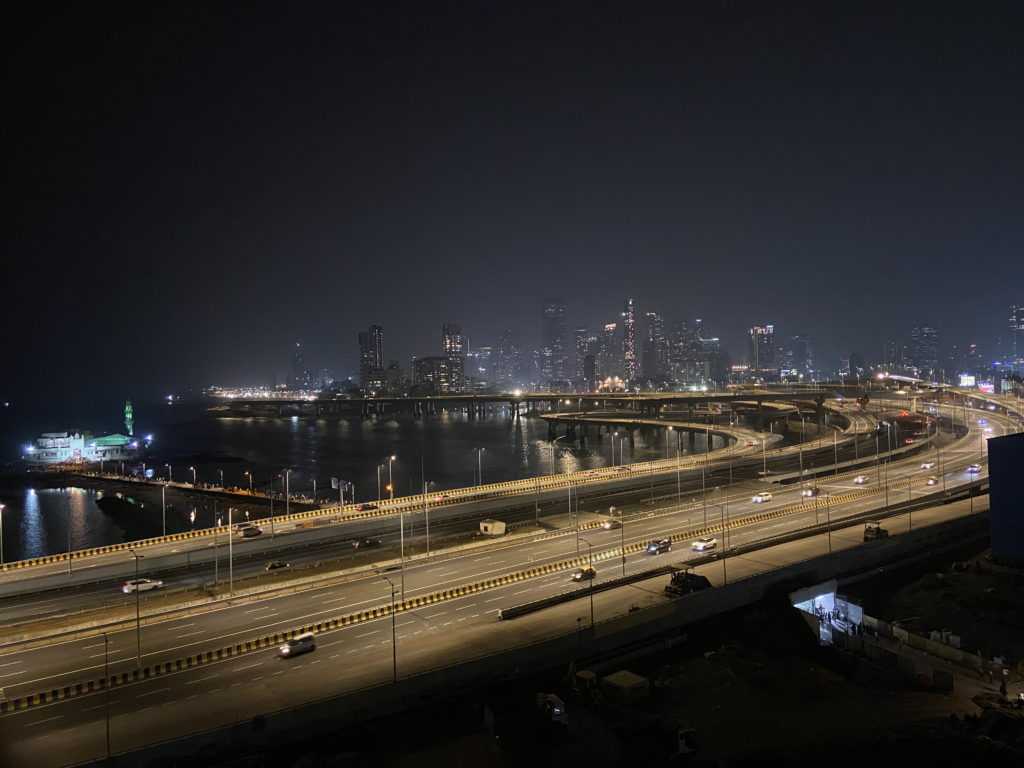
The lack of responsibility and an inability to plan responsibly have caused the defences against air pollution to break down. Constant encroachment on the Aarey Forest, the incessant construction and reconstruction of roads in Mumbai, backdoor “solutions” to expedite mining, and shifting the blame for convenience’s sake have led to what can only be called a country in crisis.
It is not just independent communities breathing hazardous air, but an entire population of 1.4 billion people who have to bear the consequences. PM 2.5, that is, particles smaller than 2.5 micrometres, can enter the lungs and bloodstream and have been linked to diseases such as anemia, diabetes, coronary heart disease, lung cancer, and pneumonia. In India, a 10 cubic meter increase in PM 2.5 concentration led to an 8.6 per cent increase in mortality, and approximately 1.7 million people died from air pollution-related causes in 2022. These are staggering statistics, clearly illustrating the grave impacts of continuous exposure to high levels of air pollutants. Yet, authorities remain elusive in their efforts to correct the situation, with misinformed remarks about stabilizing air quality, in spite of evidence of worsening air pollution, the implementation of short-sighted fixes such as installing mist systems near airports, and the constant shifting of blame to avoid responsibility.
When the authorities are unable to accept responsibility, effectively implement long-term policies, and are ill-equipped to handle a rapidly growing crisis, there is no one to call on to accomplish change. The fight for clean air and breathable living conditions for most Indians remains an uphill battle.
Edited by Idan Miller
Featured Image: India Gate in Delhi. Photo by Ashish Kushwaha is licensed under the Unsplash License.

.jpg)