
How Instagram Is Brewing Cities, One Café at a Time
Among the streets of Montréal, cafés like Café Alphabet, Café Olimpico, and Crew Collective have transformed unconventional spaces and incorporated innovative designs to attract a wide range of audiences. In particular, these coffee shops are places for Millennials and Gen-Z to participate in a trend known as “café hopping,” the act of visiting as many coffee shops as possible primarily for aesthetic and Instagrammable reasons.
This aesthetic turn in Montréal’s coffee scene is not unique. Across the world, cafés have increasingly become cultural spaces as much as places to buy coffee. Nowhere is this more visible than in Seoul, where café culture is highly integrated within people’s lives and the city’s urban identity. With more than 75,000 coffee shops, South Korea’s capital boasts a dynamic and rapidly expanding café scene.
Although surfing cafés can enrich one’s experience of a city, the popularization of social media trends has led large numbers of visitors to flock to particular places, creating concentrated foot traffic and reshaping neighbourhood dynamics over time. This is problematic because uneven patterns of urban activity can place pressure on local infrastructure, services, and everyday community life. As businesses adjust their strategies to meet demand, these tactics often deepen the commercialization of neighbourhoods, catering to one-time customers while gradually driving out locals. In Seoul, commercial gentrification has slowly permeated from main roads into alleys and single-family residential areas since the 1980s.
It is well known that the internet has accelerated the rate at which trends rise and fall, creating cycles of intense but fleeting attention. In South Korea, this has reached the point of microtrends, which take many forms, including the recent trend of recording “eating only at a Korean convenience store for 24 hours” and posting it on YouTube. But social media does not only dictate how we behave in daily life. It also shapes the urban environment in ways that promote mass consumption over local authenticity. Over the past decade, the popularization of specialty coffee bars (SCBs) on Instagram has raised questions about how to balance innovation and preservation.
In response to the widespread attention that such trends garner, businesses develop strategies to compete for consumer attention. Beyond simply serving good coffee, owners need to master marketing, interior design, and menu crafting, all of which conform to the current trend. To do so, owners focus on variety and quality, though perhaps more so on products that will certainly become trendy. In Seoul, the ubiquitous presence of photo zones–places especially designed for customers to snap aesthetic photos for the gram–has contributed to a wider issue of false consumerism.
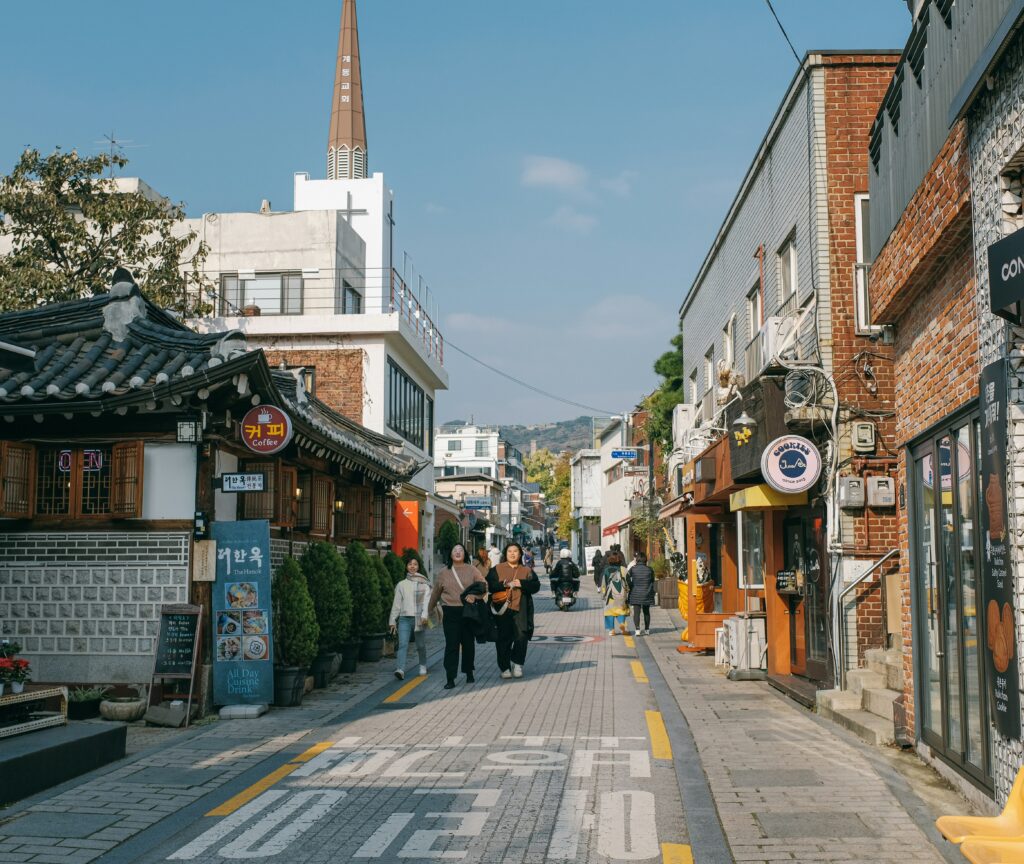
An Instagrammable place is defined as a destination where distance and the satisfaction of goods consumed are not primary factors in the desire to visit. In such cases, the main groups that frequent these places are local and foreign Millennials and Gen Z who seek one-time experiences. Due to the small size of people’s apartments, many South Koreans seek to occupy cafés instead, whether it be students studying, couples lingering, or friends conversing. Perhaps the link between housing-market issues in densely populated cities and commercial gentrification is not as elusive as it seems. Due to a lack of housing and small apartments, people are spending time in spaces outside. Simultaneously, the conversion of housing into SCBs also exacerbates the housing problem. As such, urban planning is a complex mix of issues that are both causes and effects.
The link between the virtual and the real world manifests when online popularity drives offline crowding. Across Seoul, SCBs are ubiquitously used as spaces for different kinds of people to gather, including running crews, artists to host events like book readings or music concerts, and small businesses to promote fashion and games.
But the commercialized neighbourhood ends up deterring people seeking good-quality coffee, leaving them in a state of ‘placelessness’. In a study, a community manager noted her surprise upon learning that people would climb as far as the end of an uphill road. Another postgraduate expressed his bitterness and resignation that he will “no longer try or expect to have [his own] coffee hideout.” But beyond young adults losing their favourite coffee spots, the impact of rising aesthetic stores extends to deeper consequences for urban development as well.
These urban ‘regenerated’ spaces cost not only locals, but also vulnerable groups who rely on functional facilities like grocery stores and laundromats. They are now displaced by aesthetic forms such as concept stores, boutiques, and SCBs. A symbol of the beginning of Seongsu-dong’s commercial era, Gallery Café Daelim Changgo started off as a rice mill warehouse in the 1970s. The preserved brick and concrete wall, the iron and wood structure, and the high ceilings pay tribute to the past while creating a unique atmosphere that charms visitors. Whereas Seongsu-dong historically housed factories, warehouses, and auto-repair shops, Daelim Changgo transformed the ‘dirty’ feel of the neighbourhood into a ‘youthful’ yet sophisticated urban environment. This ‘success story’ is evidence that repurposing can harmoniously combine innovation and preservation. However, whether this outcome was favourable for locals or simply catered to one-time customers is an important question.
This visual consumption creates a marketable aesthetic that draws people in for the photos. Instagram, especially, is a platform for people to imitate others’ consumption experience, primarily through copying photo composition. For example, people will use the same window background or photo angle. These people are also often those who purchase the simplest drink despite the many options. This phenomenon of replication not only affirms pseudo-authenticity among customers but also indicates that the shortage of these photo zones accelerates the opening of similar businesses. In response, the neighbourhood landscape quickly changes.
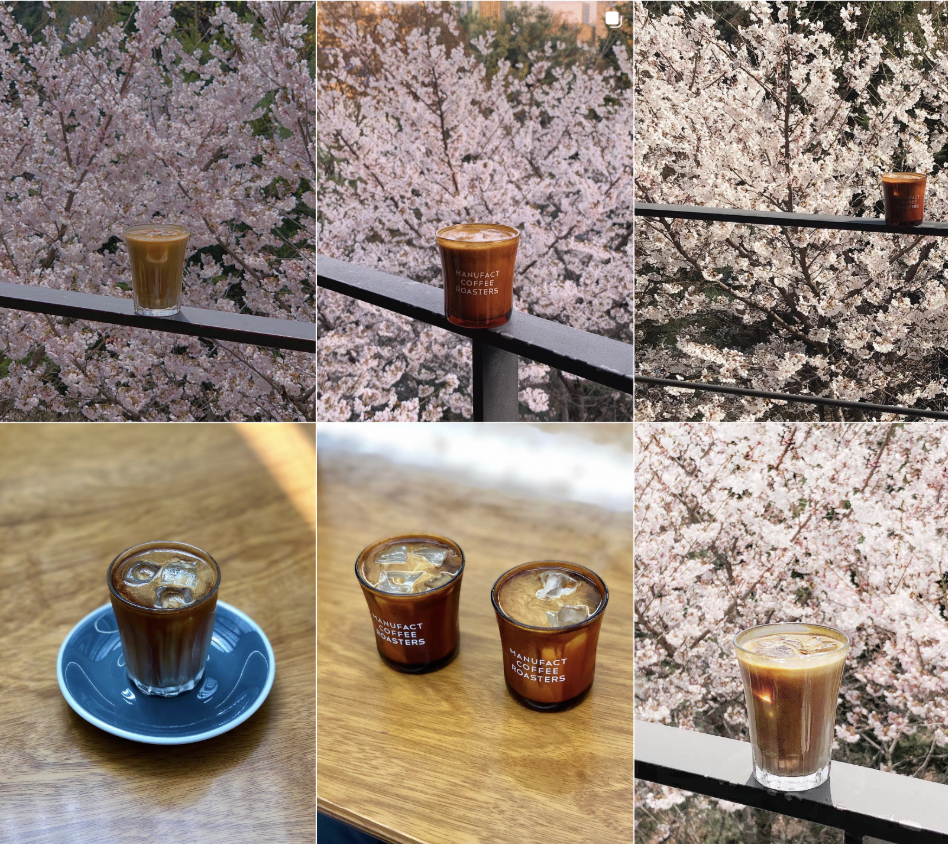
Ultimately, people–inhabitants and visitors alike–are the ones who determine how the surroundings are valued and appreciated. Evolving trends have cultivated a dynamic blend of traditional Korean aesthetics with Western culture among Seoul SCBs.
As more people seek identity through social media, it is crucial to distinguish between what is real and what is false authenticity. For businesses, the choice between competing for profit or fostering community raises the question not of whether, but specifically how, technology can be used to form deep and meaningful local connections. Although commercial gentrification does not directly displace residents, the repercussions on locals’ sense of belonging persist.
Urban development is shaped by local-scale interactions just as much as by top-down governance. There needs to be a reconfiguration of what it means to be dynamic, focusing equally on innovation and preservation, or perhaps more on one than the other. It is clear that social media has created an imbalance in dispersion and power among people. As such, proper intervention needs to address people’s behaviour by embedding communities and social belonging off the screens.
Edited by Noor Elbially
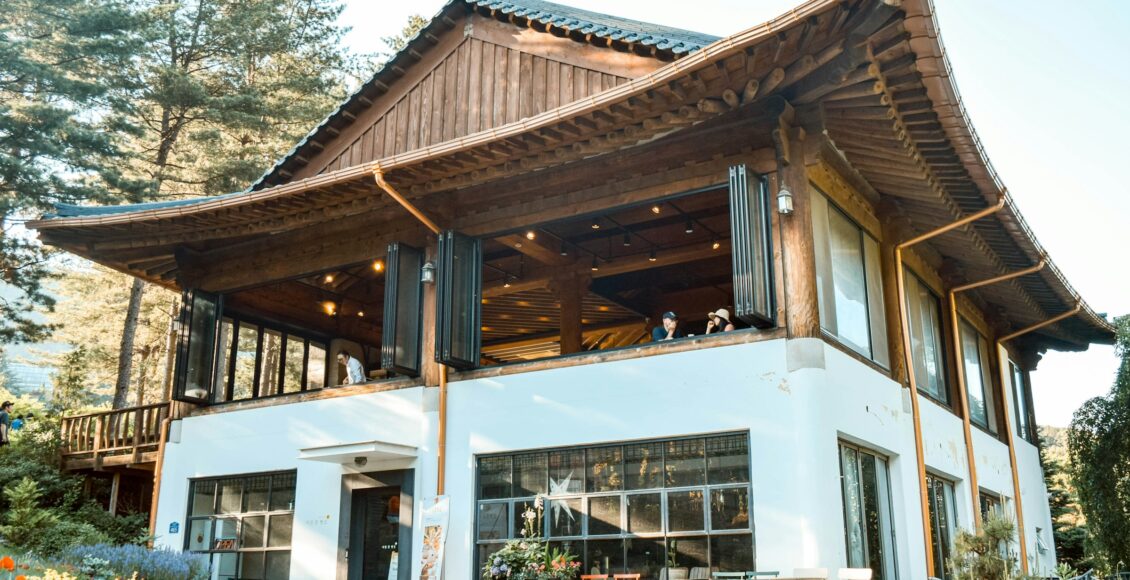
Featured Image: Photo of a café within South Korea’s Garden of the Morning Calm by Carl Kho is licensed under the Unsplash License.
