
How the Economics of E-Waste Trade Fuels a Quiet Crisis in Ghana
For the typical electronic user in the Global North, buying a new phone, hair dryer, or vacuum results in having to dispose of an older edition. Old electronics collect dust for years in one’s home before they must inevitably be thrown out. But how do consumers actually go about disposing of these products? If individuals are aware of local ecocenters, located in many major cities, they can drop off their old devices knowing that the city will facilitate safe disposal or recycling. However, many consumers simply lack the time, willingness, and knowledge to do anything but toss their old electronics in the trash. In 2022, over 5 billion phones were thrown out, contributing to the 62 million tonnes of electronic waste generated in the same year. According to the United Nations, this waste could fill 1.55 million 40-tonne trucks–enough to form a bumper-to-bumper line around the equator.
Electronic waste (E-waste) encompasses a wide variety of discarded electronic equipment, from phones and used cables to printers and microwaves. E-waste typically contains toxins: Mercury, lead, cadmium, and arsenic, which need to be effectively managed to avoid harm to human health and the environment. Unfortunately, e-waste generation is growing at a rate five times faster than that of recycling, putting strains on facilities in the Global North and pressuring firms to seek alternative methods for e-waste disposal. This problem is only set to worsen, as e-waste is predicted to increase by 32 per cent from 2022 to 2030, reaching an estimated 82 million tonnes.
Since e-waste recycling recovers important minerals for global supply chains, firms are incentivized to recycle and reuse these resources. Like most industries, the global e-waste trade can be distilled to basic economic principles, which ultimately reveal why the e-waste crisis has remained overlooked in many parts of the Global North. It is typically more cost effective for countries in the Global North to export e-waste, creating an economic incentive for Global South countries willing to accept the import.
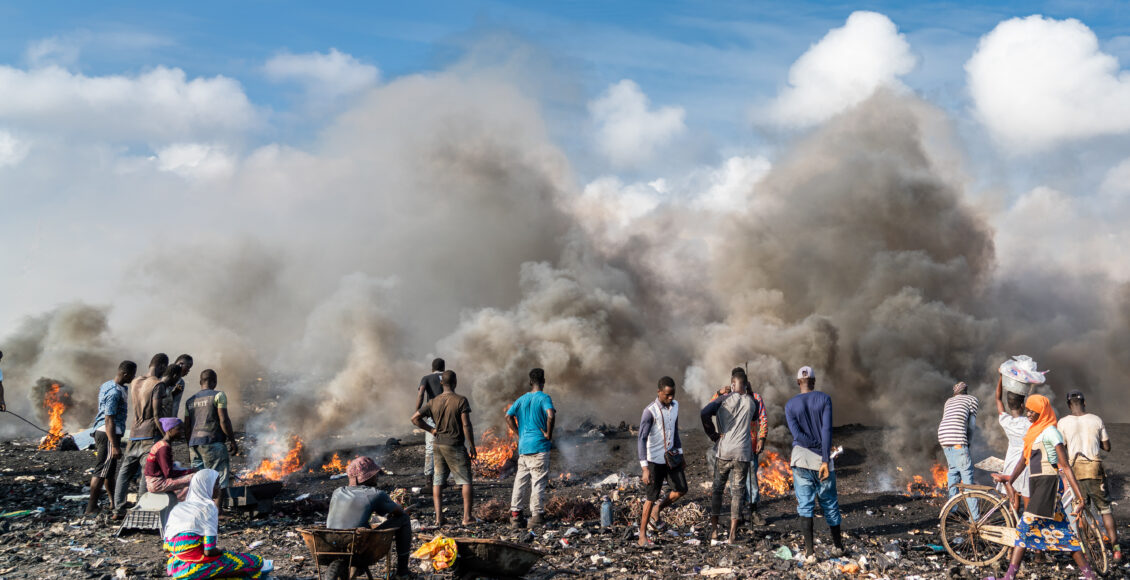
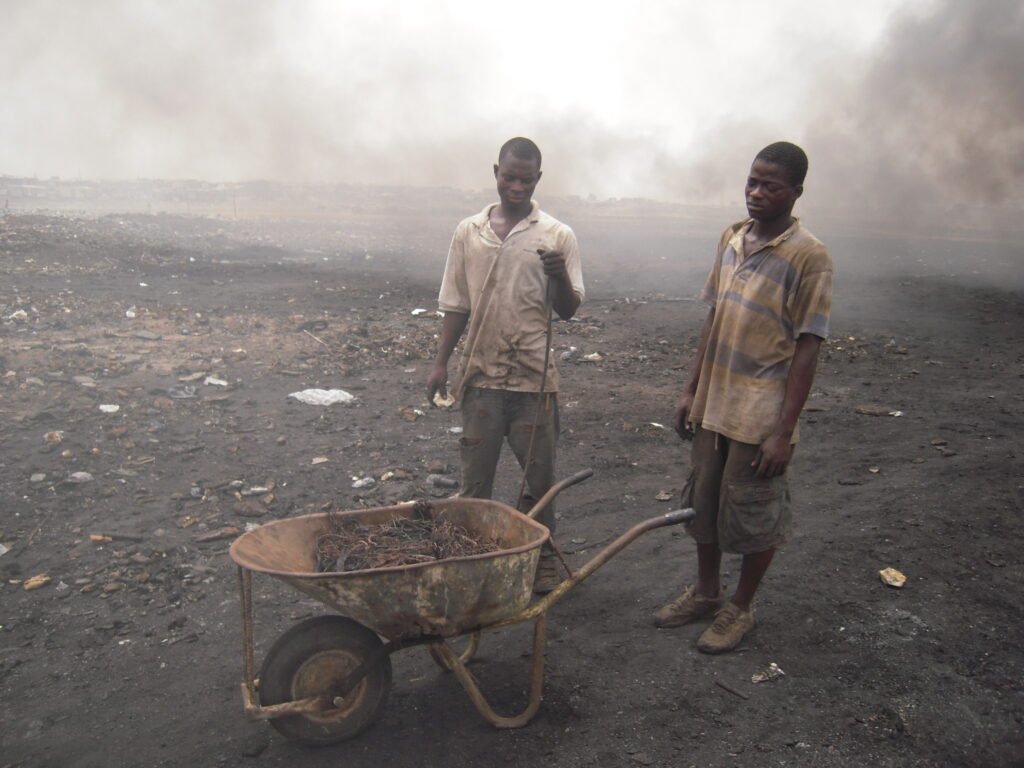
As one of the primary recipients of e-waste, Ghana serves as a critical case study for understanding how this trade disproportionately impacts Global South importers, reflecting the broader colonial underpinnings of the industry. Currently, 15 per cent of the world’s global e-waste is sent to Ghana, amounting to over 9 million tonnes of waste. This number is predicted to be more than doubled, reaching nearly 20 million tonnes by 2050. According to the Ghana e-Waste Country Assessment, the majority of Ghana’s e-waste is imported from Europe, North America, and Asia, often accumulating at the Agbogbloshie, an e-waste processing site in Accra with limited access to personal protective equipment (PPE). The expansive, yet informal e-waste dismantling industry in Ghana can be traced back to firms in the Global North, which capitalize on low labour costs in Ghana.
E-waste enters Ghana through a variety of methods, reflecting ongoing power imbalances between sender and recipient countries. The majority of e-waste entering Ghana is disguised as second-hand goods or donations. This allows sender countries to evade international regulations like the Basel Convention, which aims to control the globalized movement of e-waste and similar hazardous materials. Alternatively, products may enter under the guise of Electronic and Electric Equipment (EEE) and end up as e-waste; approximately 70 per cent of EEE arriving in Ghana is second-hand and in suboptimal conditions. EEE frequently enters Ghana through container shipments at the Port of Tema, received by commercial importers who manage equipment from overseas markets. Another understated yet critical entry pathway is via small-scale or informal importers, who capitalize on the lack of regulations at import sites. Such entry points reveal how Global North countries are able to mindlessly discard e-waste products that often end up in unusable conditions in the Global South—primed and ready to cause negative externalities.
The persistent health challenges caused by the inflow of e-waste into Ghana reflect the international community’s failure to implement protection mechanisms for e-waste dismantlers. Children are particularly vulnerable to health ramifications caused by the e-waste crisis. In the Global South, millions of children as young as age five work informally in the e-waste sector. According to UNICEF, children’s exposure to e-waste dismantling sites has contributed to a staggering 1.7 million children in Ghana registering blood lead levels above the threshold of concern–5 µg/dL. Lead poisoning associated with e-waste toxic materials can interrupt brain development, causing cognitive impairment, reduced IQ and attention spans, and learning challenges. While Global North consumers have the luxury of mindlessly disposing of old electronic products, many child labour victims are reaping the consequences, facing pervasive health threats as e-waste concentration in Ghana continues to rise.
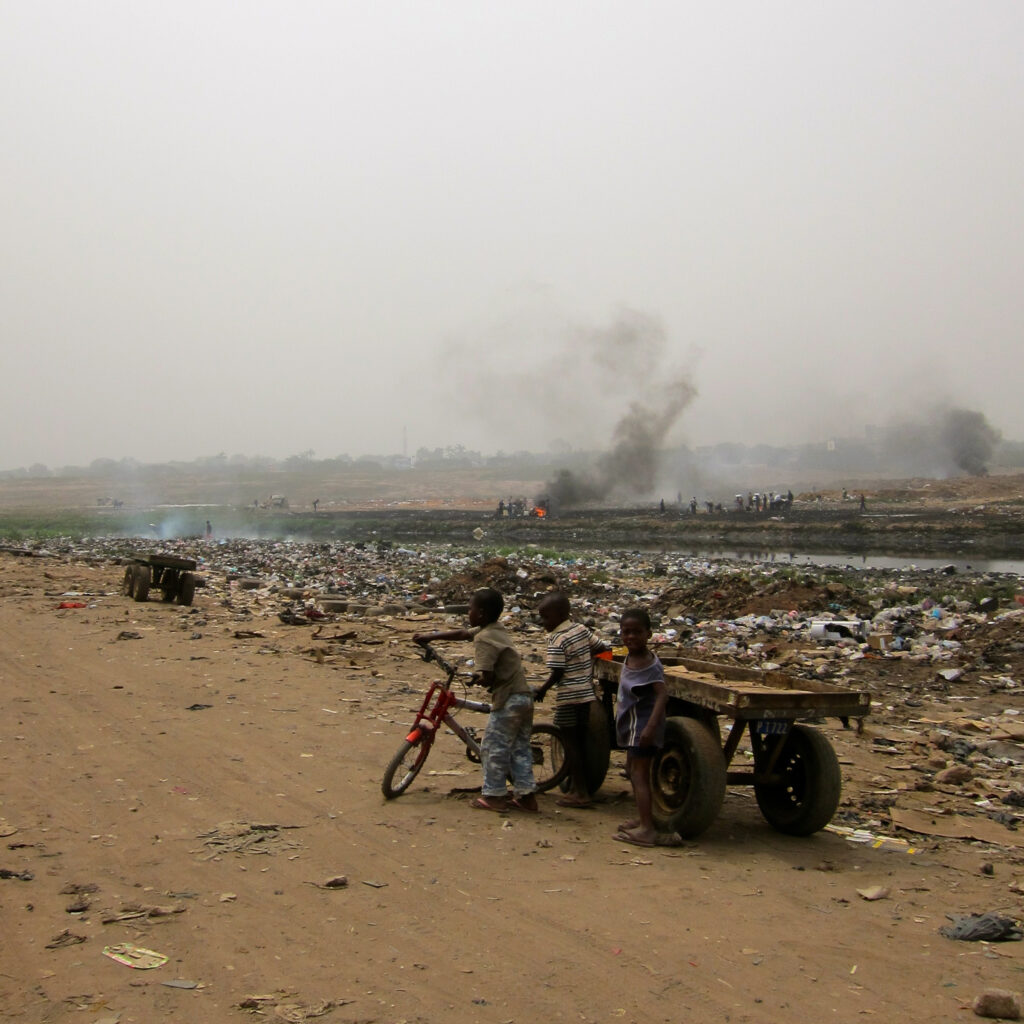
E-waste dismantling also poses significant threats to Ghana’s environment, further emphasizing the importance of altering contemporary e-waste trading networks. E-waste has a high content of hazardous metals such as lead, cadmium, and mercury, which harm soil, water, and air quality when released into the environment during dismantling. Soil contamination is a particularly acute problem, with informal dismantling practices such as open burning and acid leaching releasing chemicals into soils around Agbobloshie, threatening local biodiversity. Additionally, e-waste substantially contributes to water pollution. Ghana’s Odaw River and Korle Lagoon have both been flagged as hotspots for e-waste contamination. When pollutants from e-waste enter aquatic bodies, they contaminate food chains and, in turn, human health; this underscores how e-waste generates systemic adversity across a variety of Ghana’s ecosystems.
The e-waste trade inflicts disproportionate burdens on Ghana, reflecting ongoing colonial patterns where the Global North exploits the South for cheap labour. In turn, this inflicts serious human rights violations and stalls opportunities for economic development. Ghana does not produce significant quantities of its own e-waste; rather, the root of the damage inflicted on the country’s socio-economic livelihood is e-waste imports. Accordingly, the onus for the e-waste crisis must be flipped onto the Global North—including those producing, consuming, and ultimately discarding e-waste. Consumer decisions like commuting to an e-waste disposal centre instead of throwing out an old phone can take all of 30 minutes, yet be pivotal for reducing the burden Ghana faces with e-waste imports. As e-waste generation continues to surge three times faster than the global population, it is critical that its impacts on Ghanaians do not continue to go overlooked.
Edited by Marina Gallo
Featured image: Young men are pictured burning electrical wires to recover copper at Agbogbloshie, Accra, Ghana on September 2, 2019, by Muntaka Chasant, licensed under CC BY-SA 4.0.


