
Measured Reset: Carney’s China Trip and Canada’s Strategy of Risk Management

The arrest of Huawei executive Meng Wanzhou in Vancouver in 2018, Beijing’s detention of Michael Kovrig and Michael Spavor, allegations of foreign interference, and Ottawa’s eventual decision to ban Huawei from Canada’s 5G networks transformed a once-expanding economic relationship into a security-sensitive one. In effect, Canada’s China policy did not collapse so much as it was recalibrated under constraint, shifting toward managed distance. Trade retaliation became a recurring feature, and political contact narrowed. The relationship hardened into something high-friction and volatile, where even technical disputes carried diplomatic weight and domestic political consequences.
This volatility matters because Canada is structurally exposed. As a trade-dependent middle power, it cannot easily absorb prolonged economic retaliation. China, by contrast, has demonstrated patience and a willingness to weaponize market access when it suits its interests. At the same time, the United States remains Canada’s overriding economic and security partner, particularly as the 2026 review of the Canada-United States-Mexico Agreement (CUSMA) approaches. Article 32.10 of the agreement, the so-called “non-market economy” clause, effectively constrains Canada’s ability to pursue deeper trade integration with China without risking American retaliation. Layered on top of that is Washington’s expanding use of national-security trade tools under Section 232. When tariffs are framed as matters of security rather than economics, bargaining space shrinks, and allies are expected to align. In this environment, Canada cannot “go first” even if it wants to.

Against this backdrop, Prime Minister Mark Carney’s January 2026 visit to China—the first leaders’ meeting since 2017—was widely described as a reset. The trip produced two central tangible outcomes: a new strategic partnership framework and a roadmap for economic and trade cooperation, as well as provisional progress on two politically sensitive files: electric vehicles (EVs) and canola. On paper, these are significant developments. But the visit must be understood as a stress test rather than as a rapprochement.
The language of “strategic partnership” risks overstating the political moment. A country as economically exposed as Canada can see sudden tariffs, trade investigations, or diplomatic freezes rapidly translate into domestic political pressure. Ottawa is constructing a bounded framework for cooperation in selected areas while maintaining distance in sensitive sectors. This reset prioritizes predictability over expansion; stabilization, not transformation.
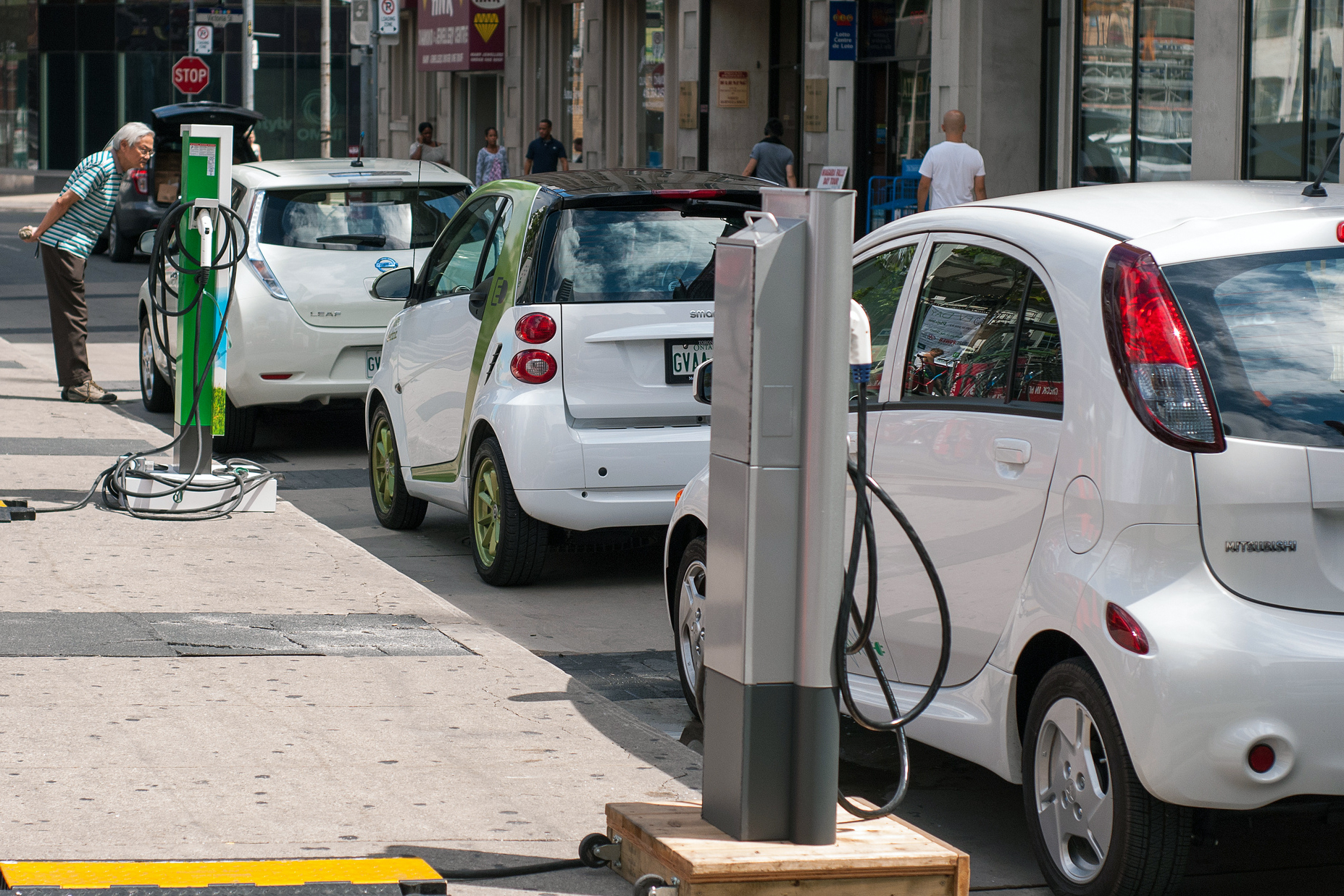
Canada’s cautionary tale remains the electric vehicle surtax. In August 2024, Canada announced a 100 per cent tariff on Chinese-made EVs, which came into force in October of that year. The move aligned Ottawa with similar actions by the United States and the European Union. It signalled toughness and policy coordination. But China’s response followed a familiar pattern: they retaliated by investigating and taking measures affecting Canadian canola, along with related agricultural products. The initiative targeted a politically sensitive, regionally concentrated sector in which Canada is highly exposed to market volatility, export disruptions, and regional income shocks, particularly in the Prairie provinces, where agricultural exports are highly concentrated. The issue was structural. Ottawa acted in a sector where it had little leverage and significant exposure, while Beijing retained the ability to retaliate against Canada when it was economically and politically vulnerable. Policy experts increasingly view this pattern as symptomatic of a broader shift in the global trade order. The World Trade Organization’s (WTO) dispute settlement system remains weakened, limiting the ability of smaller economies to rely on rule-based enforcement. Economic coercion has become more normalized. Recent cycles of tariff escalation between Washington and Beijing demonstrate how quickly trade disputes enmesh strategic contests with legal disagreements. In this environment, countries employ leverage and sequencing, meaning the deliberate ordering of economic moves, acting only where leverage exists and delaying gestures that provoke retaliation, instead of formal legal remedies.
China’s ambition to join the Comprehensive and Progressive Agreement for Trans-Pacific Partnership (CPTPP) adds another layer. As a member, Canada is a gatekeeper. That position creates bargaining space only when Ottawa acts with discipline and clarity about what it is willing to offer. At the same time, few experts expect Canada to reopen engagement in sensitive technology sectors. Artificial intelligence, advanced semiconductors, telecommunications infrastructure, and critical minerals remain politically and strategically fraught. Domestic securitization—including foreign interference legislation and tightened investment screening—constrains Ottawa’s room to manoeuvre. US pressure will continue to function as the dominant external constraint.
The core question, then, is how Canada operates within these limits. Rather than simply renewed engagement, Carney’s reset is best framed as risk management. Ottawa is attempting to stabilize a high-friction relationship without initiating deeper integration or crossing Washington’s red lines. Canada cannot out-escalate great powers. Canada’s trade-dependent and concentrated economy cannot compete through sustained tariff cycles, market closures, and retaliatory measures that larger economies can absorb for longer periods. Canada is left with its sequencing: choosing when to act, delaying symbolic moves that provoke retaliation, and engaging only where it has tangible force.
In practical terms, that means recognizing that EVs, steel, and industrial policy tools offer limited bargaining power vis-à-vis Beijing. They are areas where Canada’s actions are often reactive and alignment-driven, and where retaliation risks are asymmetric. By contrast, energy, particularly liquefied natural gas (LNG), represents a more credible bargaining chip. As Pacific LNG exports come online, Canada occupies a space that China has a clear long-term demand for. Energy trade is capital-intensive, long-term, and commercially grounded. Unlike advanced technologies, LNG exports do not directly implicate dual-use security risks, intellectual property transfer, or critical infrastructure vulnerabilities. It does not immediately intersect with the most sensitive security files. An LNG-first approach would not constitute strategic alignment but would represent selective engagement in a sector where Canada has something of value to offer.
Such an approach would also be legible to Washington. Energy trade does not carry the same strategic sensitivities as advanced technology cooperation because it involves commoditized resources traded globally rather than sensitive knowledge systems embedded in defence and intelligence ecosystems. It allows Ottawa to define guardrails clearly: sensitive sectors remain off-limits, while commercial energy flows provide a stabilizing channel. Leverage, in this sense, implies having something the other side wants, which creates space for negotiation and reduces incentives for punitive action.
A measured reset reflects a doctrine of economic discipline, prioritizing leverage, sequencing, and restraint over symbolic confrontation. It requires refusing symbolic fights that invite predictable retaliation, rebuilding leverage where possible, and treating institutions such as the WTO and the CPTPP as arenas of strategic competition rather than guarantees of protection. Over the next several months, Canada’s China policy will be judged less by diplomatic optics in Beijing than by whether it strengthens Ottawa’s position in Washington’s CUSMA review room. In a world where power increasingly shapes economic relations, Canada’s task is not to pick sides reflexively, but to sequence its moves carefully and engage only where the balance of risk and leverage makes sense.
Edited by Liam Murphy
Featured Image: Courtesy of the PMO.

