
Opinion | America at Its Best Brings Others Along. A Canadian Flying Around the Moon Today Is Proof.
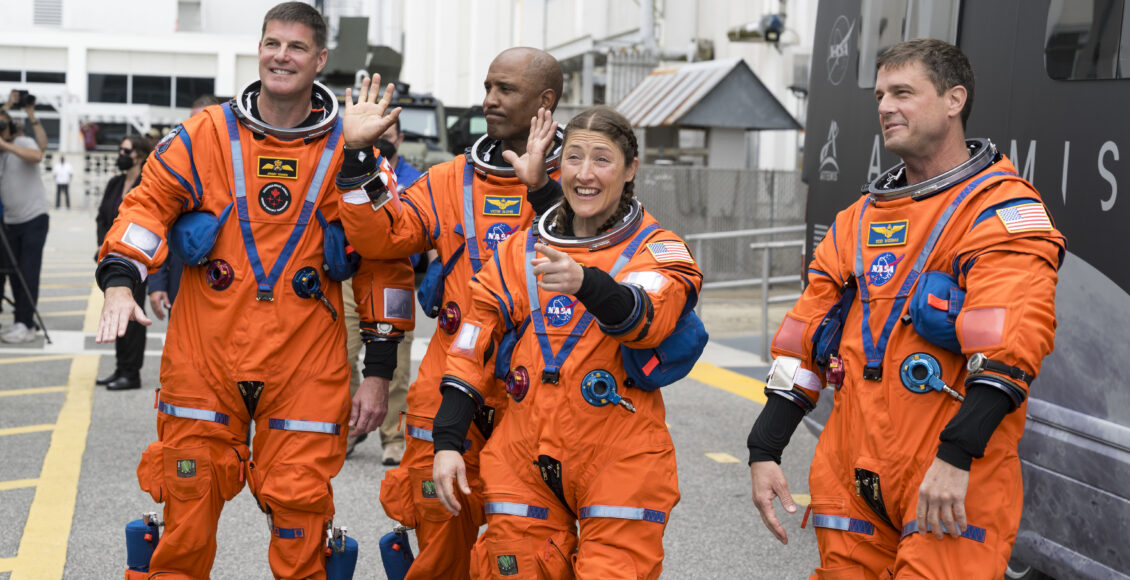
For the first time in nearly half a century, humans are flying to the Moon. Later today, the four astronauts aboard Artemis II, Americans Reid Wiseman, Victor Glover, and Christina Koch, alongside Canada’s Jeremy Hansen, are expected to reach 406,773 kilometres from Earth during their lunar flyby, travelling farther from home than any human in history.
For Canada, Hansen’s presence aboard Artemis II is a moment of profound national significance. By flying on the mission, he has become the first non-American ever to leave Earth orbit, a distinction rooted in decades of Canadian contributions to space exploration: from Alouette I, which made Canada the third country to design and build its own satellite, to the Canadarm, a fixture of American space shuttle missions for three decades, to the $2.05 billion Canada committed in 2019 to Canada’s space program, a contribution that, under the 2020 Gateway Treaty, helped secure Hansen’s seat on Artemis II. But all of that explains how Canada earned the mission’s lone non-American seat, not why the United States chose to offer it in the first place.
The answer came from Hansen himself, days after the Artemis II crew was announced on April 3, 2023. Appearing on The Late Show alongside his crewmates, Stephen Colbert asked the obvious question: How had the only non-American ended up on the mission? Hansen’s reply was telling. “It is not lost on anyone in Canada,” he said, “that if the United States wanted to go to the moon again, they don’t need Canada to do it.” What brought him there was a deliberate American choice: a decision by NASA, as he put it, to think big and to “curate a global partnership.” Hansen called it “tremendous leadership” on the part of the United States, the kind that lifts allies up and allows them to bring their own genius to the project.
Artemis II is, of course, in many ways an international endeavour. In addition to Hansen’s presence, the mission depends on the European Space Agency’s service module, which powers, propels, and sustains the Orion spacecraft. The broader Artemis Accords, established by NASA in coordination with the United States State Department in 2020 and now joined by dozens of nations, have created a framework for cooperative lunar exploration spanning six continents. Yet none of that changes the fundamental reality: NASA remains the world’s pre-eminent space agency, the architect of the Artemis missions, and the institution without which none of this would exist. The United States did not need partners to return to the Moon. It chose to build a coalition anyway.
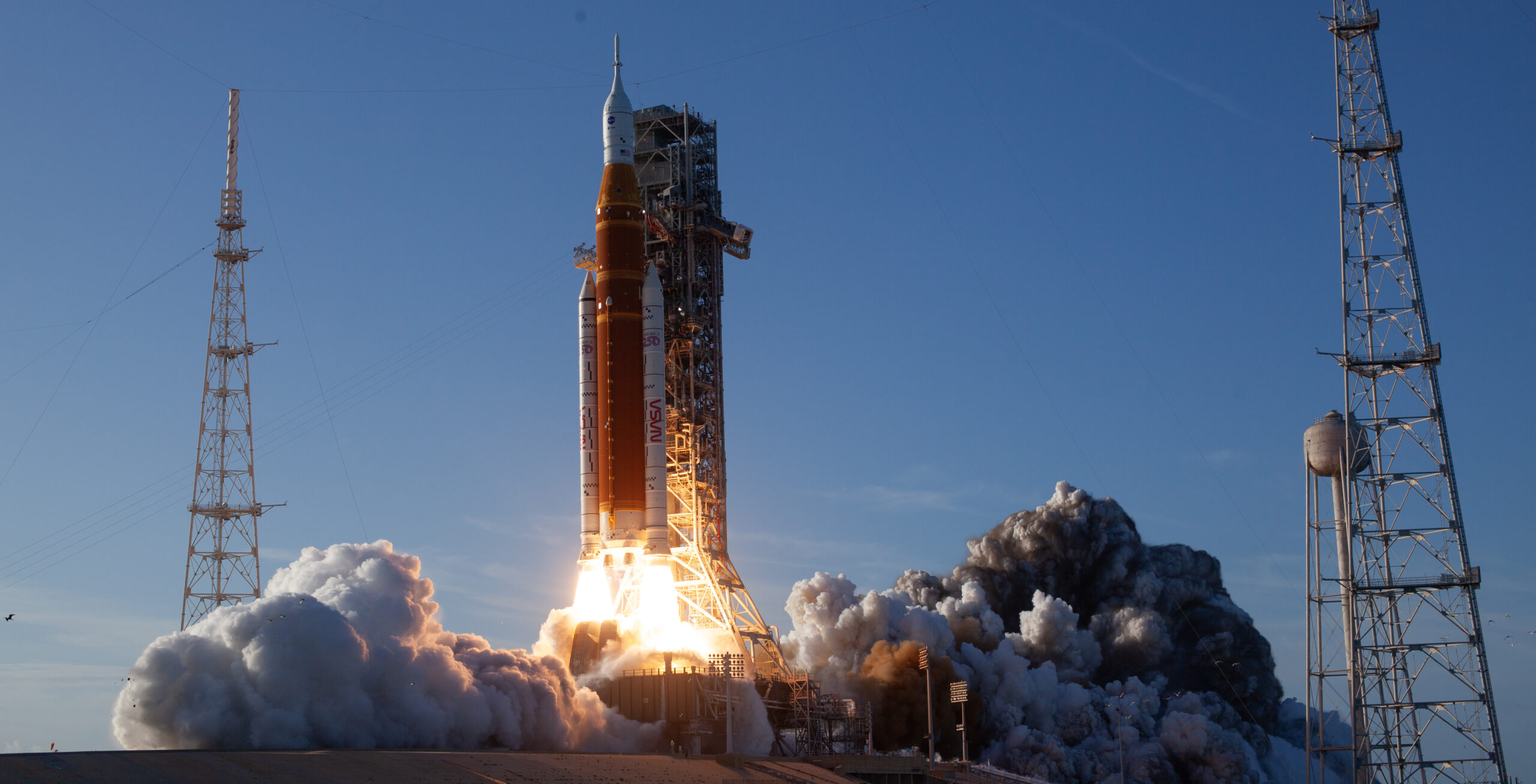
That choice reflects a tradition and theory of power that has long distinguished American statecraft: the belief that leadership is strongest when it gives capable allies a meaningful stake in projects only the United States can initiate and sustain. In his 1949 inaugural address, President Truman spoke of “moving on with other nations to build an even stronger structure of international order and justice.” That was logic that helped build NATO. It underwrote the postwar international order. It made American primacy, for much of the world, something to align with rather than fear, because it showed allies that America at its best brought others along. Artemis II is that tradition projected outward into space.
That is precisely what makes Hansen’s words from 2023 so striking today, three years to the day after he spoke them. The ethos of American leadership he described now feels painfully distant under President Trump. Again and again, his administration has treated allies as targets of coercion and contempt. Ironically, Canada is perhaps the clearest example. Trump has threatened to annex it as the 51st state, referred to both Prime Minister Trudeau and Prime Minister Carney as “governor,” and waged an escalating trade war against the country. The kind of partnership, and the “tremendous leadership,” that Hansen described on that late-night couch now feels like a dispatch from a different America.
And yet Artemis II offers a reminder that the tradition Hansen described in 2023 has not vanished entirely. Speaking from the Orion spacecraft over the weekend, floating in zero gravity beneath a Canadian and American flag, Wiseman, the mission’s commander, brushed aside any suggestion that Hansen was somehow an outsider. “No way we are teasing this guy,” Wiseman said, recalling that the two had known each other since 2009, when one joined NASA and the other the Canadian Space Agency, and had remained close friends ever since. Glover, the mission’s pilot, added: “Similar to our countries physically, this crew is very close.” In this way, the crew of Artemis II embodies the mission’s highest ideal: a shared human ambition that rises above rivalry and nationalism.
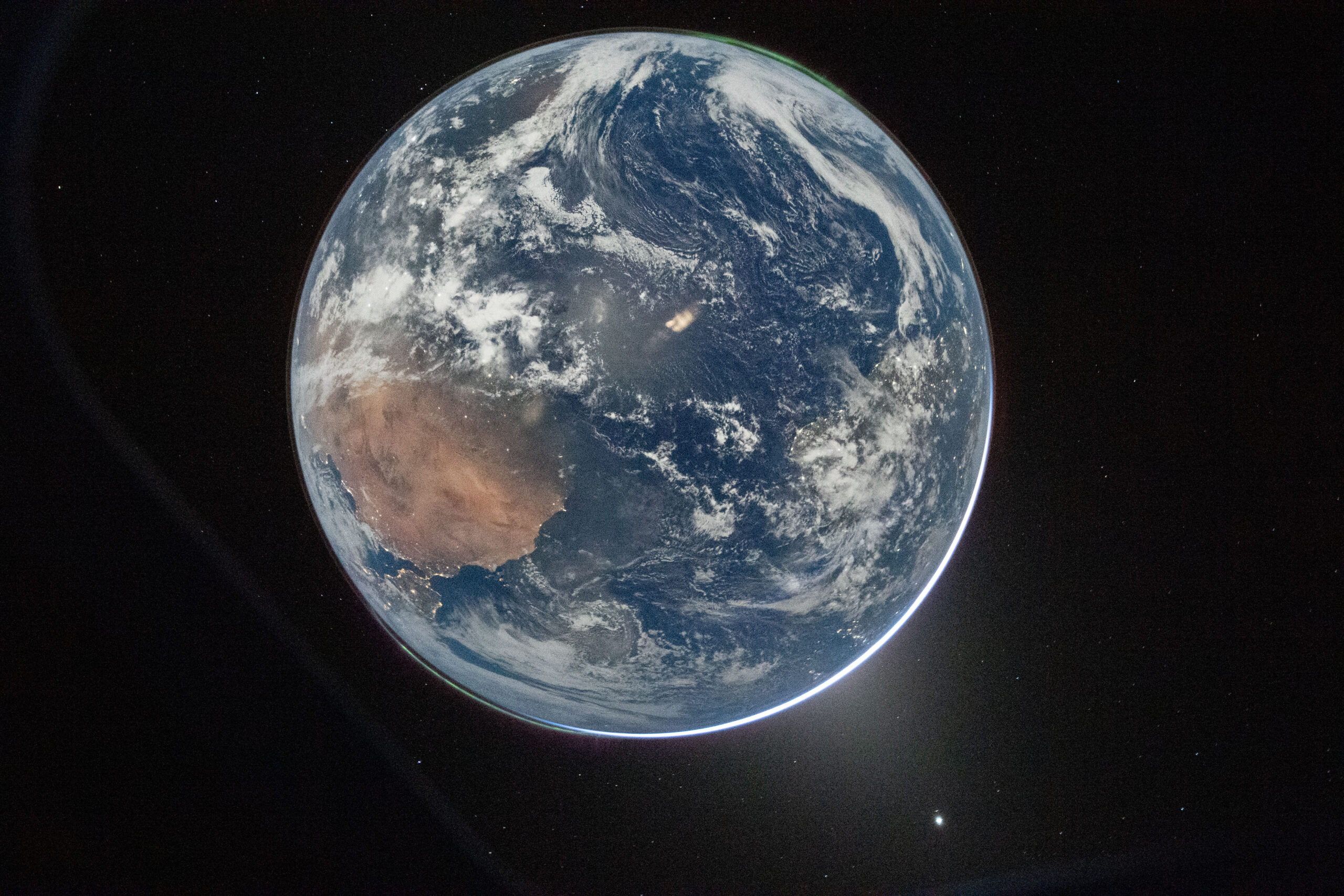
Throughout the mission, the Artemis II crew has been sending home photographs of Earth. In images like Hello, World, shown above, our planet appears radiant and alone, hanging in a darkness that makes one forget the lines humans have drawn across it. Astronauts have been describing this view since the Apollo era, and they have always returned to some version of the same revelation: from far enough away, the divisions that dominate human life do not look eternal or profound. They look fragile, artificial, and absurd. Beneath all our flags and frontiers, there is only one Earth.
At a moment when the instinct to bring others along and to share in a common mission has become harder to find on Earth, it is striking that one of the clearest expressions of that spirit is now hundreds of thousands of kilometres above it. But today, as Artemis II’s Orion spacecraft circles the Moon with a Canadian aboard, it is still possible to remember what American leadership once looked like, and to wonder what it could still be, if only it looked up.
Edited by Adèle Doat and Stellar Zhang
Featured Image: The Artemis II crew prepares to board the Orion spacecraft ahead of launch, April 1, 2026. Left to right: Jeremy Hansen, Victor Glover, Christina Koch, and Reid Wiseman. Photo by NASA/Aubrey Gemignani is licensed under CC BY-NC-ND 4.0.

