
Opinion | The Last Days of Pax Americana
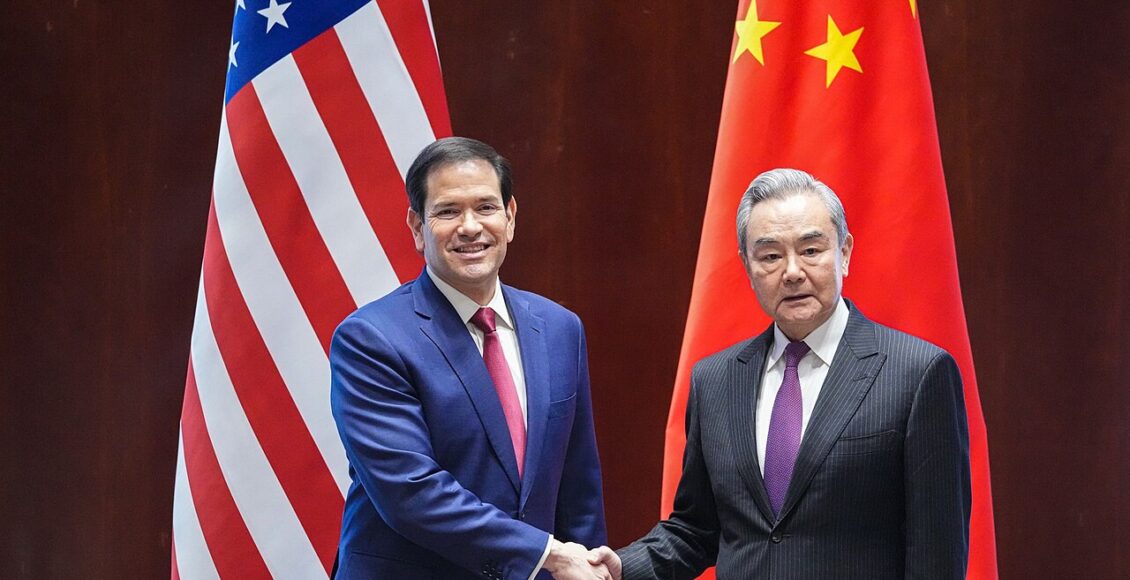
At the 2026 Munich Security Conference, German Chancellor Frederich Merz, French President Emmanuel Macron, and US Secretary of State Marco Rubio collectively delivered what should be considered as the most defining epitaph of the 21st century. In statements strikingly similar to one another, all three state leaders determined that the post-WW2 global order that had dominated international relations for the past 80 years—Pax Americana—had all but collapsed.
These views reflect a growing consensus among Western leaders. Less than a month earlier, Canadian Prime Minister Mark Carney spoke at the World Economic Forum in Davos, proclaiming that American hegemony was in the midst of a rupture. In the business world, Ray Dalio, the founder of Bridgewater Associates, one of the world’s largest hedge funds, published an article assessing the extent of this breakdown. In it, he declares that international orders must pass through six stages from rise to collapse. As of 2026, Pax Americana is in the sixth and terminal stage. This era of American global domination that we know well will be coming to an end.
The real question is not whether American hegemony will survive, but instead what will replace it and who is positioned to write the rules of the next global order. International systems are not permanent because they require a patron to sustain their legitimacy. In his article, Dalio provides a framework in which a hegemonic order can only be sustained when a dominant power establishes economic and military supremacy. When that supremacy erodes, the system it supports will inevitably collapse. This is what is known as the hegemonic stability theory (HST). In other words, on the international stage, power always prevails.
For the past 80 years, that power was American. The United States was able to guarantee its economic and military supremacy through two pathways post-WW2. Through the Bretton Woods Agreement, the US dollar was established as the global currency, creating an economic hegemony unrivalled by any nation. And, as the first to develop and only to deploy nuclear weapons, it naturally assumed a key role in writing the security structures of the post-war order through the UN and NATO. Only with both military and economic supremacy secured was the US able to position itself as a long-term hegemon.
However, that supremacy is visibly cracking. Since 2025, US President Donald Trump has publicly questioned NATO’s value, withdrawn from several multilateral frameworks, and stirred doubts over the withdrawal of the American nuclear umbrella from its European allies. Domestically, rising political polarization and violence have fractured and destabilized the US’s consistency and credibility in its foreign policy commitments and perceptions. This is exactly the dynamic that the framework of HST describes—that the collapse of a hegemonic cycle would be initiated by an erosion, which, in the US’s case, would be its own unwillingness to bear the costs of upholding the system it created.
By doing so, the US is opening up a power vacuum on the international stage. HST is unambiguous on what will follow. History shows us that this vacuum will not remain for long, as rising powers will seize the opportunity to fill the hegemonic vacancy. The US, for example, quickly responded to the fading power of the previous hegemon, the British Empire, by replacing it in both economic and military dominance post-WW2. In this case, wars are usually the best circumstances for a hierarchical transition to occur. To replace the previous hegemon, the challenger must obtain two advantages: financial supremacy and international support.
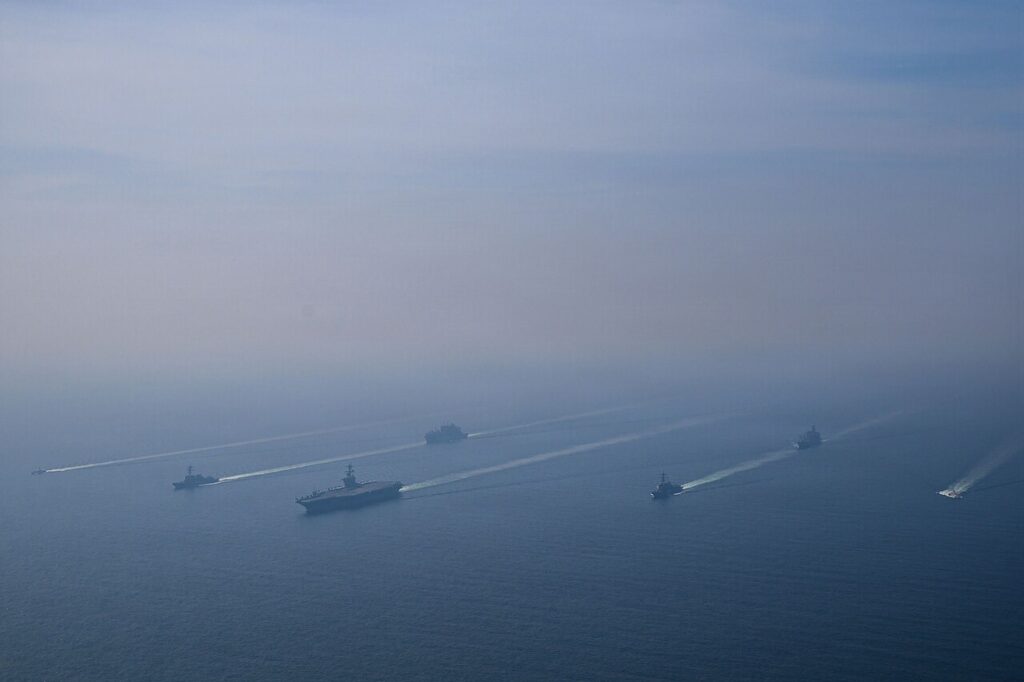
The 2026 Iran War will most likely be the playing field of this transition. When the US decided to launch strikes and open hostilities in February, it dragged itself into a war it was ill-positioned to win. This was due to two factors. Firstly, unlike in WW2, the US failed to secure an international moral consensus to legitimize its involvement in the war. The timing of the first strikes, which occurred on the immediate heels of US-Iran nuclear negotiations, will be interpreted by many countries as US-led aggression.
Secondly, the current US financial position is not optimal for long-term conflict. The guarantor of US victory in 1945 was the power of its industrial machine during the war years. Through the Lend-Lease agreement, the US was able to leverage war-torn nations in Europe to rely on American production, thereby simultaneously increasing its economic power. The US in 2026 does not hold these circumstances. Unlike Lend-Lease, which made money while building stronger, increasingly dependent allies, the US’s current position is one of a major debtor and an increasingly unreliable security partner. While the Americans hope to turn this conflict into another demonstration of their hegemonic power, they are not positioned to repeat the successes of 1945. Another power is watching closely, has studied the playbook with precision, and is positioned to challenge the 80 years of US domination.
Over the past two decades, through BRICS, the Belt and Road Initiative, and other projects, China has been constructing an alternative order that would allow it to overtake American hegemony and introduce a new era: Pax Sinica. Replicating the logic behind Bretton Woods and Lend-Lease, it has been increasingly investing in the Global South, embedding economic dependencies in Africa, Southeast Asia, and Central Asia. Most critically, it has remained neutral in the Iran conflict, which is a calculated move that would give Beijing space to drag out American involvement, prolong the conflict, and weaken the US’s international and domestic position. Since March, it has been offering humanitarian aid to areas affected by US-Israeli bombings. This, in the long run, could greatly bolster its support with war-torn countries in the region. China is playing the long game.
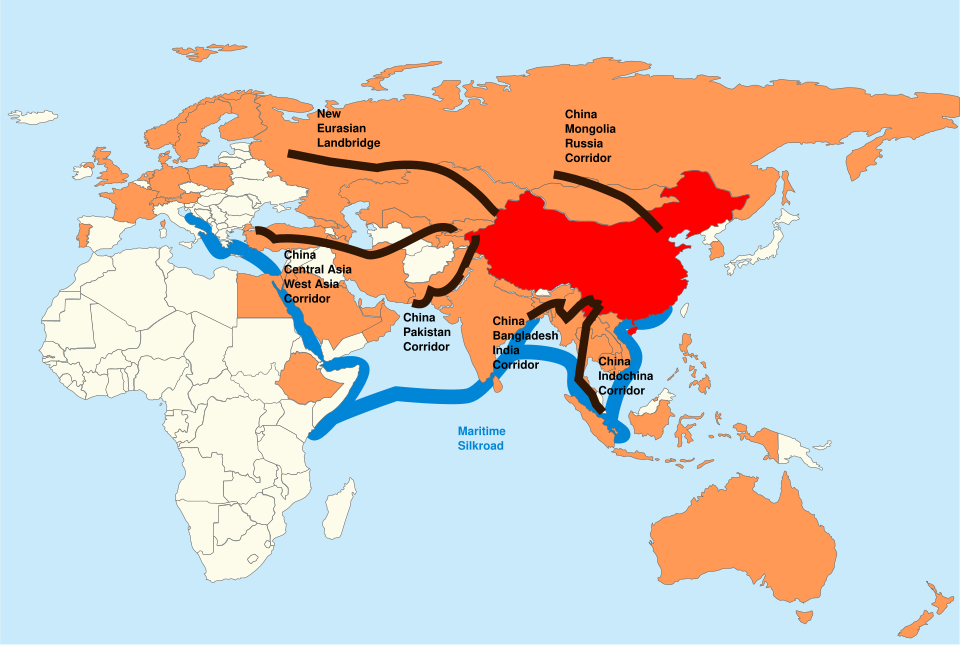
Beijing is executing a near-parallel path to the American WW2 playbook. It is allowing the US to entrench itself in a prolonged war in the Middle East, giving China the opportunity to brand the US-led coalition as aggressors. By presenting this narrative to nations in the Global South, Beijing can use the growing disillusionment with US-led institutions as an opening to introduce and expand its economic presence around the world. As one of the first to condemn US-Israeli strikes and offer humanitarian aid, China will present itself as an indispensable broker for peace in the region. Meanwhile, as NATO unity is strained by American dissatisfaction with the organization’s lack of commitment to Iran, China could also further exploit this disunity to advance its regional goals. After all, when the focus is on the Middle East, there will be significantly less oversight on the Indo-Pacific.
It was the image of America as a liberator that legitimized the reign of Pax Americana. A Chinese image as a peacemaker in Iran could begin to do the same.
The post-WW2 international order is in terminal decline. What will replace it is not certain, but it most certainly will be determined by whoever emerges from the chaos with the most allies, the most capital, and the most credibility. The outcome of the next transition will not be shaped by whoever fires the first shot, but by who is positioned to write the order that follows the horrors of war.
Edited by Stellar Zhang
Featured Image: “Secretary Rubio Meets with Chinese Foreign Minister” by U.S. Department of State is licensed under the Public Domain.


.jpg)