
Reassessing the AU-EU Partnership: Migration and the Illusion of Mutuality
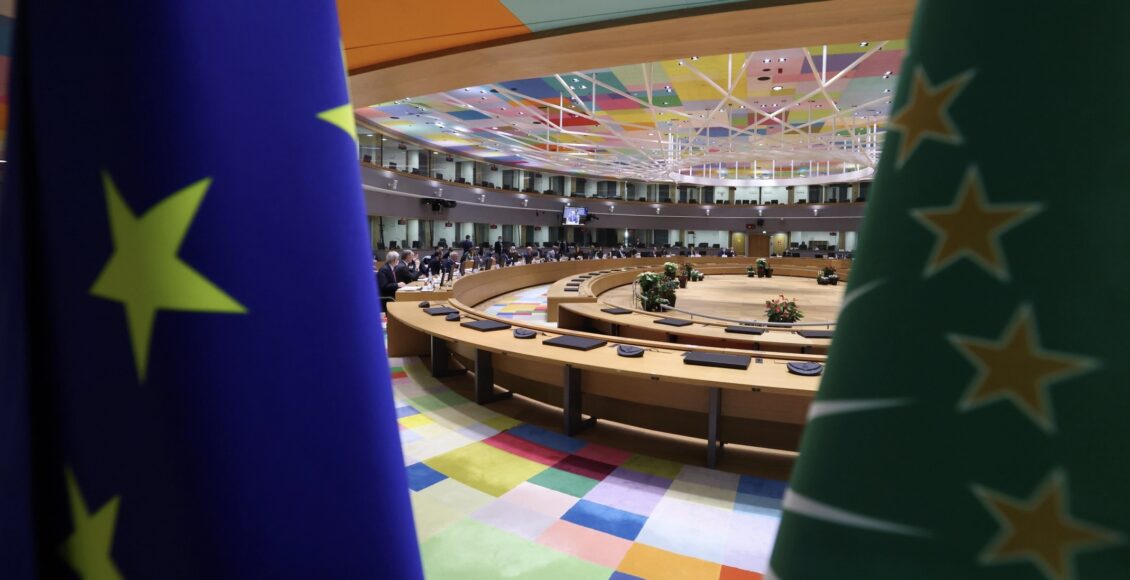
The long-standing partnership between the African Union (AU) and the European Union (EU) celebrates its 25th anniversary, a milestone that coincides with the 3rd AU-EU Ministerial Meeting and presents an opportunity to contemplate this purported strategic partnership. Concealed behind the mask of official discourse, which features equal cooperation, mutual prosperity, and strategic alignment, lies a more complex and unspoken reality.
A prime example of such allegations is evident in the domain of migration governance, which has become a central pillar of AU-EU relations. Despite various attempts to build new institutional frameworks and joint initiatives, a question remains: has the AU-EU relationship moved beyond a simple donor-recipient model to one rooted in shared agency? Or do European priorities, particularly around migration control, continue to be revolving domination and resource control?
At the beginning of the AU-EU partnership, there were the Lomé and Cotonou Agreements: early frameworks centred on aid, trade, and conditionalities. Further into their partnership, the more ambitious Joint Africa-EU Strategy (JAES) of 2007 promised a shift toward a more mutual and balanced relationship. This fulfilled both African and European interests, emphasizing a stronger African agency that had been promised since the beginning of their partnership. Since then, the AU has grown into a more dominant and assertive actor on the global stage, increasingly vocal in its calls for structural reforms in global governance. Yet, despite these developments, the institutional asymmetry between the two blocs remains a heavy point of discussion. To this day, the EU remains the AU’s largest donor, and a significant portion of the AU’s programming, particularly in the areas of peace and security, continues to be externally financed. European conditionalities and policies, tied to funding and trade preferences, continue to shape African policy priorities in subtle but powerful ways.
This deeply rooted structural dependence widens the pre-existing gap between theoretical partnership rhetoric and practical reality. The AU may wave flags of sovereignty and mutualism, but EU policy still very much sets the tone and the tempo. This is particularly evident in the domain of migration, where European interests have repeatedly overridden African priorities.
One focal point of the AU-EU cooperation is migration, particularly in the aftermath of the 2015 refugee crisis. In response, the EU launched the Migration Partnership Framework (MPF), which aims to engage African countries in return agreements, border control efforts, and asylum processing. The 2015 Valletta Summit and subsequent Khartoum and Rabat processes served to institutionalize this cooperation, offering significant economic development aid in exchange for African governments’ collaboration on migration containment.
However, this self-styled partnership raises serious questions about agency and equity. The bulk of EU funding has been allocated to restrictive migration measures, including border surveillance, biometric data collection, and return infrastructure. In doing so, addressing the root causes of the issue or investing in impactful long-term development is avoided. Essentially, African states have increasingly been “instrumentalized” as outposts of European border control.
The logic of “externalization” has thus shaped AU-EU cooperation in ways that prioritize European domestic political pressures over many African developmental needs. Return and readmission agreements have often been conducted and concluded with minimal transparency, with little to no African consent. In countries like Niger and Tunisia, EU pressure has sparked public backlash and accusations of sovereignty erosion. For example, Tunisia’s recent negotiations around migrant camps drew widespread criticism from civil society groups who argued that EU funding was being used to outsource detention centres to North Africa without democratic oversight.
Nevertheless, African sovereignty is not entirely absent. Some governments have begun resisting EU demands by rejecting readmission agreements or demanding greater developmental compensation. Yet, such resistance remains fragmented and constrained by the structural dependency that defines the partnership.
Beyond migration, recent joint initiatives such as the Africa-Europe Investment Package, announced during the 2022 AU-EU Summit, promise to support digital transformation, green energy, and infrastructure across the continent. The EU has pledged €150 billion under its Global Gateway strategy, aiming to counter China’s Belt and Road Initiative and present Europe as Africa’s preferred partner.
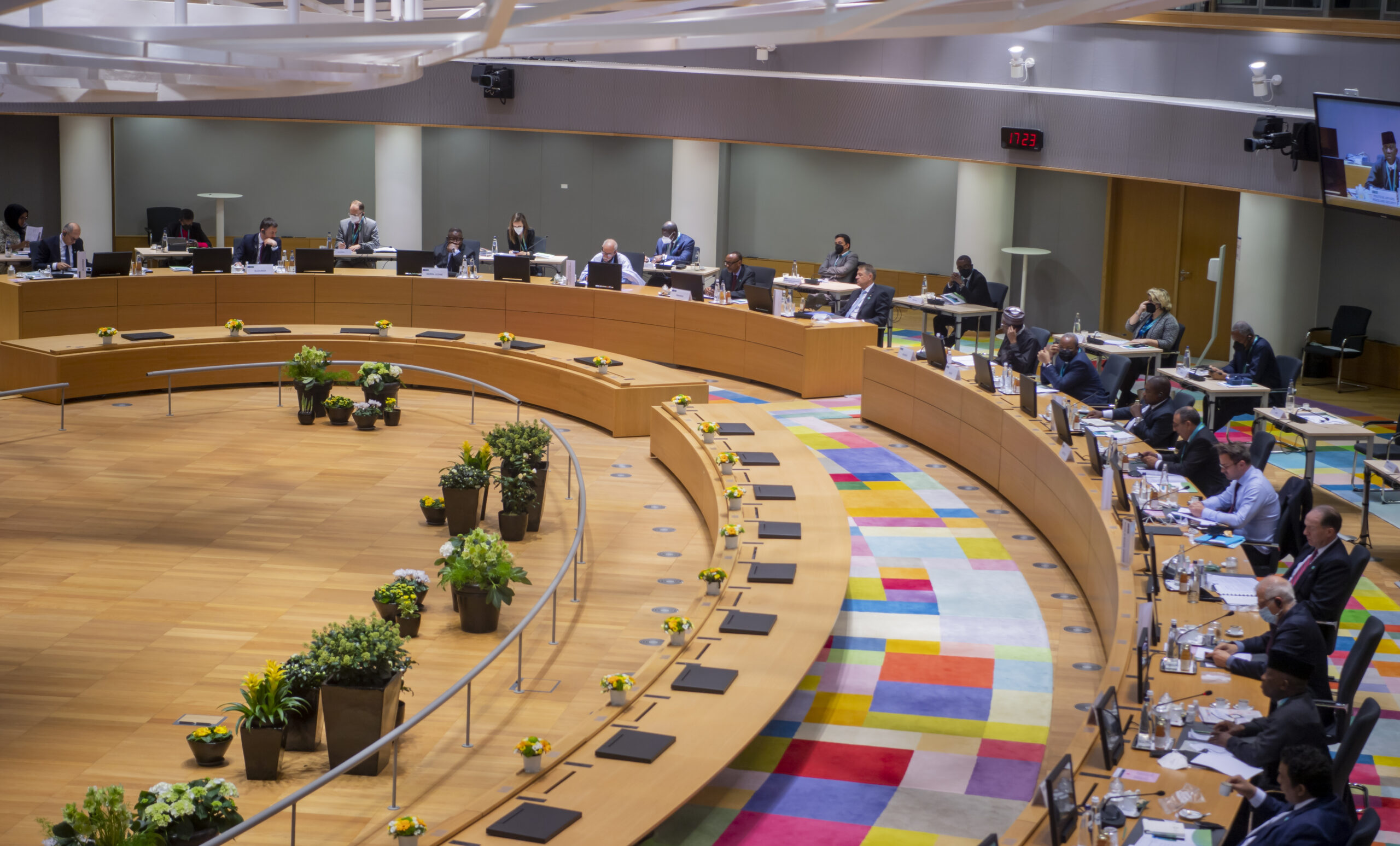
Yet once again, rhetoric and reality seem to diverge. Much of the pledged funding is routed through European institutions and private investors, raising serious concerns about control, ownership, and accessibility. African negotiators have expressed concern about the opacity of disbursement mechanisms and the Eurocentric criteria used in project selection. Moreover, green transition plans often impose unachievable conditions on African states, asking them to leapfrog fossil fuel development without the actual financial support that such transitions require.
A continuous emphasis from the EU on “shared values” and “win-win cooperation” often conceals a deeper imbalance in how priorities are set and whose actual interests are served. While the AU pushes for more fair trade terms and institutional reform of global bodies such as the IMF and UN Security Council, these demands are rarely central in EU-AU summits or policy deliverables.
The 25th anniversary of the AU-EU partnership is an important opportunity for such critical reassessment. While institutional frameworks have evolved, and joint declarations abound with references to equality and cooperation, the relationship remains marked by structural dependency and European agenda-setting. Nowhere is this clearer than in migration governance, where African states are often reduced to instruments of EU border policy.
If the partnership is to become truly mutual, it must move beyond aid-for-compliance and toward co-developed strategies that recognize African agency and autonomy. This requires not only financial reform but a shift in mindset: one that places African priorities at the centre rather than on the periphery of intercontinental cooperation.
As global power dynamics shift and the geopolitical importance of Africa rises, the EU faces a choice: continue pursuing a securitized, interest-driven agenda, or help build a partnership that lives up to its founding ideals.
Edited by Maisie Minnick
Featured Image: “European Union – African Union Summit 2022,” by European Union / Council of the EU is licensed under CC BY 4.0.
