
The Fish Farm Problem and the Logic of Development Finance

The difference between a trawler and a fish farm is not what they produce, but the methods they employ to extract the product. One drags the seabed, extracting everything in its path, indifferent to what remains. The other depends on the water staying alive; its returns are tied to the long-term health of the ecosystem it inhabits. Development finance has always claimed to be of the latter tradition.
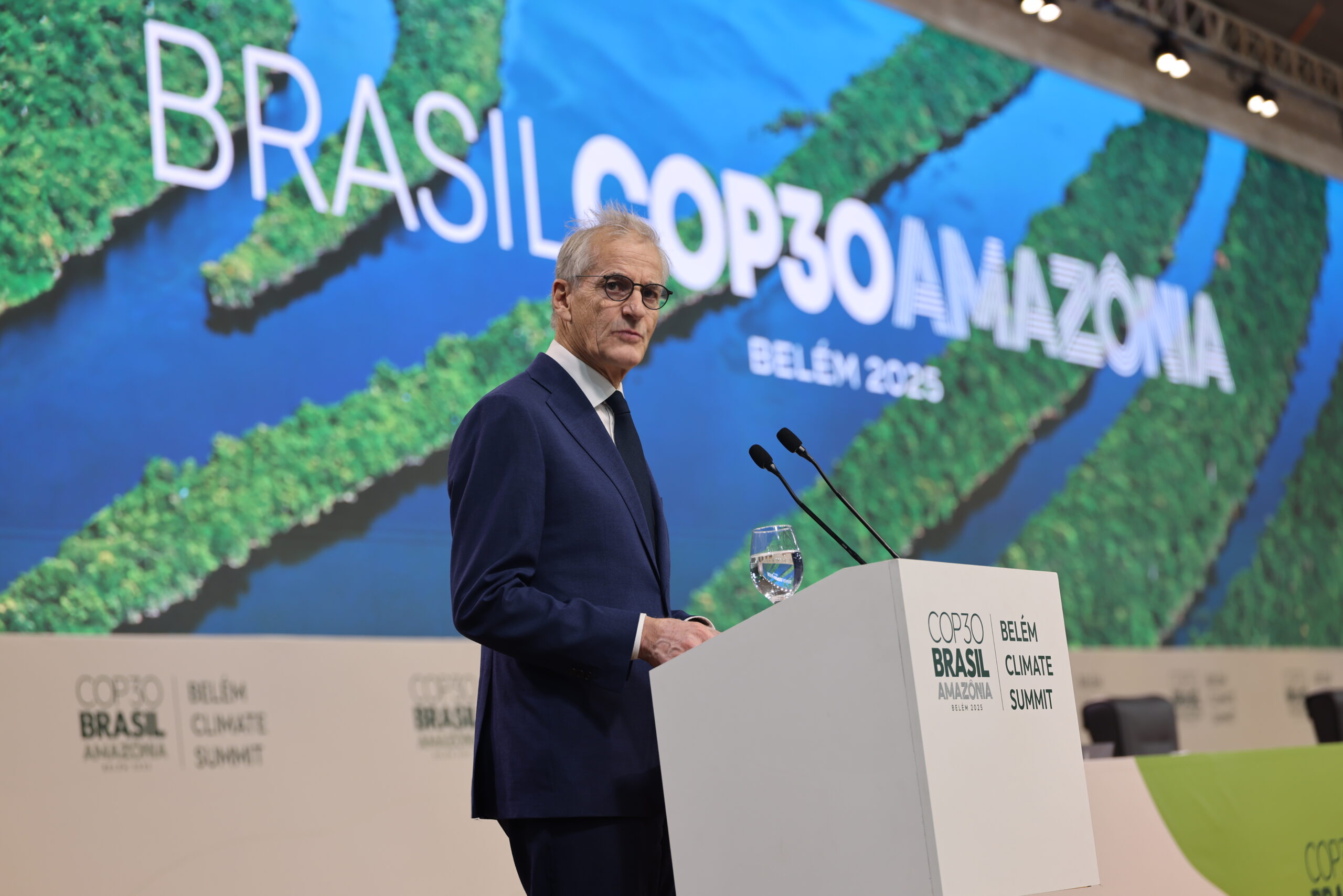
At COP30 in 2025, the difficulty of scaling climate financing came into sharp focus. Existing commitments aim to reach at least $300 billion USD annually by 2035, but estimates now place developing countries’ needs closer to $1.3 trillion USD annually. The money is moving, but far less of it remains where it lands.
Capital has moved south before. In the 1980s, structural adjustment lending promised modernization but delivered dependency. The World Bank and International Monetary Fund conditioned loans on liberalization, privatization, and austerity. Governments watched their industrial bases erode, public sectors shrink, and economies reorganize around the needs of creditors rather than citizens. Similarly, the trawler did not announce itself as such. It spoke the language of efficiency and reform.
Today’s climate investment arrives through different channels and a different vocabulary. It moves through green bonds, blended finance, corporate sustainability initiatives, and public-private partnerships designed to mobilize capital at scale. The mechanisms have changed, but the incentives have not. The underlying question remains: when foreign capital builds your infrastructure, who owns what it produces?
The trawler and the fish farm describe the two versions of this relationship. One extracts quickly, with little regard for what remains. The other ties its returns to the continued viability of the system it draws from. Most modern climate finance presents itself as the latter but still behaves like the former. Infrastructure is financed externally, often built with imported technology, and maintained through contracts that lock cities into long-term dependence on outside firms. Revenues may be generated locally, but ownership, expertise, and decision-making authority frequently sit elsewhere.
The Lake Turkana Wind Power project in northern Kenya illustrates the pattern. Africa’s largest wind farm spans 40,000 acres of ancestral pastoral land, generating 310 megawatts and supplying roughly 17 per cent of Kenya’s installed capacity. By any energy metric, it is a success. Yet, the consortium behind it is almost entirely European: The European Investment Bank, the Dutch development bank FMO, Nordic development finance institutions, Danish Vestas turbines, and now partly owned by BlackRock. The power supplies the national grid under a 20-year purchase agreement. However, ownership does not reside with the communities whose land they occupy. Indigenous pastoralist groups were not consulted, and the village of Sarima was relocated to make way for construction. In 2015, an intertribal coalition declared that they rejected what they called the illegal privatization of 150,000 acres of their ancestral land, adding that they were not opposed to wind energy itself—only to a model in which they had no ownership and no leadership role. The infrastructure may be green, but the structure of extraction is familiar.
This is the contemporary version of an older problem. Capital is no longer forcing its way in through crisis lending. It is being invited in through climate urgency. The issue is that capital flows on terms that make extraction easy and local retention incidental. Changing the structural calculus involves reversing that default by designing investment environments where value stays, participation requires local anchoring, and exit carries a cost.
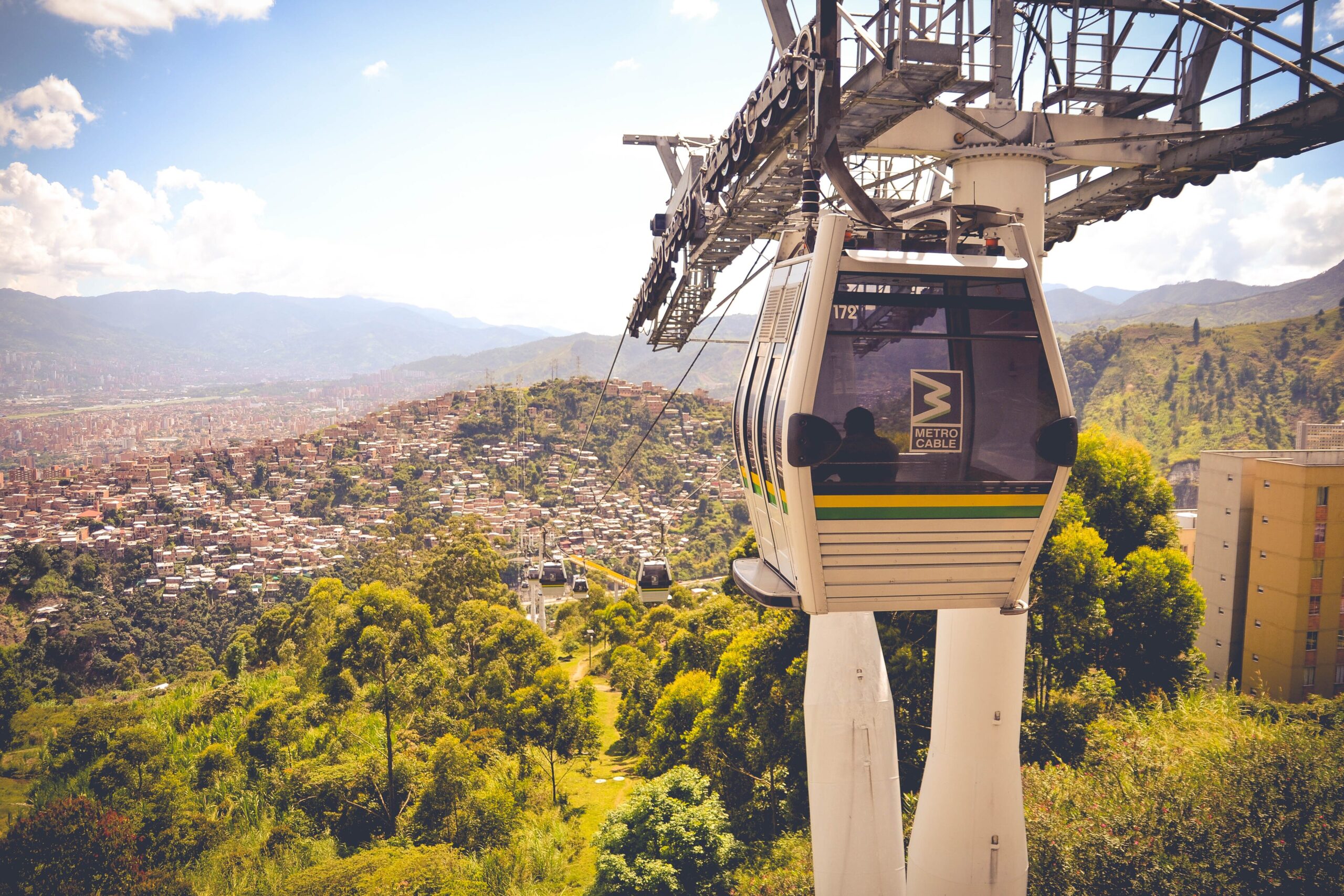
Medellin, Colombia, offers the closest thing to a working model. In the early 2000s, the city was synonymous with cartel violence, its hillside barrios physically and economically severed from the center. The Metrocable system, launched in 2004, was the first cable car network in the world fully integrated into a city’s public transit. It was publicly financed, municipally operated, and designed through direct engagement with the communities it was meant to serve. Commutes that took two hours dropped to thirty minutes. Poverty significantly fell in served neighbourhoods over the following decade. Outdoor escalators in Comuna 13 reconnected one of the city’s most isolated districts to the urban core. The infrastructure was paired with social programs—schools, libraries, health facilities—clustered around transit nodes through the city’s Integrated Urban Projects.
The model was not without costs. The city’s Cinturón Verde, a greenbelt initiative designed to contain hillside sprawl, displaced more than 14,000 families when a former dump was converted into parkland. Rising property values around metro stations pushed some longtime residents out of neighbourhoods the system was built to serve.
What distinguishes Medellin is that the core transit investments were structured from the outset around public ownership, local governance, and community participation. The city retained control of the infrastructure, the operating revenues, and the planning authority. Where it lost ground was not because the model was wrong, but that complementary protections for land tenure and housing affordability went unarticulated. This distinction matters. The mechanisms that kept Medellín’s transit investments anchored locally are the same ones available to cities across the Global South when the political will exists to deploy them.
It begins with ownership: land remains one of the few levers cities still hold, and it is often the first one they concede in partnerships with foreign entities. When land is transferred outright, so too is the bargaining power that comes with it. Mechanisms like community land trusts offer an alternative, allowing development to proceed while keeping underlying control in local hands. Medellin’s own experience with the Cinturón Verde suggests what happens when this step is skipped — even well-intentioned projects displace the people they are meant to protect.
Financing structures can fortify this. Revolving funds and locally governed investment vehicles allow capital to recirculate rather than exit after a single cycle, building domestic control over time. Blended finance can tie returns to outcomes that matter locally—employment, reinvestment, service provision—rather than to extraction timelines.
Procurement is another pressure point. Large projects tend to import expertise, technology, and labour as bundled packages, limiting local participation to low-value segments. Turkana remains poignant: Danish turbines, European financing, foreign contractors, and indigenous communities reduced to landowners without ownership. Requirements for local sourcing, technology transfer, and training can shift this balance, but only if they are enforced.
The constraint is not the lack of tools, but of leverage. Cities in the Global South operate within tight fiscal and political margins, often negotiating with actors that can move capital elsewhere. That imbalance makes it difficult to impose conditions without risking the investment itself. Yet the leverage that does exist is frequently underused. Urban land markets, regulatory approvals, and access to rapidly growing consumer bases are not negligible assets. They are bargaining chips, and they are strongest before the contracts are signed.
This is where the distinction between the trawler and the fish farm matters. The question is not whether capital enters, but whether it is made to adapt to the ecosystem it depends on, whether the ecosystem is reshaped to suit it. One model extracts value and moves on. The other ties its returns to the continued vitality of the place it inhabits. The difference, in the end, is who owns the net.
Edited by Abe Caplan
Featured Image: A fishing boat using the trawler method. Photo by Olivier Dugornay is licensed under CC BY 4.0.


_(Ifremer_00775-88687_-_48193).jpg)