
The Male Default in Medicine: How Women’s Health Became an Afterthought
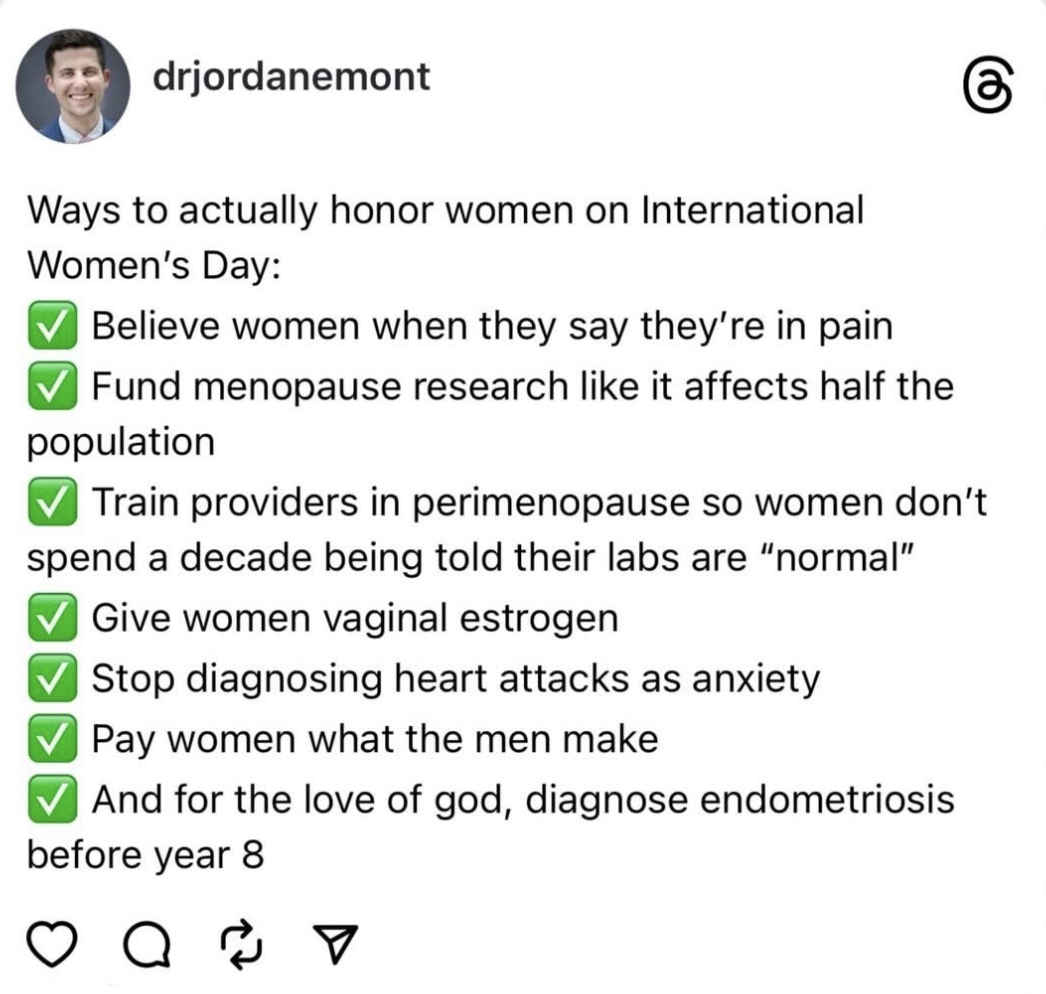
Before any woman was gaslit by her physician, language did it first. Hysteria originates from the Greek word hystera, meaning “uterus,” a condition that Greek physicians thought was caused by the uterus wandering around the body. But it didn’t end there, because the term “hysterectomy,” today describing the removal of the uterus, originated from that same hystera. The legacy that women’s emotions and pain are somehow biological and unstable goes back to Hippocrates, and prevails over 2000 years later. On March 8 2026, International Women’s Day, Dr Jordan Emont’s viral tweet highlighted this disparity, urging doctors to “believe women when they say they’re in pain,” to “diagnose endometriosis before year 8,” and to “fund menopause research like it affects half the population.” Because modern medicine has long relied on the male body as a test subject, women’s symptoms are often misinterpreted, their pain often dismissed, and their health concerns systematically underfunded and underresearched.
In fact, women in the US were only formally required to be included in clinical trials in 1993 through the NIH Revitalization Act, which reversed the 1977 FDA recommendation that trials exclude women of childbearing potential from drug trials. The 1977 guidelines had even expanded to include women who used contraception, who were single, or whose partners were vasectomized. Women’s historical exclusion from clinical trials meant that medical breakthroughs were only really useful to men, but have been universally applied. A major catalyst in the inclusion of women in clinical trials was the Thalidomide scandal, where pregnant women in 46 countries were prescribed Contergan, whose active ingredient was thalidomide, to treat morning sickness. Because this medication had never been required to be tested on pregnant women, its fetal effects were never recorded. The widespread belief at the time that what is safe for adults is safe for pregnant women and that the placenta protects the fetus led to the prescription of Contergan to women, resulting in the “biggest anthropogenic medical disaster ever”, with more than 10,000 children born with a range of severe deformities and thousands of miscarriages. This is symbolic of how the medical system has treated women as afterthoughts in medical knowledge, which has deep consequences.
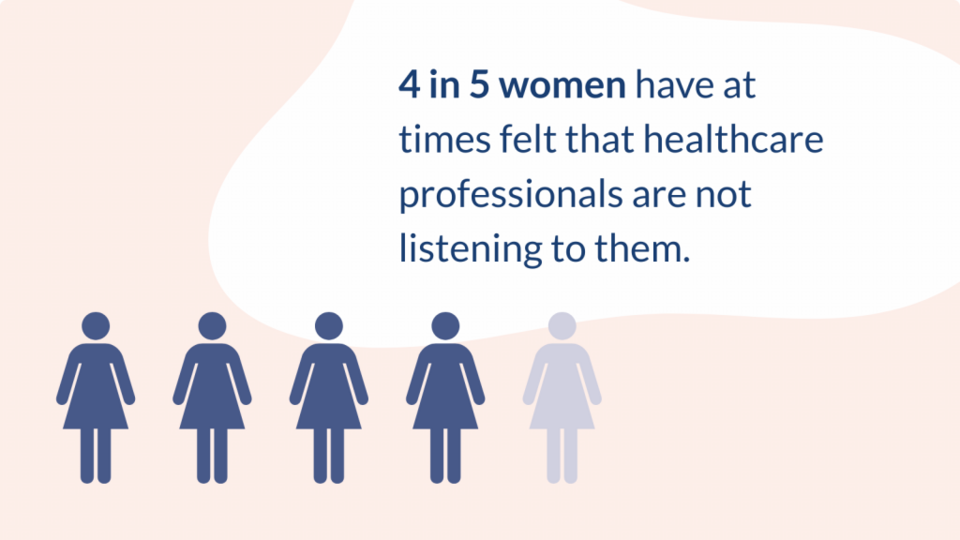
As a result, women today are significantly more vulnerable to misdiagnosis, standing at roughly 66 per cent more likely to receive a medical misdiagnosis than men because their symptoms present differently. Perhaps two of the most infamous misinterpretations of these different symptoms are ADHD and endometriosis. Girls are up to three times less likely to receive an ADHD diagnosis during childhood because the hyperactivity facet of ADHD presents differently in girls than in boys. Dr MacLean, a psychiatrist at Henry Ford Health, explains that “unlike the stereotypical presentation of a boy who’s jumping up and down and getting in classmates’ faces, girls with ADHD may just seem energetic and talkative.” Similarly, endometriosis is a condition estimated to affect 1 in 10 women of reproductive age, but is infamously hard to get diagnosed with. Physicians often tell women their crippling pelvic pain is mere period pain or irritable bowel syndrome, while their uterine lining is growing outside their uterus. On average, women in the U.S. wait 7 to 10 years for an accurate endometriosis diagnosis, tying back to Dr Emont’s “diagnose endometriosis before year 8.” It is no secret that women’s pain is frequently dismissed or attributed to psychological factors, much like hysteria. The common experience of painful symptoms being dismissed as hormonal fluctuations or menstrual pain leads to conditions like polycystic ovary syndrome and endometriosis being overlooked, forcing women to navigate cycles of pain and invalidation for years.
The systematic under-researching of women’s health is apparent in the growing body of research revealing the presence of chemicals, toxins, and heavy metals in commercial menstrual hygiene supplies. Because society still stigmatizes menstruating bodies, it is not surprising to find out that the FDA only regulates menstrual products as medical devices, meaning they are not held to the same standard as drugs. A recent study has found 16 different metals among 14 tampon brands, including toxic metals such as lead, a material that has no safe exposure level. This makes tampons a potential source of hazardous exposure to metals in menstruating people. Heavy metal exposure is associated with adverse health outcomes, such as oxidative stress, kidney failure, and reproductive issues. As these products are only required to be tested as medical devices, information about their long-term chemical exposure and trace contaminants is not recorded and therefore unknown.
The gendered gap in medicine has real-life consequences, such as delayed diagnoses, poorer health outcomes, and the wrong treatment for women. Women are not a niche group; they represent a core demographic whose exclusion results from structural bias. Treating women’s bodies as deviations rather than standards will continue to cause pain, and placing women’s health as secondary to men’s is a dangerous dynamic to perpetuate.
Edited by Idan Miller
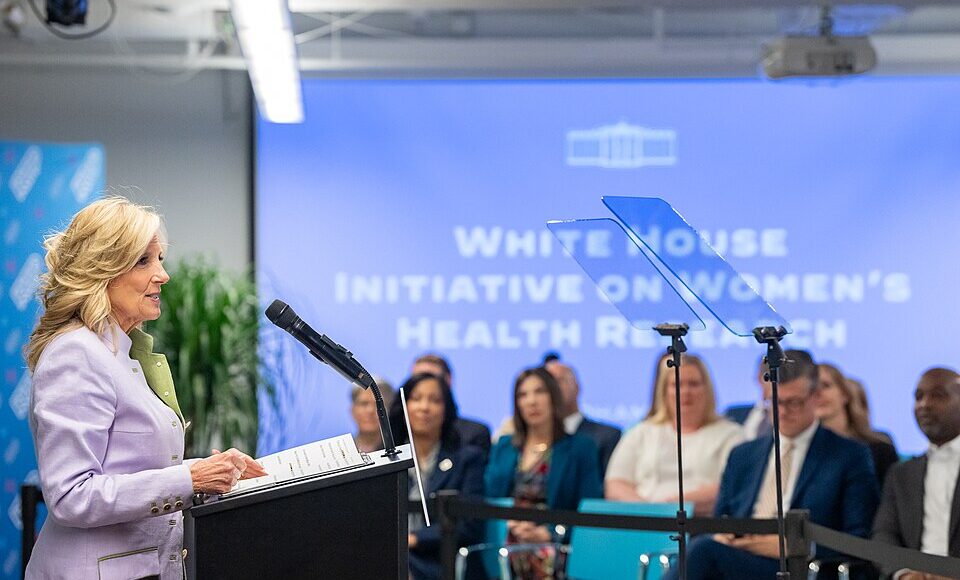
Featured Image: FLOTUS Jill Biden delivers a speech on research in women’s health in North Carolina. Photo by Ooligan is licensed under the Public Domain of the U.S. Federal Government.


