
The Unfinished Legacy of the Americans with Disabilities Act
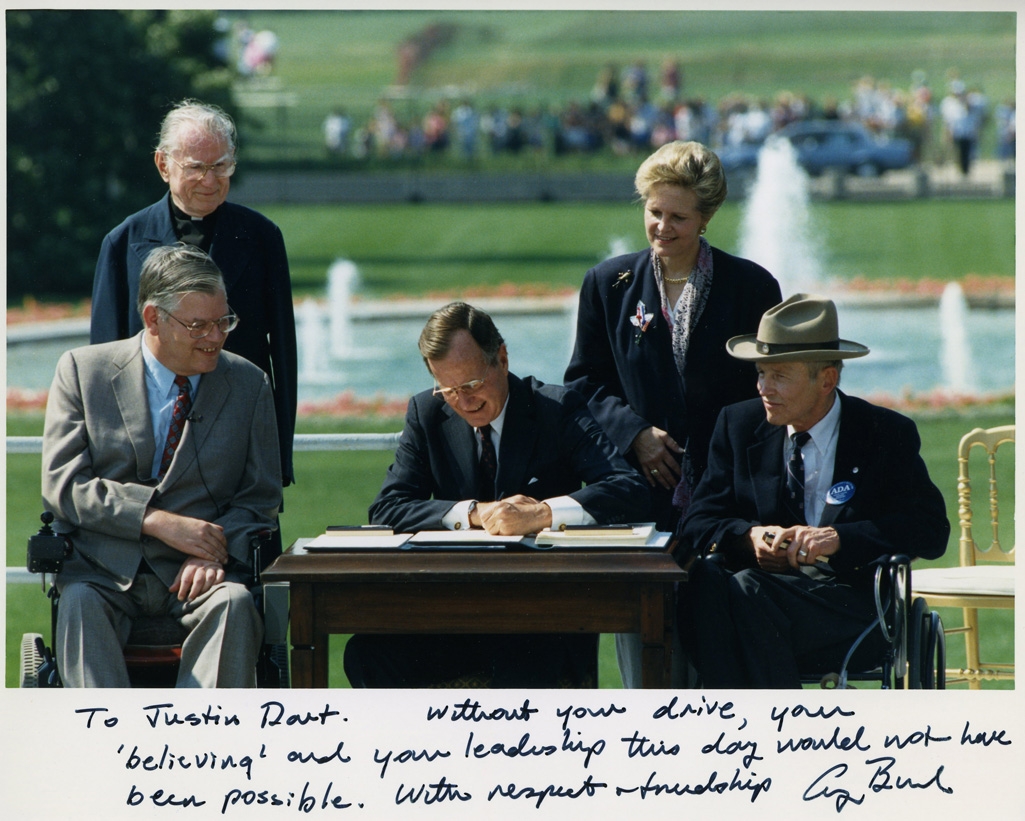
For many disabled Americans, the Americans with Disabilities Act (ADA) of 1990 was a landmark piece of legislation that broke barriers for thousands of US citizens. The act led to increased accessibility in public spaces, proper recognition of the intrinsic rights of disabled people, and set a precedent for future legislative change. It was curated after a decades-long struggle for legally protected civil rights by disability activists and an even longer period of stigma surrounding disabilities that followed many Americans through all avenues of life. In spite of the objective influence brought forth by the legislation, current executive choices introduced by the Trump administration put disabled people’s autonomy and ability for a relatively ‘normal’ life at risk. These policy decisions have lit a fire under harmful, bigoted rhetoric and have undeniably set back 28 per cent of Americans’ progress in living their lives defined by their disability.
The ADA was pioneered by Congressman Tony Coelho, an epileptic man who faced the negative connotations associated with his disease through limited employment opportunities and restrictive education environments. The forgotten, everyday struggle of disabled Americans was a life lived by Coelho. Therefore, Coelho committed himself to politically advocating and spearheading what came to be known as the ADA. The ambitious piece of legislation fought to increase accessibility in public, federal spaces, and institutionally removed the stigma that surrounded life with a disability. It was this same ambition, however, that stalled the Act’s progression and ratification.
On the morning of March 12, 1990, angered disability activists depicted their frustration with Congress by organizing a protest coined the Capitol Crawl. The forgotten moment in American history was monumental in many ways for American society, as thousands of disabled citizens made their way up the 83 inaccessible steps of Capitol Hill. Led by the American Disabled for Accessible Public Transit, more commonly known as ADAPT, the protest highlighted the daily barriers faced by people with seen and unseen disabilities, with activists pulling themselves out of their wheelchairs to ascend the US Capitol with both resilience and dignity. As a significant moment bookending weeks of protests, this symbolic demonstration gave Congress the push it needed to get the bill into the president’s hands at the time, George H.W. Bush, who subsequently signed it into law. The ADA provided 61 million Americans with significant accommodations and civil rights protections that had not been formally implemented before. With sections on employment, this specific title implemented accessibility as a standard in federal workplace practices. The act further required telecommunications companies to provide alternative services to Americans with hearing or speech disabilities. Accessible public transportation also reportedly increased from 65 per cent to 97 per cent, with improvements also being seen for invisible disabilities like diabetes and depression.
The undeniable impact of the ADA gave disabled Americans the rights and dignity withheld from them for decades. Despite the civil protections established by the landmark law, the current landscape of American politics puts these protections at risk.
Under the recent Trump administration, a broad, systematic shift has begun towards scaling back disability rights protections and funding. Many disability rights advocates describe these regressions as the most significant setback to the preservation of disability rights since the ADA’s passage. Though not explicitly labelled as rollbacks of disability rights, the dismantling of DEI and accessibility initiatives removes programs and structures that directly aid disabled Americans in finding access to employment and other opportunities indiscriminately.
In March of 2025, the Trump administration pulled 11 pieces of federal disability guidance that were intended to help businesses clarify their responsibilities under the ADA. The guidance included advice on designing accessible parking and changing areas, communicating with hotel guests about accessibility options, and determining when individuals with disabilities could receive support from family members during hospital no-visitor policies in the COVID-19 period. The Department of Justice posited that some of the guidelines were outdated, in reference to COVID-19 visitation restrictions, and thereby their removal took away “regulatory burdens” for businesses who struggled during and post-pandemic. This facade, however, overlooks the role that these regulations played in how businesses treat and interact with disabled Americans. Disability advocates note that such guidance serves as clarification of compliance expectations, thereby shaping how businesses treat and interact with ADA standards that are not constitutionally safeguarded.
The loosening of disability protections does not just stop there. The administration has notoriously reduced staffing in the Office of Special Education and Rehabilitative Services, a move that is only worsened by proposals to dismantle the Department of Education. These decisions remove disability-related national oversight for education and place approximately 15 billion USD in special education funding into question. Furthermore, the current attack on healthcare programs, Medicaid, and Social Security disability eligibility requirements introduces new factors of uncertainty for disabled Americans who rely on these services and social safety nets, further stigmatizing and creating hurdles for disabled Americans to jump through.
The protections offered by the Americans with Disabilities Act provide systematic equality to the whole of American society. The attacks on said equality threaten landmark case protections and minimize the economic productivity of a diverse American society. As administrative priorities shift, the protections and their lack of enforcement remain central questions to this national debate. This policy “push and pull” situates America as socially regressive and once again puts the civil rights of a marginalized group at significant risk. Going forward, it is critical that future administrative policy uphold the accessibility standards of the ADA and reinstate inclusive planning into executive decisions affecting everyday Americans. When inclusivity and accessibility are no longer federally prioritized, disability activists might find themselves needing to take a page from their predecessors at the Capitol Crawl and stand for the indisputable rights of disabled Americans.
Edited by Noor Elbially
Featured Image: Layout of a darkened room, highlighting the handicap sign.“Three Lights” by Tim Mossholder is licensed by the Unsplash License.
