
Threads of Uncertainty: How Tariffs are Reshaping the North American Apparel Sector
US President Donald Trump is no stranger to leveraging tariffs as a geopolitical tool. During his first term, he increased taxes on Chinese imports, prompting retaliatory tariffs from Beijing and sparking a significant trade war. Trump later threatened Canada and Mexico with heightened tariffs in 2020, forcing the two countries to negotiate a North American trade pact known as the US-Mexico-Canada Agreement (USMCA). Yet economists argue that the tariff policies imposed by Trump’s first administration were trivial compared to today’s “Trump 2.0” trade war. The effects caused by the recent wave of tariffs are markedly broader in scope and have led to significant repercussions across various sectors.
One sector that is especially overlooked, yet vital to the social and economic fabrics of North American society, is the apparel retail industry. Trump’s 2025 tariffs have—and will continue to—reshape nearly all facets of the North American apparel industry, including pricing, supply chains, and consumer behaviour, altogether prompting strategic adaptation from small and large companies alike.
Trump justified his imposition of the 2025 tariffs as a means to combat undocumented immigration in the US. On February 1, he signed an executive order imposing 10 per cent tariffs on all Chinese imports and 25 per cent tariffs on Mexican and Canadian imports beginning February 4. In doing so, he invoked the International Emergency Economic Powers Act (IEEPA), an unprecedented move that surprised many trade lawyers. The IEEPA grants presidents the authority to combat “unusual and extraordinary” international threats that may require regulating economic transactions. Originally passed in 1977, it has been used over 69 times to mitigate international emergencies as of January 2024. Historically, the IEEPA has been primarily leveraged to block foreign transactions, including freezing bank accounts and embargoing goods. Trump, however, used the IEEPA to impose tariffs, which he claimed were necessary to halt the national emergency in relation to “illegal aliens and drugs, including deadly fentanyl.” Economists warned that Trump’s uncommon use of the IEEPA would overturn decades of trade policy and create economic turmoil for businesses across the globe. Once again, the president drew upon the issue of illegal immigration, relying on a seemingly disconnected issue to justify heightened tariffs.
On February 3, Trump agreed to a 30-day pause on tariffs against Canada and Mexico following agreements with both countries to increase border regulations. Yet just 10 days later, he announced a new plan endorsing reciprocal tariffs. Under this agenda, tariffs would be calculated by dividing a country’s trade deficit with America by its total goods exported to America and halving the result. Again, economists argued that such measures were “flawed” and “delusional,” as trade deficits are not a key indicator of barriers to trade.
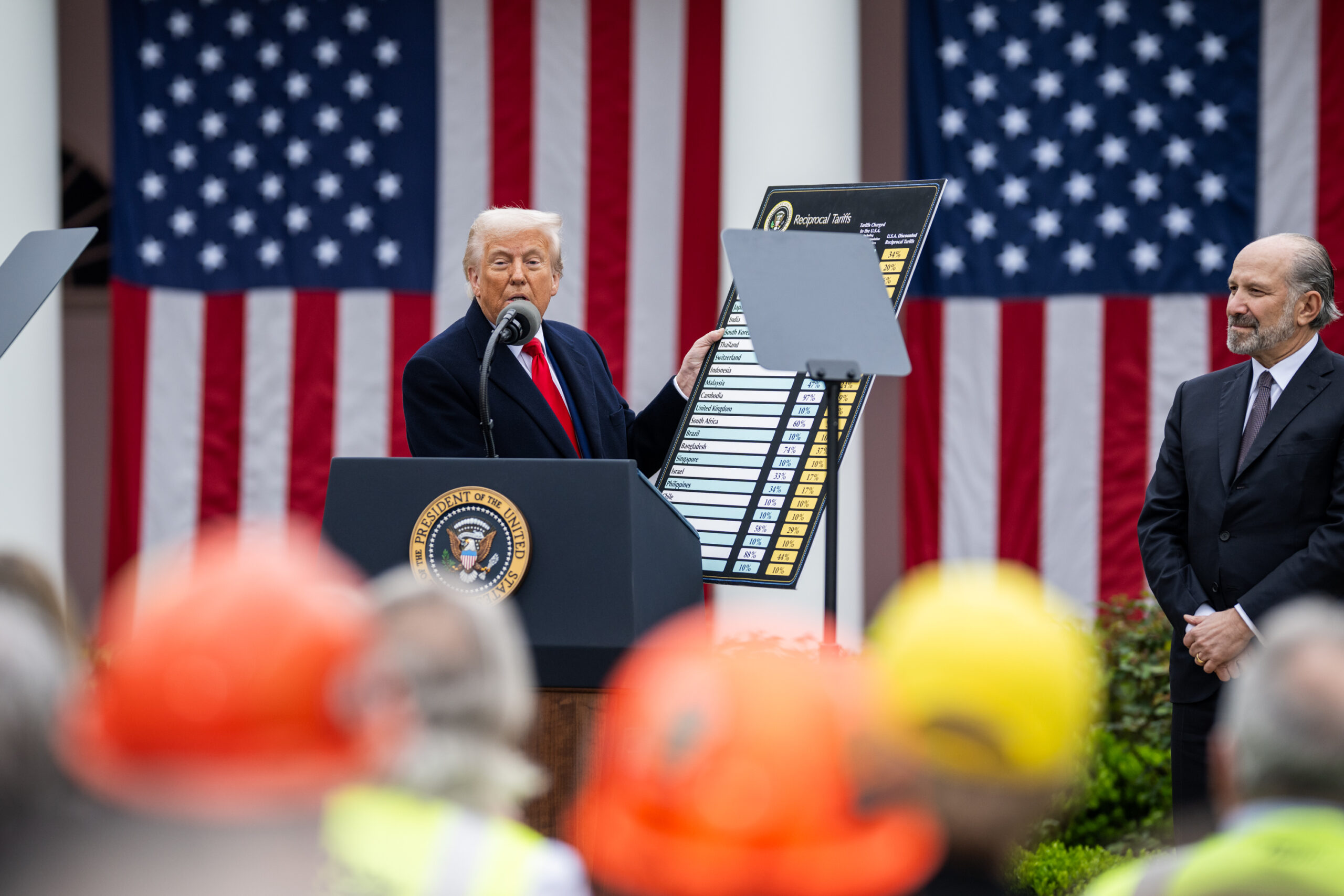
Reciprocal tariffs were predicted to significantly disrupt the global apparel retail industry. Concerningly, Trump indicated that India, an enormous supplier of textiles to North American retailers, would not be spared from increased tariffs. To make matters worse, on March 4, Trump’s month-long suspension of tariffs on Canada and Mexico expired, adding back the 25 per cent tariffs on both countries’ imports. Immediately, both countries promised retaliatory measures, with then-Prime Minister Justin Trudeau announcing tariffs on over $100 billion USD of US imports. While tariffs were relaxed or eliminated for certain industries in the ensuing months, textile manufacturing and other key facets of the supply chain across the North American apparel industry endured the same relentless tariff rates.
The next month, the Trump administration significantly ramped up its tariff agenda, prompting global backlash and legal action. On April 2, which Trump proclaimed as “Liberation Day,” the administration announced the “most sweeping tariff hike since the Smoot-Hawley Tariff Act” of 1930, which triggered a global trade war and exacerbated the Great Depression. The Liberation Day announcement included a universal 10 per cent tariff on all imported goods plus additional tariffs on over 10 countries, which Trump viewed as necessary to counteract decades of open US markets met with asymmetrical foreign tariffs and trade barriers that shut out American goods.
Trump’s spring tariffs were met with significant legal backlash. On May 28, the United States Court of International Trade (CIT) overturned all of the tariffs Trump imposed under the IEEPA, including the reciprocal tariffs. The following day, the Court of Appeals for the Federal Circuit issued a temporary stay of the CIT’s ruling in light of the US government’s impending appeal, allowing the IEEPA tariffs to remain in effect. While tariffs were relaxed or eliminated for certain industries in the ensuing months, textile manufacturing and other key facets of the supply chain across the North American apparel industry endured the same relentless tariff rates.
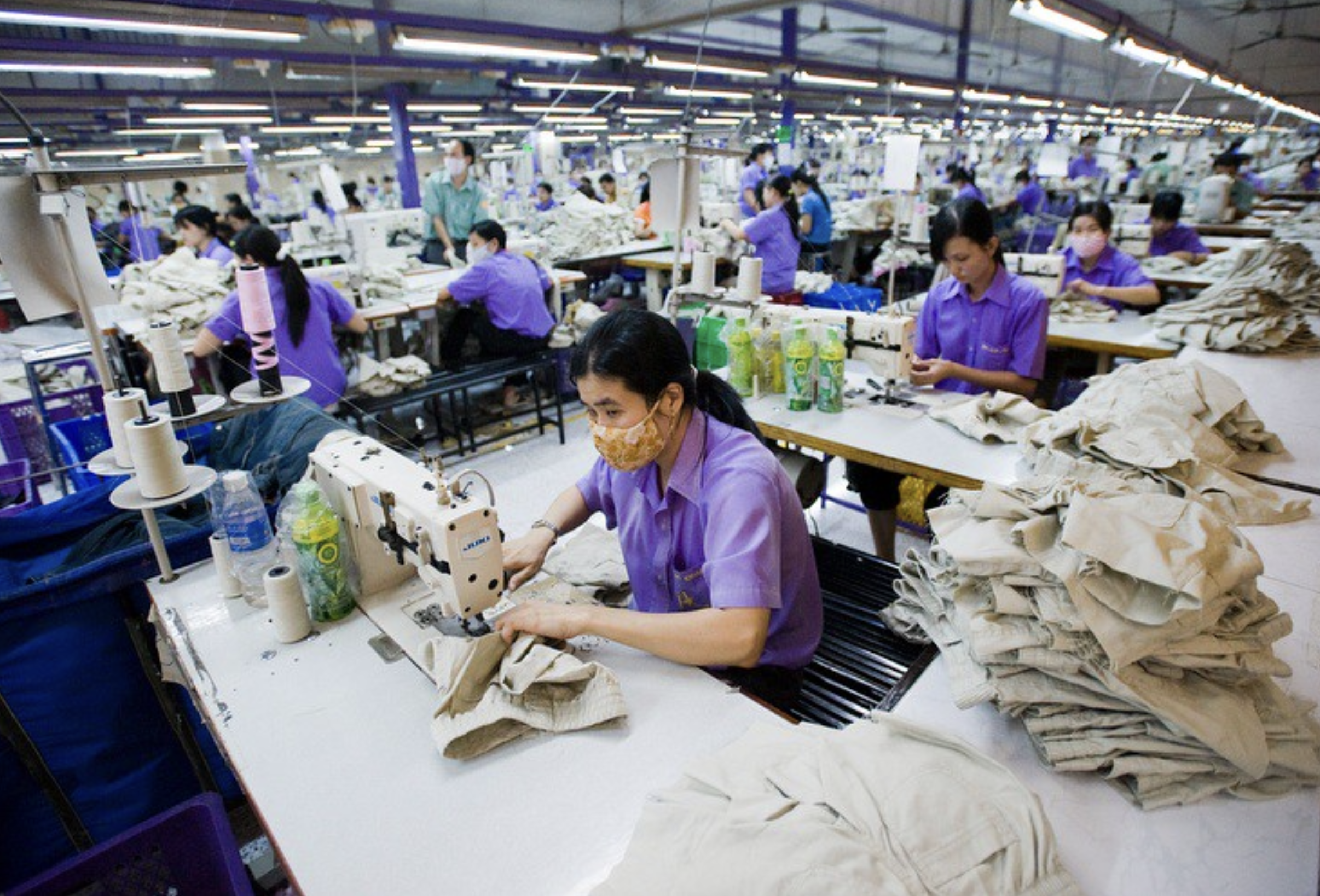
Trump’s 2025 tariff agenda has significantly disrupted the North American apparel sector’s operations, prompting industry stakeholders to reshape their production, sourcing, and distribution strategies. Consequently, product sourcing has become an especially weak link in the supply chain, as many North American companies are highly dependent on Chinese products. In recent decades, textile manufacturing in the US and Canada has significantly decreased due to various factors such as import competition and changing comparative advantages for related products. Rapid globalization and trade liberalization in the late 20th century resulted in many North American apparel companies offshoring their production to countries such as China, Vietnam, and Bangladesh, where they could benefit from low labour costs. However, as Trump’s tariffs increased import prices for offshored production, many North American apparel companies are shifting their procurement models and sourcing strategies to reduce their reliance on overseas manufacturing. Accordingly, China’s share of US apparel imports has dropped from 33.8 per cent in 2017 to a mere 21 per cent in 2025. This number will likely continue to decrease as apparel companies that rely on just-in-time inventory from Asia increasingly experience backlogs, product shortages, and inventory write-downs due to tariffs. Altogether, these challenges are prompting a re-evaluation of risk tolerance among North American apparel companies, with many demonstrating interest in nearshoring or reshoring to encourage faster turnarounds.
Operational delays are not the only challenge faced by North American apparel companies due to the 2025 tariffs. Perhaps more importantly, recent tariffs have had significant financial implications for both small and large apparel companies in North America. Many companies are facing margin pressures, with some estimating gross incremental losses of $250 to $300 million USD. Financial strains and profitability concerns are particularly observed by small businesses that operate with thinner margins and limited resources, making it challenging for them to absorb additional costs. Small and large apparel companies across North America have passed much of these cost increases onto customers, resulting in stark apparel cost increases across the continent. The Budget Lab at Yale University estimated that Americans will face enormous apparel price increases in the latter half of 2025, including a 39 per cent increase in prices for leather shoes and bags and a 39 per cent increase in clothing costs, which could remain in place for years to come.
Alternatively, to mitigate consumer backlash and reduced demand associated with price increases, some firms are exercising selective pricing tactics. Instead of blanket price increases, some fashion companies are employing selective increases in apparel categories that are less price-sensitive, including prestigious designer lines. Altogether, the new tariff measures have already hindered the profitability of many North American apparel companies, prompting firms to adapt to mitigate potential long-term losses.
Although recent tariffs have caused significant operational and financial disruptions, they also provide an opportunity for the North American apparel industry to shift toward more sustainable practices. The tariffs will push businesses to evolve their product strategies, including potentially shifting toward fewer high-margin staples that minimize fast fashion turnover. Currently, no North American apparel company has openly announced a shift toward sustainable alternatives in response to the recent tariffs. However, with a growing volume of consumers rejecting fashion, many brands are shrinking their collection sizes to prioritize sustainability and longevity. As companies shift production to local, tariff-friendly regions, there is hope that the fashion industry may become increasingly sustainable as an indirect outcome of the recent tariffs.
Trump’s 2025 tariffs are catalyzing profound shifts in operational and financial strategy among North America’s apparel sector. While large companies with greater access to capital will be able to adapt, persevere, and maybe even decrease their environmental footprint, small firms have and will continue to suffer. Ultimately, tariffs will reshape the North American apparel sector, forcing companies to adjust sourcing, pricing, and sustainability strategies in ways that could redefine the industry for years to come.
Edited by Marina Gallo.
Featured image: Photo by Vladan Raznatovic is licensed under the Unsplash License.

