
Two Neighbours, Two Courts, One Paradox: Abortion Rights in the US and Mexico
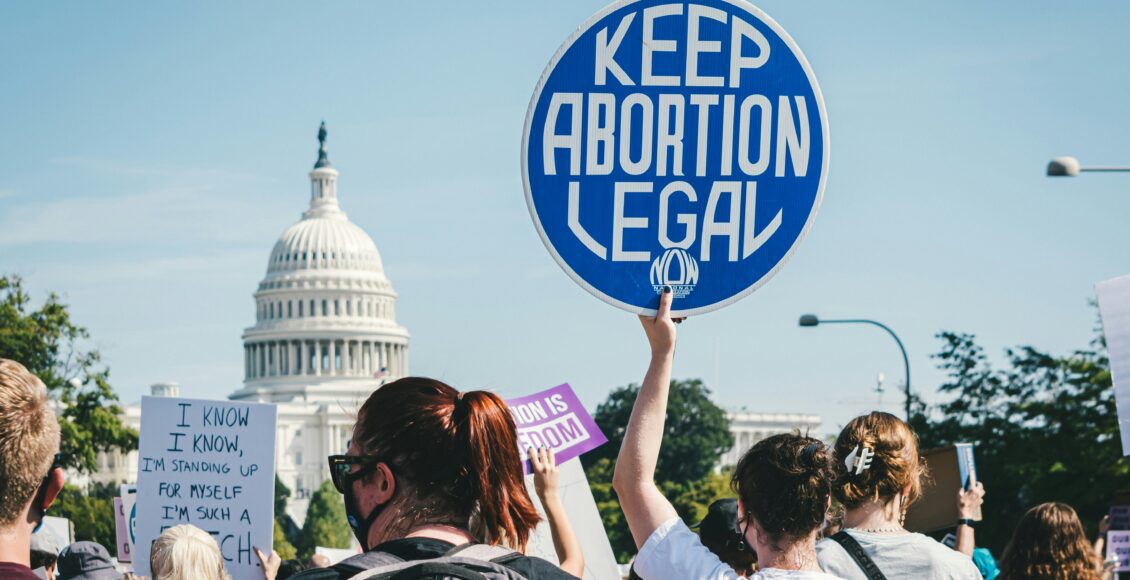
In September 2021, Mexico’s Supreme Court of Justice of the Nation (SCJN) unanimously declared criminalizing abortion unconstitutional. Nine months later, the United States Supreme Court overturned Roe v. Wade (1973). The irony is striking: Mexico—commonly perceived as conservative and overwhelmingly Catholic—expanded abortion rights through judicial reasoning, while the United States—long self-identified as a global rights leader—restricted access through partisan judicial maneuvering. Two neighbouring Christian-majority countries with politically compromised judiciaries reached diametrically opposite conclusions on closely related constitutional questions.
Taken together, these rulings pose a clear comparative puzzle. Holding religion constant and treating politics as the product rather than the cause, analyzing this outcome centres on judicial interpretation, social movements, and international human rights uptake as the channels through which the bounds of the decision were set.
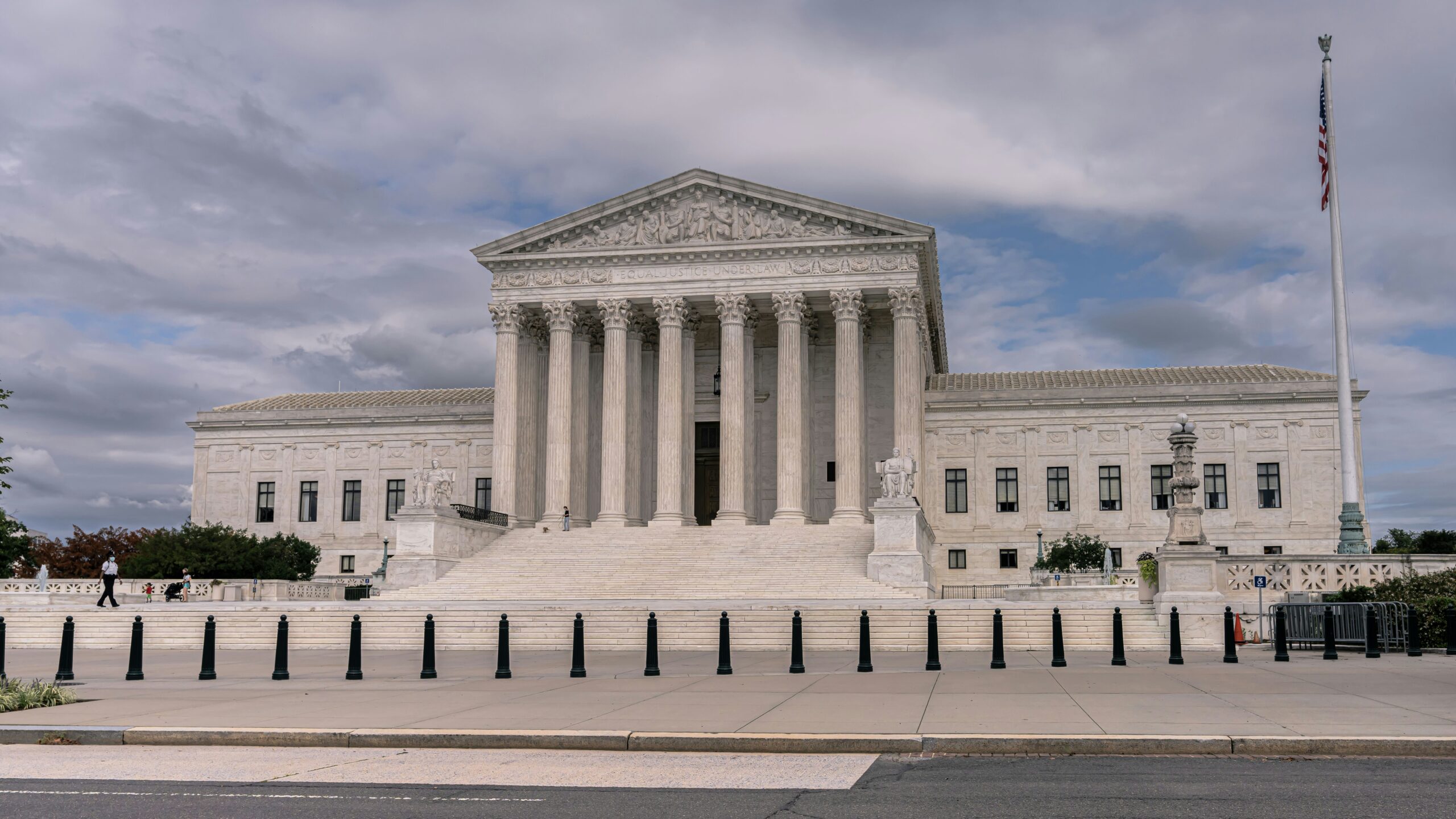
The landmark Roe v. Wade decision legalized abortion across the US, grounding it in the right to privacy under the 14th Amendment. For decades, Roe symbolized the judicial protection of personal liberty, even as anti-abortion movements chipped away at its legitimacy. In Dobbs v. Jackson Women’s Health Organization (2022), the Supreme Court reversed course, arguing that the Constitution contains no explicit right to abortion and that broad interpretations of “liberty” risk legitimizing practices outside the nation’s traditions. Abortion, therefore, was neither “deeply rooted” nor codified in American legal history, and thus could not be considered a fundamental right. The court’s decision promptly activated trigger bans and accelerated state-level prohibitions, marking a foundational shift in the Fourteenth Amendment’s treatment of bodily autonomy.
Nine months before Dobbs, Mexico’s SCJN unanimously decriminalized abortion, striking down Coahuila’s Penal Code that imposed up to three years in jail for abortion. In a sweeping decision, the Court invalidated those provisions, ordered the release of those convicted, and affirmed that reproductive autonomy was constitutionally protected. Here, dynamics played out very differently from those in the US. President Andrés Manuel López Obrador’s Morena party avoided taking a strong position on the matter, wary of alienating conservative voters and outside forces running parallel to formal politics—feminist movements, international human rights norms, and a judiciary willing to assert its independence.
In the US, the appointment of federal judges is a public and partisan affair carried out by the president. The nomination process is simple: the president tenders a candidate for a vacancy on the Court, and the Senate votes to confirm the nominee by majority vote. In the run-up to Dobbs, President Trump made some of the most publicized judicial appointments: Amy Coney Barrett, Brett Kavanaugh, and Neil Gorsuch, flipping the somewhat even 4-1-4 distribution into a lopsided conservative supermajority. These appointments are for life and thus create judicial insularity, with judges beholden to their appointing authority and subject to lasting ideological influence.
This conservative supermajority’s ideological approach was reflected in the Dobbs ruling. They used an originalist reading for unenumerated rights, concluding that only liberties “deeply rooted” in US history and implicit in “ordered liberty” qualify, and abortion does not meet that standard. In addition, the ruling weakened stare decisis in constitutional cases and legally bowdlerized bodily autonomy from the 14th Amendment’s guarantee against state deprivation of liberty.
This is not to imply an absence of flaws on Mexico’s part. The president exercises undue influence in judicial nominations, with selection processes lacking stated qualifications or standards. Past examples have included the appointments of Eduardo Tomás Medina-Mora Icaza (appointed 2015), Arturo Zaldívar (appointed 2019), and Yasmín Esquivel Mossa (appointed 2019), among others. However, unlike the US, where partisan appointment directly engineered a doctrinal reversal, Mexico’s flawed nominations occurred in an institutional context already primed by human rights reforms and feminist advocacy. The US has been selective in ratifying core human rights treaties—such as the failure to ratify the Convention on the Elimination of All Forms of Discrimination Against Women (CEDAW)—in contrast to Mexico, which adheres to and codifies human rights treaties into domestic law. For decades, key American justices have expressed skepticism toward citing international law in constitutional adjudication, reinforcing a jurisprudential exceptionalism that sidelines human rights frameworks. Justice Ruth Bader Ginsburg long warned that anchoring abortion rights primarily in privacy rather than equality made Roe vulnerable, a weakness which Dobbs exploited.
Meanwhile, Mexican courts have treated human rights obligations very differently. Following Radilla Pacheco v. Mexico in the Inter-American Court, the 2011 Human Rights Amendment revised 11 constitutional articles and explicitly adopted the “pro-homine” principle. This recalibrated Mexico’s constitutional ecosystem to integrate international standards and imposed state obligations to promote, respect, and guarantee human rights, reshaping judicial review across rights domains. In 2007, when the SCJN heard the abortion case in Mexico City, the SCJN framed abortion as a right to health, dignity, and autonomy, refusing to reduce women to “instruments” of gestation and balancing fetal interests against maternal personhood. Adopting a similar stance in 2021, the Court unanimously invalidated Coahuila’s criminalization and established binding criteria anchored in constitutional and international rights, obliging judges nationwide to follow suit. The result reflects a constitutional cosmopolitanism absent in Dobbs.
Another significant element in the matrix of factors that led to a positive outcome in Mexico was social mobilization, particularly through regional feminist networks. Latin America’s Marea Verde (Green Wave) movement built on decades of feminist organizing and mobilized symbols inspired by the Mothers of Plaza de Mayo, expanding through Ni Una Menos (protesting unsolved murders of women in Mexico). The movement’s repertoire spanned litigation, legislative proposals, and advocacy for reproductive rights. It also connected abortion to health, dignity, and equality, aligning its claims with Mexico’s post-2011 constitutional vocabulary. Marea Verde diffused across borders– ranging from Argentina’s 2020 abortion legalization to Mexico’s in 2021 and Colombia’s in 2022, sustaining discourse in the public sphere. This persistence supplied courts with an environment conducive to transformative rulings.
Conversely, after 1973, US pro-choice advocacy often prioritized maintaining judicial doctrine over sustaining mass, cross-sector mobilization. Meanwhile, anti-abortion groups recalibrated, aligned with the Republican Party, and advanced durable policy and institutional strategies through lobbying and organizations like the Federalist Society and Americans United for Life. This anti-abortion activism resulted in the Hyde Amendment, which normalized the lack of federal funding for abortion, later extended internationally via the Global Gag Rule, which barred the use of US international aid in the provision of abortion-related services. A multi-decade focus on judicial appointments thus culminated in a conservative supermajority that explicitly targeted Roe’s doctrinal premises, setting the stage for Dobbs’s rejection of a federal abortion right and return of authority to the states.
The juxtaposition of Dobbs and the SCJN’s 2021 rulings shows that courts do not act in a vacuum: they transmit political pressures through institutional channels that can either restrict or expand rights. By contrast, Mexico’s 2024 shift toward popular judicial elections, although not directly related to the 2021 liberalization of abortion, warrants attention. This change underscores the same pathologies seen elsewhere: partisan vetting, electoral incentives overriding legal craft, and volatility driven by expediency. If institution-building once expanded protection, institutional redesign can just as easily erode it. Accordingly, the task ahead in both countries is to strengthen institutions that enable principled decision-making, because durable rights are never gifts of a moment but products of institutions built to withstand tumult.
Edited by Olivia Diamantopoulos
Featured Image: Photo by Gayatri Malhotra is licensed under the Unsplash License.
