
Under Watchful Eyes: The Constraint of Free Will for Iran’s Female Footballers
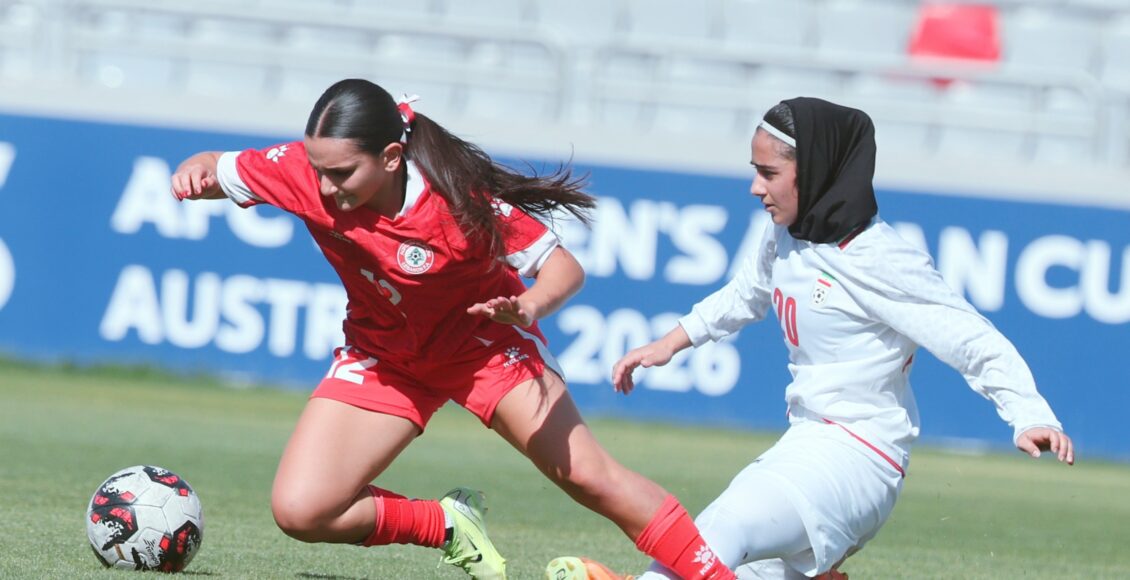
Silence took over the pitch on March 2, 2026, when the Iranian Women’s National Football Team, the Lionesses, refused to sing the national anthem at the FIFA Women’s Asia Cup in Australia. With Iran in the midst of war, the team’s open defiance of their government drew significant international attention, a testament to their bravery, but also a cause for concern regarding their safety.
For the football community, any refusal to sing a national anthem is understood as an inherently political statement. The Lionesses’ refusal to sing Iran’s national anthem was an especially striking act, made just two days after the death of Supreme Leader Ali Khamenei, whose passing had significantly destabilized the Iranian regime and its legitimacy. The defiance, however, was short-lived. Human rights advocates were quick to point out that they were unable to make contact with the players, who were visibly shielded from media questions by their own team managers and, reportedly, even a representative of the Islamic Revolutionary Guard Corps. This deliberate restriction of outside communication raised questions about whether these women could truly express themselves freely. Furthermore, when the team was seen singing and saluting the anthem in subsequent games, reportedly under pressure to do so, the international community began questioning whether the players were still able to act of their own free will. Their inability to speak to the media, combined with FIFA’s failure to adequately protect their human rights, suggested that their decision-making had since been compromised.
Iran’s government has been historically known for its repressive tactics, routinely employing threats and coercion to control dissent among its population. This pattern was immediately evident when Iranian state media labelled the players “war traitors,” language that galvanized the Australian public to push for their protection. The context of ongoing war only deepened these concerns—with the regime having cut off internet access in Iran, the outside world feared it would have no way of knowing what happened to the players once they left Australian soil.
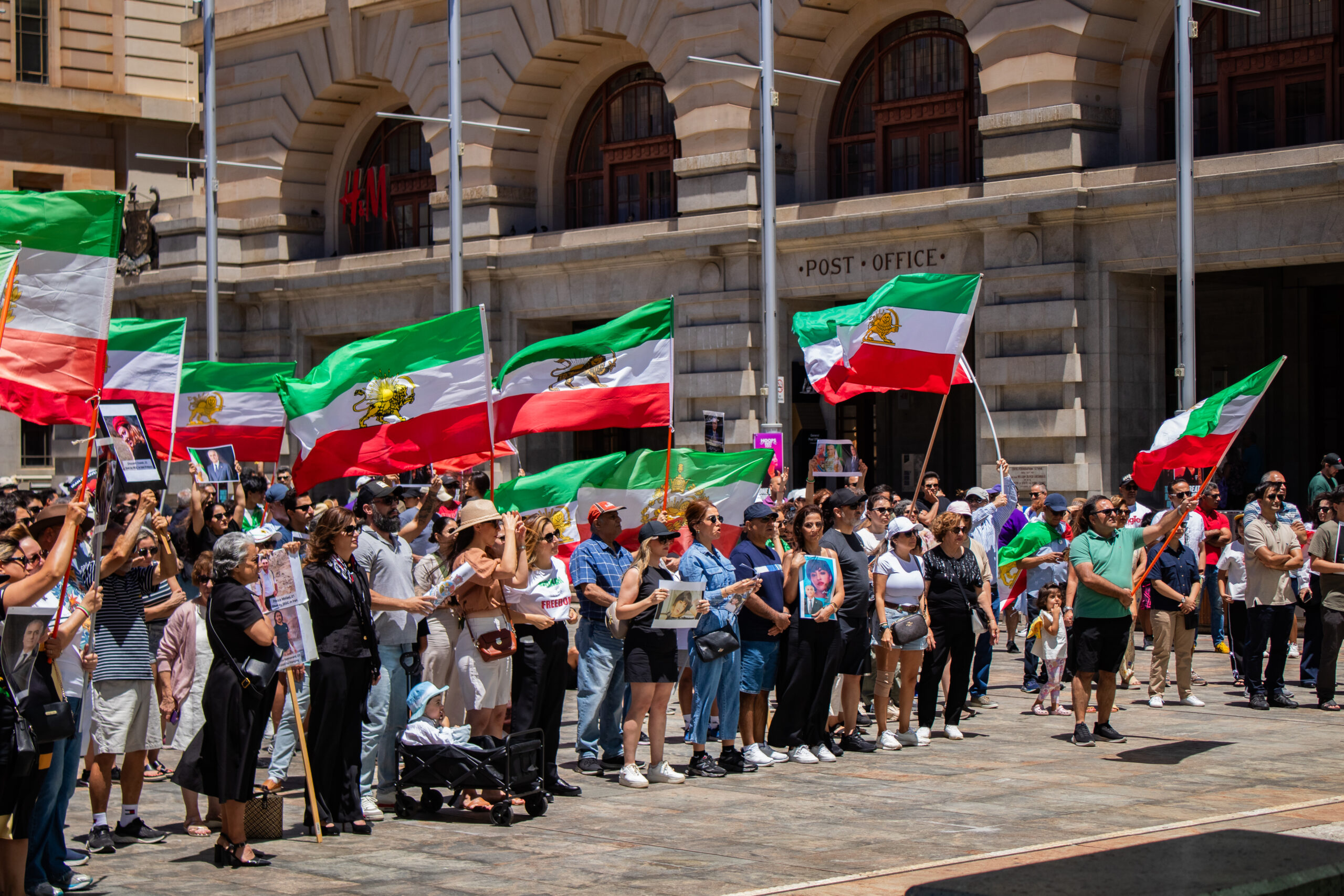
A sense of desperation gripped the Iranian-Australian community, with many demanding to hear from the players before their departure following elimination from the cup, and much of the Australian public calling for them to be granted asylum. Even the exiled Crown Prince of Iran, Reza Pahlavi, a key figure in the opposition to the Islamic Republic, called on the Australian government to protect the Iranian players.
After considerable difficulty in making contact with the Lionesses, the Australian government offered several players humanitarian visas. Nearly all, however, chose to return to Iran with the team. Many in the international community doubted the decision had been made freely, pointing to the fact that the women may have been pressured into reversing their decision under threats directed at their families. Australian officials, for their part, maintained that they had done what they could for the women, even as they privately feared they had failed them.
Australian Immigration Minister Tony Burke addressed parliament directly on the matter, stating, “In Australia, people are able to change their minds. We respect the context in which she had made that decision,” referring to one of the players who had decided to reverse her decision to pursue asylum. Yet for many, his words rang hollow. With the Iranian government’s threats looming over the players and their families, it was difficult to accept that any choice made under such conditions could be considered truly free. The basis of free will holds that decisions must be made independent of outside coercion, a standard that Australia, for all its willingness to help, had no power to guarantee. And yet it could not force the women to stay, for free will cuts both ways.
Many contend that FIFA, as the event’s organizing body, could also have done more to ensure players could make free decisions from the outset. Experts have accused the federation of failing to anticipate such a protest and being poorly prepared for it, pointing to a deeper failure to protect human rights at the sport’s organizational level.
While the Lionesses were widely praised for their courage, they were not alone in their defiance. The Iranian men’s team had also refused to sing the national anthem at the 2022 FIFA World Cup in Qatar, reflecting a pattern of resistance that the government has been unable to fully suppress, even as its grip tightens under the pressures of the current war.
That said, the Lionesses’ return to Tehran on March 19 was met with a welcome ceremony, offering some relief to those who had feared the worst. However, the regime’s contradictory behaviour throughout the episode is a reminder of its unpredictability, and similar moments of protest are likely to surface at future sporting events involving Iranian national teams. The question of free will remains unresolved, but for now, the women are home safely—and that, at least, is something.
Edited by Sofia Gobin
Featured Image: Despite losing to Lebanon in a qualifying game, the Lionesses were the only team from the Middle East to qualify for the Asia Cup. Photo is licensed under CC0 1.0 Universal.


