
When Money Breaks: Lebanon’s Economic Paradox
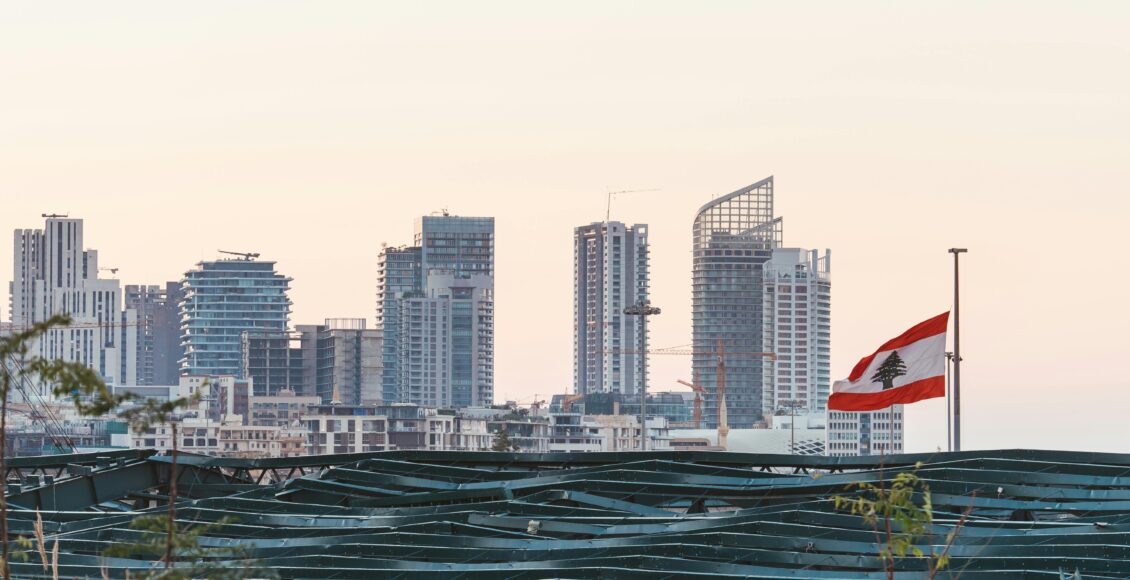
In 2019, Lebanon suffered from what is widely considered one of the most severe financial collapses in recent history. The crisis unfolded on three fronts: currency collapse, a banking meltdown that erased savings, and a fiscal breakdown that drained state finances—weakening public services and impeding debt repayment. All this is a result of a purported Ponzi-like scheme involving Lebanon’s central bank, Banque du Liban. To better understand Lebanon’s current crisis and its management, it is essential to understand the roles of central banks and fiat money.
Central banks serve as the backbone of modern financial systems. They conduct monetary policy, influence a country’s currency, and control the money supply. In doing so, central banks set macroeconomic objectives such as price stability and economic growth to support overall economic stability. This is often done by setting official interest rates, which affect the cost of money. Based on the economic situation, central banks either raise official interest rates to control inflation or lower them to encourage consumption and boost economic growth. They regulate money in circulation by injecting money into the economy, act as the lender of last resort for smaller banks in trouble to borrow money against collateral, and supervise the broader banking system, serving as an advisor and protector. Banque du Liban, like the US Federal Reserve and the European Central Bank, is an independent public institution with financial and administrative autonomy. In practice, however, this independence is deeply contested and has been compromised by the interests of banks and political considerations.
In fiat monetary systems, money derives its value not from physical commodities like gold, but from government decree and public trust. This structure grants central banks significant power to influence currencies. When trust erodes, people look for a more stable store of value and means of exchange. Dollarization is one result: the growing use of a foreign currency—often the US dollar—because households and firms no longer have confidence in the national currency. It typically emerges during severe economic instability and high inflation, and can be accelerated by political turmoil or conflict, as in Lebanon’s case.
This dynamic is central to Lebanon’s story. The 15-year civil war devastated the economy: by 1990, real per-capita GNP had fallen to roughly one-third of its 1975 level. Large fiscal deficits fueled inflation and a sustained depreciation of the Lebanese pound, pushing Lebanon toward dollarization. While foreign-currency use is assumed to decrease after macroeconomic and political stability are regained, in Lebanon it persisted: the dollarization rate of resident deposits was higher after the 1993-94 stabilization than before the war, reflecting continued lack of confidence in Lebanon’s political and monetary credibility.
Additionally, Lebanon’s trade balance had had a structural deficit since the end of the civil war in the late 1980s: Lebanon’s trade deficit ranged from $3.5-$6.5 billion USD annually from 1990-2007, then surged in the 2010s to about $13-$15 billion USD until the crash in 2019 (roughly 25 to 35 per cent of GDP during the 2010s). Still, Banque du Liban’s reserves were stable during this same time period, implying the government’s deficit was financed by substantial inflows that compensated for the gap and ensured the preservation of the reserves. But where were these inflows coming from?
Following the civil war, under Riad Salameh’s leadership at Banque du Liban, Lebanon built a model that is widely considered as a nationally regulated Ponzi scheme: fresh inflows were needed to meet existing obligations. The currency peg to the US dollar, adopted in the 1990s, restored short-term stability and investor confidence, helping drive economic growth for nearly two decades while overvaluing the lira and reducing pressure to develop export-oriented industries—leaving the economy dependent on remittances, aid, and foreign capital.
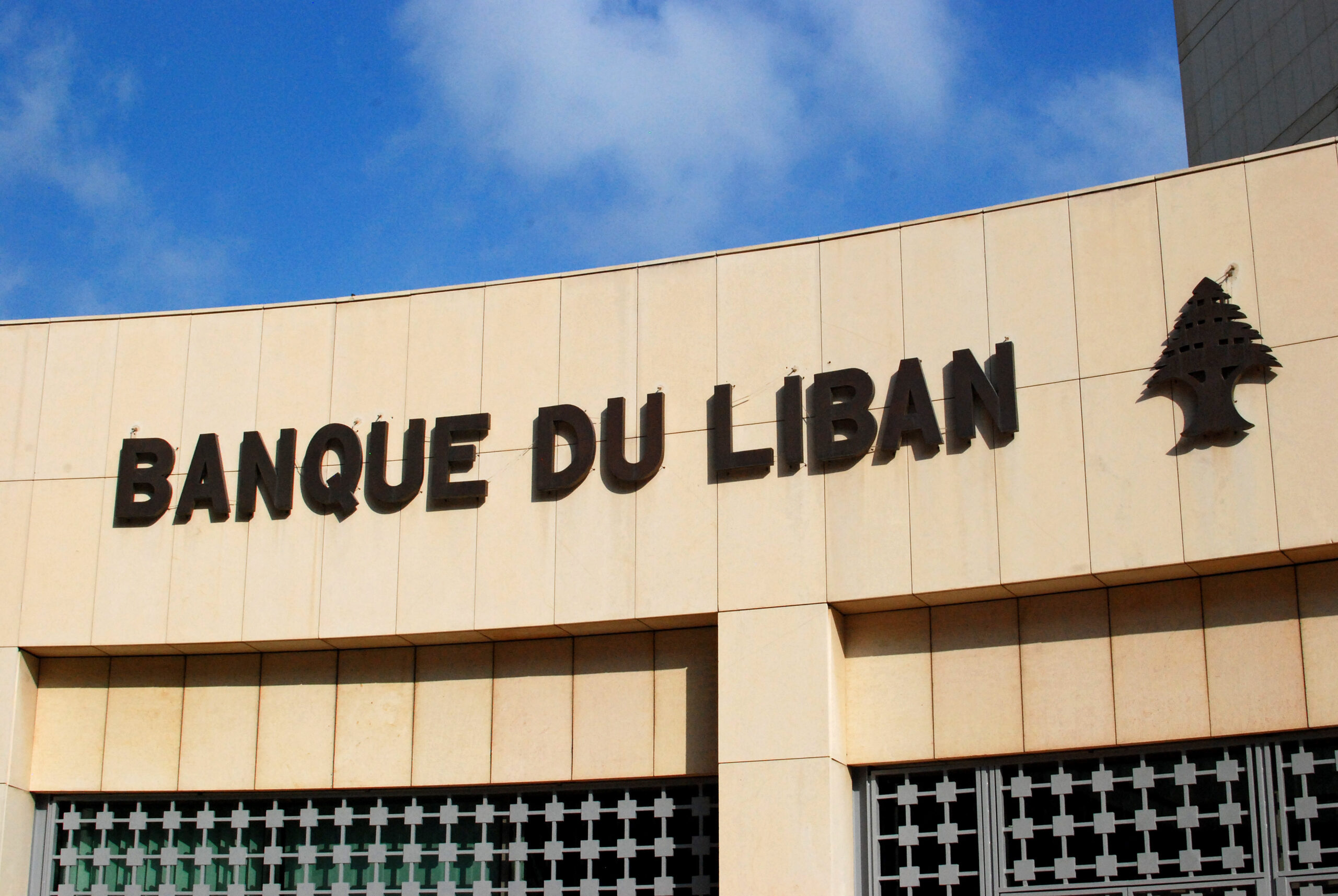
From 2005 onward—amid Hariri’s assassination, conflict with Israel, and spillovers from Syria’s war—political instability and concerns over Hezbollah’s influence cooled Gulf engagement and weakened those inflows. To defend the peg, Banque du Liban turned to “financial engineering”: offering exceptionally high returns to attract dollars. Commercial banks drew in foreign-currency deposits with generous rates, then placed much of those dollars at the central bank in exchange for even higher returns. This propped up the peg and financed state needs in the short run, while steadily expanding liabilities and hollowing out the system’s balance sheet.
The entire system began to crumble in October 2019 with the rise of Lebanon’s thawra—a popular uprising against government corruption, draconian taxation, and failure to provide public services. International investors lost faith in the country’s ability to service its debt and foreign capital stopped flowing into the country. Banks allowed the elite to pull their money out prior to imposing capital controls—restricting withdrawals and blocking international transfers—with Salameh and other Lebanese bankers and elite reportedly smuggling at least six billion out of the country. The politically powerful and well-connected transferred money overseas for safe harbour while ordinary citizens, including the new depositors who entered the system, found their bank accounts locked and their savings gone.
The current situation in Lebanon is an economic paradox of high cost of living and low wages. Even after the crash and a massively devalued currency, Lebanon is one of the most expensive countries in the Arab world, rivaling costs of living in Dubai or Riyadh. Meanwhile, the currency’s collapse has crushed purchasing power for anyone earning in lira; the World Bank notes the Lebanese pound had lost 98 per cent of its pre-crisis value by December 2023, driving persistent inflation and deep hardship
Several structural factors keep prices high. Lebanon imports more than 80 per cent of what it consumes; each fluctuation in exchange rates or shipping costs instantly drives up local prices. In addition, families spend an extra $100-200 USD per month just to compensate for failing state services, including electricity and water.
However, Lebanon’s partial dollarization prevents prices from falling with most things still being listed in dollars, often at international rates.
Presently, Lebanon is experiencing a political shift with the election of Joseph Aoun—ending a period of more than two years without a head of state–and the formation of a new government. Stabilization alone is not recovery, however, in order to not just navigate the crisis but to actively recover economically, Lebanon requires a comprehensive financial and economic adjustment.
Implementing an economic program supported by the International Monetary Fund (IMF) would add credibility to Lebanon’s policies, ease financing pressures, and support government debt restructuring. And while the war with Israel has inhibited progress, the new government and change in leadership of the central bank offers optimism. Lebanon can’t recover until it faces the banking losses openly. It needs a real review of bank accounts and a clear plan for who pays—so ordinary depositors aren’t stuck with the bill. Banque du Liban should stop improvised interventions, operate transparently, and help set a stable monetary plan. Transparency is needed to restore trust and move forward. Stronger banking rules and tougher anti-money-laundering enforcement are also necessary.
Yet there’s nuance: some elites benefit from the current mess. Delay and opacity can protect insiders, let money move abroad, and push the cost onto everyone else through inflation and frozen savings. In a country of roughly six million people that hosts over a million refugees and sits at the center of a fragile region, that means Lebanon can either keep navigating the crisis day by day—or begin the harder work of recovery by choosing transparency, fair loss-sharing, and credible institutions.
Edited By Shumyle Eman Shahid
Featured Image: Photo of Beirut by Jo Kassis is licensed using Pexels.
