
Why Russia’s Shadow Fleet Is Harder To Stop Than It Looks
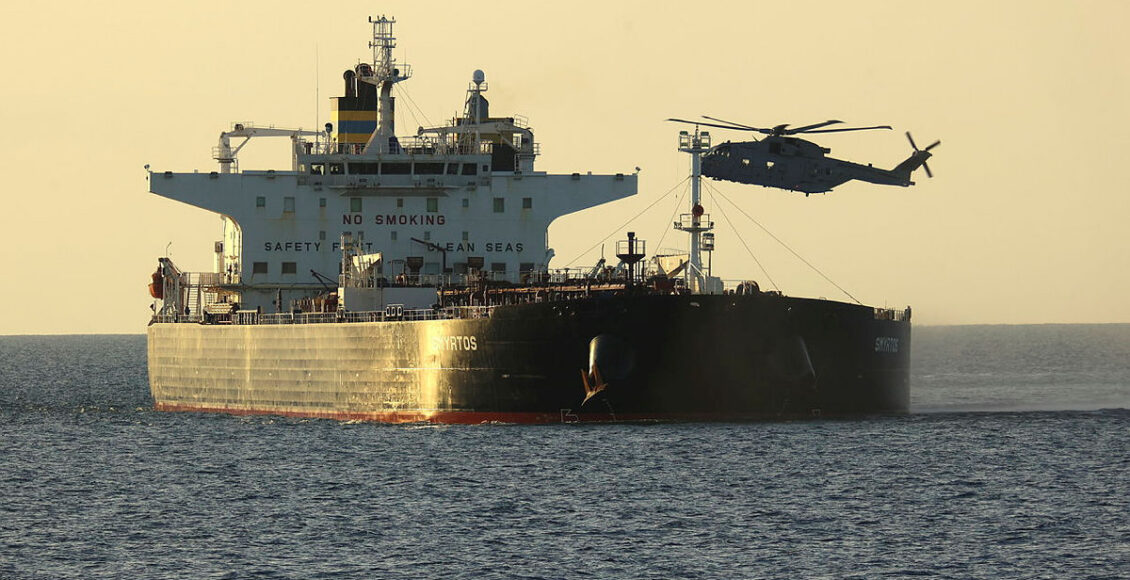
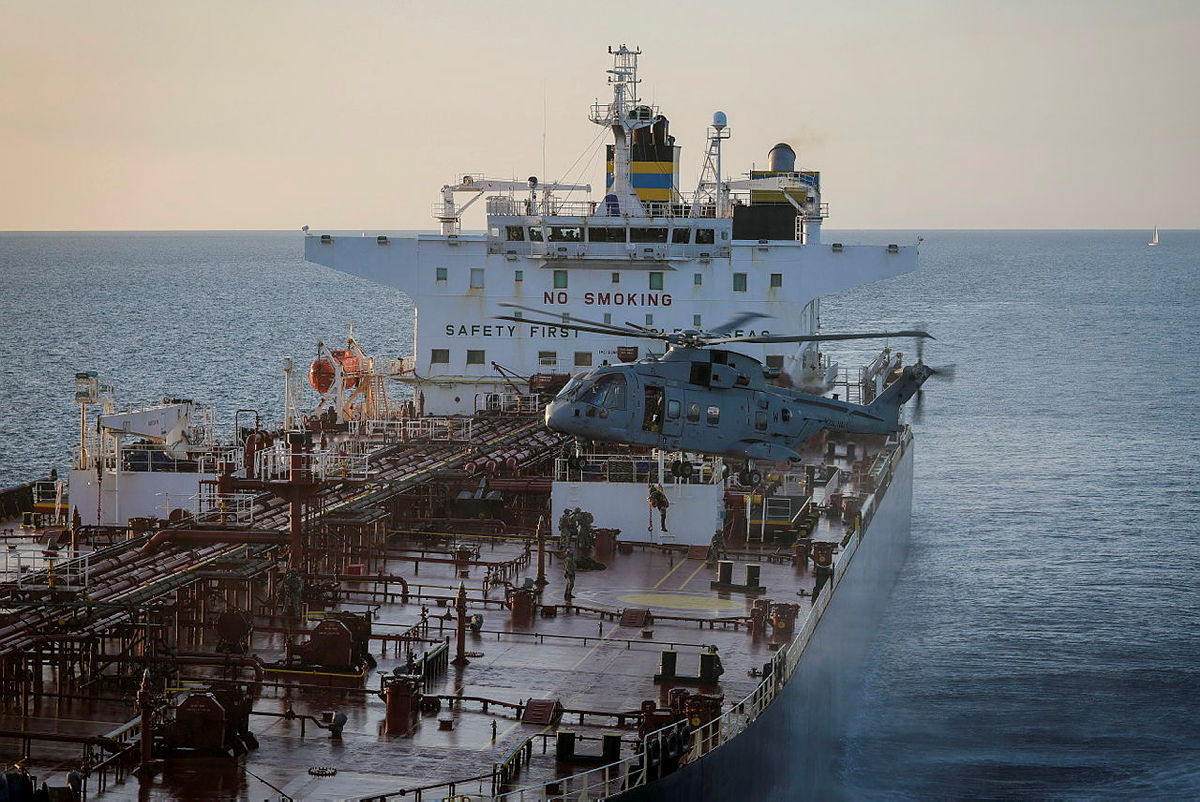
In the early hours of June 14, Royal Marines carried out the United Kingdom’s first unilateral boarding of a Russian shadow fleet tanker, the Smyrtos, as it transited the English Channel with sanctioned oil. Then Prime Minister Keir Starmer hailed the six-hour operation as proof that those enabling Russia’s war in Ukraine “cannot hide,” a message reinforced two days later when London unveiled a fresh package of sanctions targeting Russian shipping and finance.
Together, the raid and the sanctions package projected the image of an increasingly assertive Western campaign against Moscow’s sanctions-evasion network. Yet, the very body of international maritime law that made the operation possible also exposes the limits of maritime enforcement against Russia’s shadow fleet that generates $100 billion in annual revenue. Behind the dramatic images of commandos fast-roping onto the tanker lies a less triumphant reality: the Smyrtos was one of the easiest cases the UK is ever likely to encounter.
What made the Smyrtos boardable had nothing to do with sanctions, and everything to do with its legal status. Cameroon quietly deregistered the Smyrtos from its registry. In maritime law, that single administrative act rendered the vessel effectively stateless, leaving it without the protection of a national flag. Under Article 110 of the United Nations Convention on the Law of the Sea (UNCLOS), warships enjoy a “right of visit” permitting them to board and verify the nationality of any vessel reasonably suspected of being without nationality on the high seas. Once Royal Marines confirmed the Smyrtos was stateless, the boarding became lawful, allowing British authorities to verify the vessel’s status. Had the vessel retained a valid flag, Article 110 would not have provided the same legal basis for intervention.
Yet, Article 110 is a poor foundation for anything more ambitious than a single boarding. A dispute over a ship’s nationality is the easiest legal hook available to Western navies and also one of the least consequential ones. It authorizes verification rather than enforcement and says nothing about what happens after a warship inspects a suspected stateless vessel. Whether the boarding state can subsequently apply its domestic criminal law, enforce its sanction regime, confiscate the vessel, or prosecute the crew remains legally contested. That silence creates a legal grey zone. Turning a nationality check into the wholesale seizure of a tanker tests the normative limits of international maritime law.
In practice, that grey zone produces a cycle of temporary intervention rather than permanent disruption: tankers are stopped, but almost none of them stay stopped. France held the Grinch for three weeks, fined it, and then let it go. It arrested the Tagor’s captain but released him a day later and sentenced the Boracay’s captain to a year in prison in absentia, leaving both men free from any immediate interference at sea. The United States, Finland, Sweden, Estonia, Belgium, and Germany have each boarded tankers of their own, and while those actions demonstrate political resolve and appear as decisive strikes against Russia’s war chest, their strategic impact is limited. A ship is boarded, headlines are written, an investigation follows, and within weeks, the vessel, its crew, and often its cargo quietly sail on. Article 110 cuts both ways at once: too weak to hold the ship it catches, yet broad enough to be stretched into an expansive legal justification for restricting Russia’s oil revenues.
More fundamentally, Article 110’s narrow geographical and jurisdictional scope provides Moscow with a straightforward means of avoiding the right of visit altogether. The provision applies only on the high seas, and only to vessels reasonably suspected of being stateless. Once a tanker carries a valid flag, it is protected by the freedom of navigation guaranteed under UNCLOS Article 87, and Article 110 no longer applies. Within territorial waters, UNCLOS Article 17 offers a comparable shield through the right of innocent passage.
Recognizing this, shadow fleet operations are increasingly re-flagging to Russia. Ukrainian intelligence reports that Moscow is preparing to re-register 80 tankers under its flag. This is not a marginal adjustment but a structural one. Re-flagging institutionalizes the shadow fleet, transforming it from a covert network into an officially protected extension of Russia’s merchant marine. By replacing legal ambiguity with sovereign protection, Moscow makes foreign interference both legally and diplomatically costly. It also dissolves the legal basis that enabled the Smyrtos boarding, preserves the infrastructure sustaining its oil exports, and makes similar boardings increasingly difficult to reproduce.
The Smyrtos case therefore illustrates Russia’s broader use of lawfare: the strategic exploitation of the protections and ambiguities of the existing legal order and competing interpretations of law to secure an operational advantage. UNCLOS Article 110 was built to address threats of piracy and the slave trade, not to police modern sanctions evasion. Russia exploits this mismatch by invoking maritime protections when they shield its vessels, while portraying Western boardings as unlawful attacks on freedom of navigation. The narrative is deliberately reversed with Moscow casting itself as a defender of the rules-based maritime order, while states enforcing sanctions are portrayed as the ones violating them. In doing so, Russia transforms maritime enforcement into a contest not only over operational capability but also the interpretation and legitimacy of international law. The effect is to turn legal uncertainty itself into a form of protection, raising the cost and complexity of enforcement.
Treating the shadow fleet as a succession of isolated legal battles misunderstands its nature. It is a coordinated, state-supported system built to exploit whichever vulnerability enforcement leaves exposed, boarding by boarding. Disrupting it will take more than seizing ships one at a time; it will take a campaign against the underlying commercial system of shell companies, traders, insurers, financiers, and registries that sustain the shadow fleet.
That system, however, is no longer hidden as it once was. By stepping out of the shadows, Russia has sacrificed plausible deniability that long insulated its shadow fleet from meaningful enforcement by coastal states, port authorities, and sanctions regimes. Whether that newfound visibility will finally give those authorities the leverage they have so far lacked remains uncertain. A fleet that can no longer hide behind statelessness may simply be exchanging one vulnerability for another. If so, the Smyrtos was not the breakthrough it was hailed as, but simply the last easy target before the harder fight begins.
Edited by Argane Goel
Featured image: The tanker Smyrtos is boarded by a military helicopter during a British maritime operation on June 14, 2026. Photo by RN is licensed under the MOD Crown Copyright News / Editorial Licence.


